About Baptist Health Sciences University
Students pay an average net price of $13,401 after financial aid, making this one of the more affordable paths into healthcare careers. Graduates earn a median salary of $72,529 within ten years, providing strong return on investment despite the typical $29,500 in student debt. The employment rate reaches 98.7%, reflecting the high demand for skilled healthcare workers. Monthly loan payments average $313, which becomes manageable given the solid earning potential in nursing and health sciences.
The student body is overwhelmingly female at 91.83%, reflecting the demographics of nursing and healthcare professions. Nearly half of students are Black (46.51%) and another 39% are White, creating a diverse learning community. The school operates on a trimester system, allowing students to accelerate their education and enter the workforce sooner than traditional four-year programs.
Academics & Faculty
Source: College Scorecard / U.S. Department of Education
- Student-to-Faculty Ratio
- 6:1
- Full-Time Faculty
- 97.4%
- Graduation Rate (4-year)
- 55.9%
- Graduation Rate (6-year)
- 53.8%
- Retention Rate
- 52.8%
- Median Earnings (10 years)
- $72,529
- Carnegie Classification
- Associate College (High Career)
Popular Programs by Earnings
| Program | Level | Median Earnings |
|---|---|---|
| Clinical/Medical Laboratory Science/Research and Allied Professions. | Bachelor | $63,005 |
| Registered Nursing, Nursing Administration, Nursing Research and Clinical Nursing. | Bachelor | $59,463 |
| Allied Health Diagnostic, Intervention, and Treatment Professions. | Bachelor | $50,677 |
| Health and Medical Administrative Services. | Bachelor | $42,682 |
Campus Life
Memphis summers require serious air conditioning, while winters call for light jackets rather than heavy coats. The trimester calendar system keeps students moving quickly through intensive coursework. With a 6:1 student-faculty ratio, expect plenty of hands-on instruction and clinical supervision. Weekends often involve study groups preparing for nursing exams or clinical rotations at Baptist Memorial hospitals throughout the city.
The partnership with Baptist Memorial Health Care means students spend significant time in real hospital settings rather than just classrooms. Social life revolves around study groups and professional development events. Memphis offers Beale Street, barbecue, and professional sports, though most students stay focused on their demanding health sciences programs. The 98.7% employment rate reflects the career-driven culture that dominates campus life.
- Setting
- City-Large
- Housing Capacity
- 148 beds
- Calendar System
- Trimester
Campus Safety (2023)
1 total reported incident. Source: Clery Act / U.S. Department of Education
| Offense | On Campus | Residential | Noncampus | Public Property |
|---|---|---|---|---|
| Domestic Violence | 1 | 0 | 0 | 0 |
Climate & Weather
- January Avg
- 33°–50°F
- July Avg
- 73°–91°F
- Annual Precipitation
- 54.9"
- Annual Snowfall
- 2.7"
Student Demographics
- Men
- 8.2%
- Women
- 91.8%
- White
- 38.9%
- Black
- 46.5%
- Hispanic
- 7.1%
- Asian
- 2.2%
- In-State Students
- 68.6%
- Pell Grant Recipients
- 47.0%
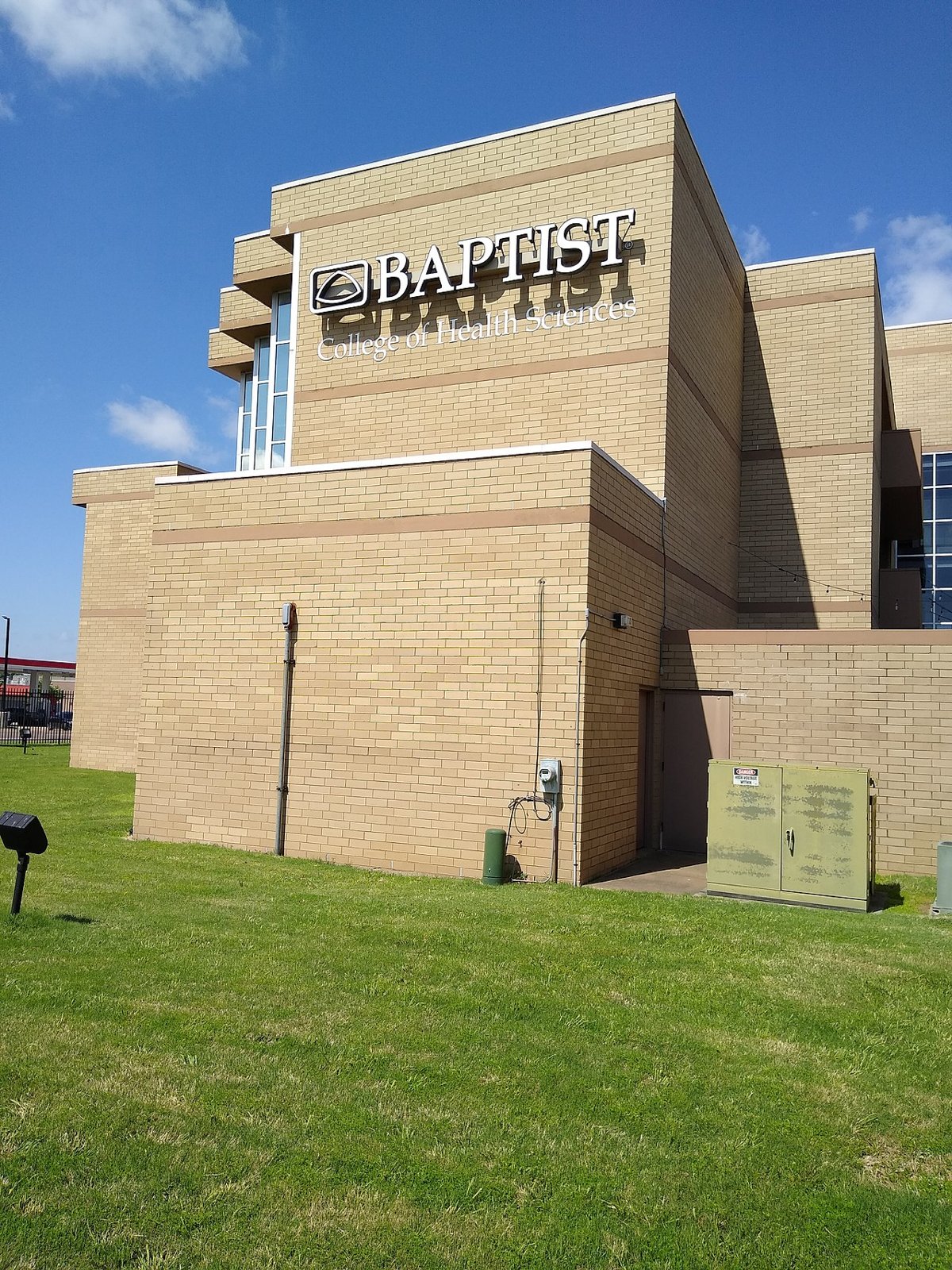
Location
- Address
- Memphis, Tennessee 38104
After College
Source: College Scorecard / U.S. Department of Education
- Median Earnings (10 years)
- $72,529
- Median Earnings (5 years)
- $71,906
- Mean Earnings (6 years after entry)
- $47,100
- Loan Repayment Rate
- 55.1%
- Monthly Loan Payment
- $313/mo
- Median Debt at Graduation
- $29,500
Frequently Asked Questions
What is the acceptance rate at Baptist Health Sciences University?
Baptist Health Sciences University accepts 40.93% of applicants with an average ACT score of 22. This health sciences focused institution maintains selective admissions while preparing students for careers in nursing and allied health fields through its partnership with Baptist Memorial Health Care.
How much does Baptist Health Sciences University cost after financial aid?
The average net price is $13,401 with tuition set at $13,846 for all students regardless of residency. Nearly 47% of students receive financial aid, and the relatively low room and board cost of $3,980 helps keep total expenses manageable for this specialized health sciences education.
What is the student-faculty ratio at Baptist Health Sciences University?
The university maintains a 6:1 student-faculty ratio with just 673 total students enrolled. This intimate learning environment supports hands-on clinical training and personalized instruction essential for health sciences programs, particularly nursing which dominates the curriculum.
What are the career outcomes for Baptist Health Sciences University graduates?
Graduates earn a median salary of $72,529 ten years after graduation with an impressive 98.7% employment rate. The strong job prospects reflect high demand for healthcare professionals and the university's direct pipeline to Baptist Memorial Health Care and other medical facilities in Memphis.
Where do students live at Baptist Health Sciences University?
The university houses 148 students on campus in a city setting in Memphis, Tennessee. With 91.83% of students being women and the majority studying nursing, the campus creates a close-knit community focused on healthcare education and clinical preparation.
Does Baptist Health Sciences University follow a traditional academic calendar?
The university operates on a trimester system rather than traditional semesters, allowing for accelerated health sciences training. This calendar structure supports intensive clinical rotations and helps students complete rigorous nursing and allied health programs more efficiently than conventional four-year schedules.