About City College of San Francisco
The financial picture tells a compelling story for budget-conscious students. Most pay around $7,272 annually after aid, making this one of the most affordable college options in expensive San Francisco. Graduates typically earn $45,805 ten years after starting, while carrying modest debt loads of just $8,218. With monthly loan payments averaging only $87, the return on investment proves solid for a two-year degree.
The academic experience operates at a larger scale than typical community colleges. Students navigate a 23:1 student-faculty ratio across diverse programs designed for both transfer and career preparation. While the 40% six-year completion rate reflects the challenges many working students face, the 90% employment rate shows strong job market outcomes for those who finish.
Academics & Faculty
Source: College Scorecard / U.S. Department of Education
- Student-to-Faculty Ratio
- 23:1
- Full-Time Faculty
- 45.5%
- Graduation Rate (6-year)
- 39.6%
- Median Earnings (10 years)
- $45,805
Popular Programs by Earnings
| Program | Level | Median Earnings |
|---|---|---|
| Registered Nursing, Nursing Administration, Nursing Research and Clinical Nursing. | Associate | $92,632 |
| Allied Health Diagnostic, Intervention, and Treatment Professions. | Associate | $88,198 |
| Liberal Arts and Sciences, General Studies and Humanities. | Associate | $69,338 |
| Accounting and Related Services. | Associate | $35,060 |
| Hospitality Administration/Management. | Associate | $33,281 |
Campus Life
With 16,060 students and a 23:1 student-faculty ratio, classes feel intimate despite the large enrollment. The student body mirrors San Francisco's diversity: 32.04% Asian, 27.67% Hispanic, and 20.89% White students create a multicultural learning environment. Women make up 53.89% of enrollment. Students typically work part-time jobs around the city while taking classes, contributing to the 39.60% six-year graduation rate as many attend part-time. Weekends often mean exploring San Francisco's neighborhoods, working, or studying in the city's many coffee shops. The Rams compete in 11 varsity sports with 253 total athletes, though most students focus on academics and work rather than campus athletics.
- Setting
- City-Large
- Calendar System
- Semester
- Founded
- 1935
Campus Safety (2023)
139 total reported incidents. Source: Clery Act / U.S. Department of Education
| Offense | On Campus | Residential | Noncampus | Public Property |
|---|---|---|---|---|
| Motor Vehicle Theft | 4 | 0 | 0 | 43 |
| Robbery | 0 | 0 | 0 | 38 |
| Aggravated Assault | 1 | 0 | 0 | 34 |
| Domestic Violence | 0 | 0 | 0 | 7 |
| Burglary | 5 | 0 | 0 | 0 |
| Arson | 0 | 0 | 0 | 2 |
| Fondling | 0 | 0 | 0 | 2 |
| Dating Violence | 1 | 0 | 0 | 0 |
| Rape | 0 | 0 | 0 | 1 |
| Stalking | 1 | 0 | 0 | 0 |
Climate & Weather
- January Avg
- 45°–59°F
- July Avg
- 54°–61°F
- Annual Precipitation
- 20.6"
- Annual Snowfall
- 0.0"
Student Demographics
- Men
- 46.1%
- Women
- 53.9%
- White
- 20.9%
- Black
- 7.0%
- Hispanic
- 27.7%
- Asian
- 32.0%
- In-State Students
- 95.4%
- Pell Grant Recipients
- 17.1%
Location
- Address
- San Francisco, California 94112-1898

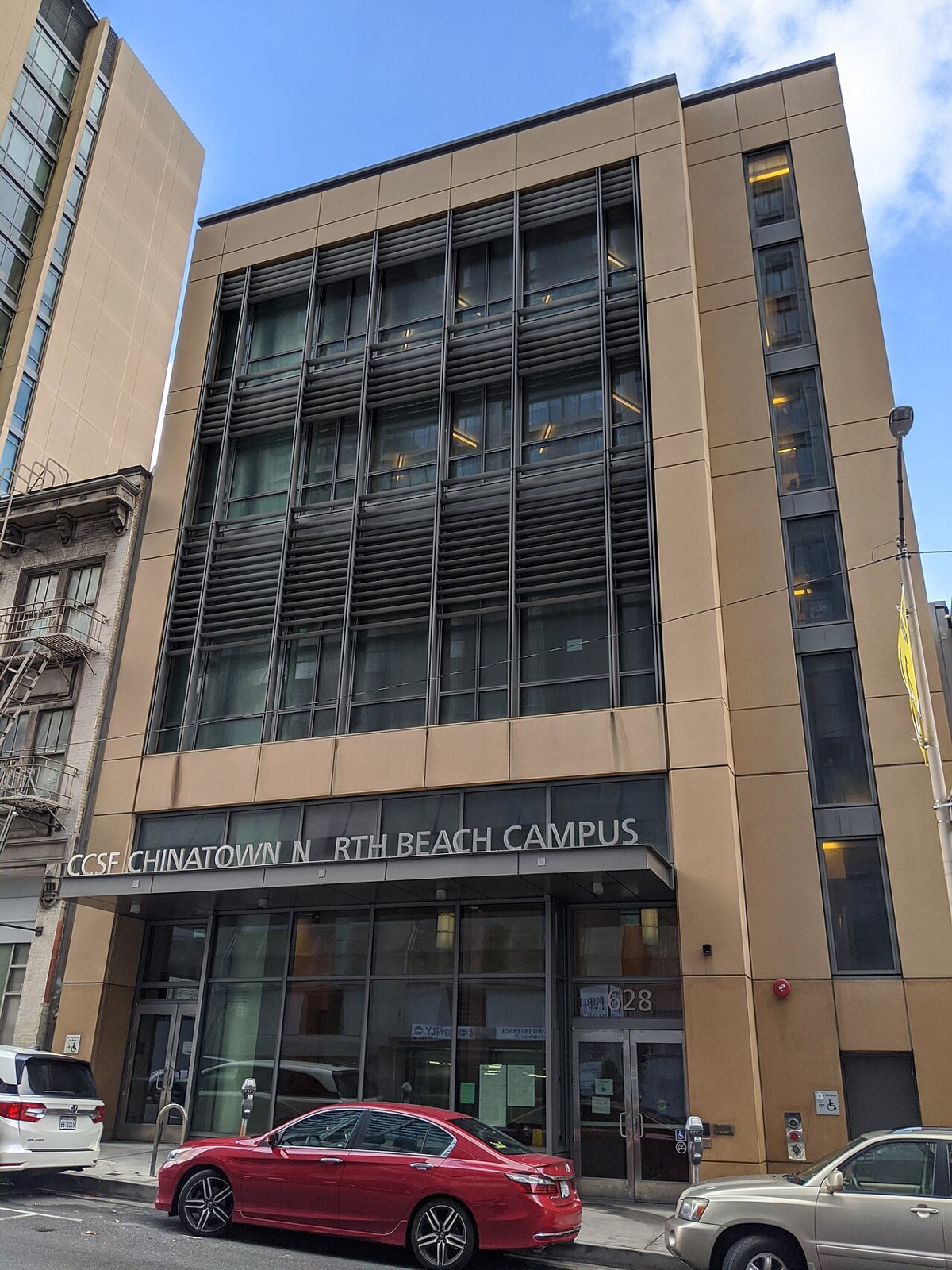
After College
Source: College Scorecard / U.S. Department of Education
- Median Earnings (10 years)
- $45,805
- Median Earnings (5 years)
- $56,266
- Mean Earnings (6 years after entry)
- $31,600
- Loan Repayment Rate
- 37.5%
- Monthly Loan Payment
- $87/mo
- Median Debt at Graduation
- $8,218
Frequently Asked Questions
What is the acceptance rate at City College of San Francisco?
City College of San Francisco operates as an open-enrollment community college, meaning they accept all students who meet basic requirements. With 16,060 students enrolled, CCSF serves as an accessible entry point for higher education in one of America's most expensive cities. The college attracts a diverse student body with 32% Asian students and 28% Hispanic students.
How much does City College of San Francisco cost after financial aid?
Students pay an average net price of $7,272 annually at City College of San Francisco. In-state tuition starts at just $1,696, making it one of the most affordable college options in expensive San Francisco. Low-income students earning under $30,000 pay around $6,859 after aid, while those from families earning $30-48,000 pay even less at $6,097.
What is the student-faculty ratio at City College of San Francisco?
City College of San Francisco maintains a 23:1 student-faculty ratio, which is typical for large community colleges. The college operates on a semester system and focuses heavily on career preparation and transfer programs. CCSF has built a reputation as a stepping stone for students planning to transfer to four-year universities or enter the workforce quickly.
What are the graduation and employment outcomes at City College of San Francisco?
City College of San Francisco achieves a 39.6% six-year graduation rate, reflecting the community college mission of serving diverse student populations with varying goals. Graduates earn a median salary of $45,805 ten years after enrollment with relatively low debt of $8,218. The college boasts an impressive 89.7% employment rate, demonstrating strong connections to San Francisco's robust job market.
Where is City College of San Francisco located and what is campus life like?
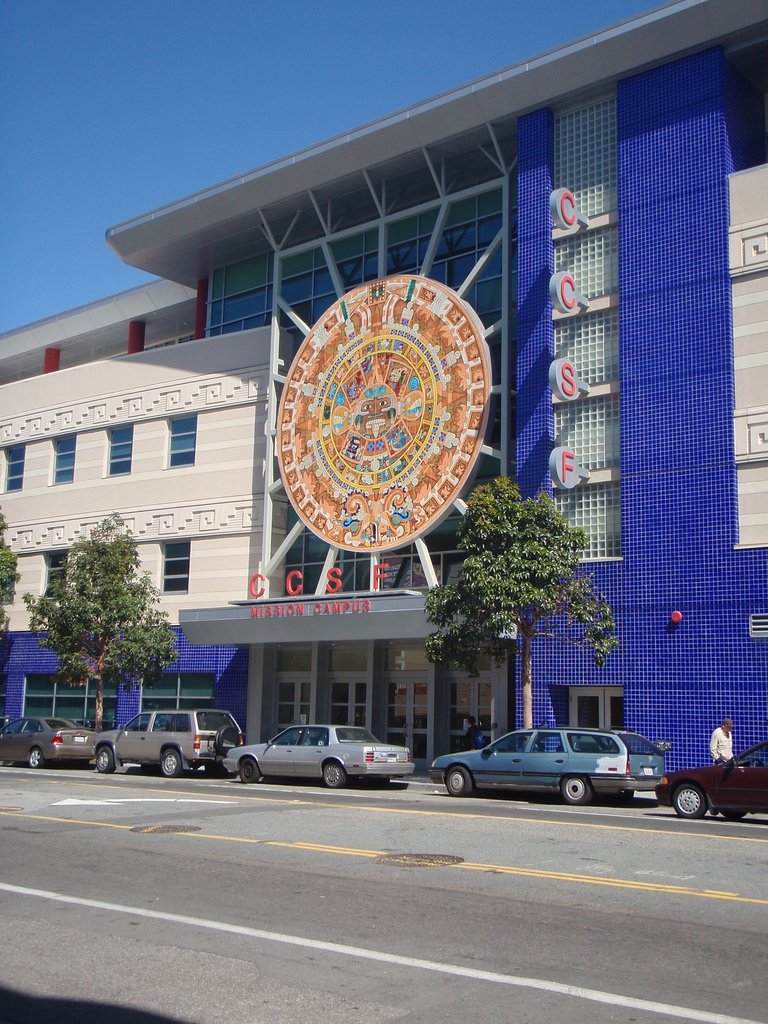
City College of San Francisco sits in the heart of one of America's most active cities, giving students access to internships and cultural opportunities. The Rams compete in 11 varsity sports with 253 total athletes, though the college offers no athletic scholarships. Campus life centers around the diverse urban environment rather than traditional dormitory experiences.
Does City College of San Francisco offer good financial aid options?
Only 17.1% of students receive federal financial aid at City College of San Francisco, largely because the low tuition makes many students ineligible for need-based assistance. Just 2.94% receive institutional grants averaging $6,353, and only 0.71% take federal loans. The college's extremely affordable tuition structure means most students can attend without accumulating significant debt.