About Clark University
The financial picture tells a compelling story for middle-class families. While sticker price hits $67,750, students actually pay an average net price of $27,711 after aid. Graduates earn a median of $62,381 ten years out, making the typical debt load of $26,759 quite manageable. Monthly loan payments average $284, reasonable given career outcomes. Students from families earning under $48,000 pay around $16,000 annually.
Clark maintains strong student outcomes with a 77% six-year graduation rate and 93% employment rate. The 9:1 student-faculty ratio means genuine mentorship, not just small classes. About 38% of students come from Massachusetts, creating a regional feel while drawing talent nationwide. The school competes in 17 Division III sports, keeping athletics in proper perspective for serious students.
Academics & Faculty
Source: College Scorecard / U.S. Department of Education
- Student-to-Faculty Ratio
- 9:1
- Full-Time Faculty
- 99.6%
- Graduation Rate (4-year)
- 76.7%
- Graduation Rate (6-year)
- 77.1%
- Retention Rate
- 87.9%
- Median Earnings (10 years)
- $62,381
- Carnegie Classification
- Doctoral University (R2)
Popular Programs by Earnings
| Program | Level | Median Earnings |
|---|---|---|
| Computer Science. | Bachelor | $74,576 |
| Business Administration, Management and Operations. | Master | $64,328 |
| Geography and Cartography. | Doctoral | $57,318 |
| Geography and Cartography. | Master | $52,733 |
| Natural Resources Conservation and Research. | Master | $48,432 |
| Biology, General. | Master | $46,087 |
| Education, General. | Master | $44,418 |
| Community Organization and Advocacy. | Master | $39,639 |
| Management Sciences and Quantitative Methods. | Bachelor | $37,568 |
| Public Administration. | Master | $37,208 |
Campus Life
With a 9:1 student-faculty ratio, you'll know your professors personally. Clark pioneered the idea that undergraduates should conduct real research, not just read about it. Students here dive into psychology labs, environmental studies fieldwork, and independent projects that often lead to conference presentations. The campus buzzes with intellectual energy, this is where Freud gave his only lecture in America, after all.
Weekends blend city exploration with campus traditions. Students head to Boston for concerts and internships, explore Worcester's growing food scene, or participate in the quirky traditions that define Clark culture. The small size means you'll find your people quickly among the 57% women and 43% men who call this academically rigorous community home.
- Setting
- City-Midsize
- Housing Capacity
- 1,773 beds
- Calendar System
- Semester
- Study Abroad
- Available
- Founded
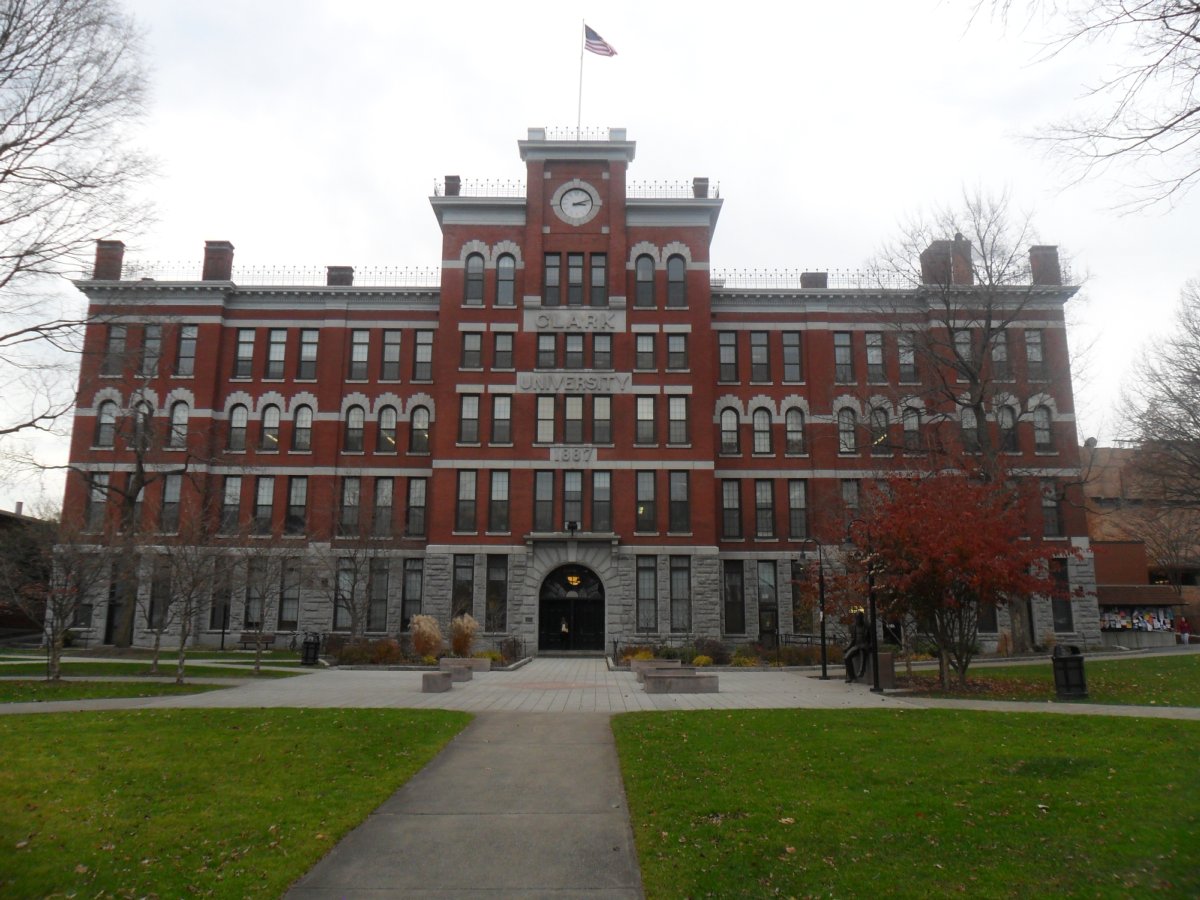
- 1887
Campus Safety (2023)
18 total reported incidents. Source: Clery Act / U.S. Department of Education
| Offense | On Campus | Residential | Noncampus | Public Property |
|---|---|---|---|---|
| Rape | 3 | 3 | 0 | 0 |
| Fondling | 2 | 2 | 0 | 0 |
| Burglary | 3 | 0 | 0 | 0 |
| Dating Violence | 1 | 1 | 0 | 0 |
| Aggravated Assault | 1 | 0 | 0 | 0 |
| Robbery | 0 | 0 | 0 | 1 |
| Stalking | 1 | 0 | 0 | 0 |
Climate & Weather
- January Avg
- 17°–32°F
- July Avg
- 61°–79°F
- Annual Precipitation
- 48.3"
- Annual Snowfall
- 72.9"
Student Demographics
- Men
- 42.7%
- Women
- 57.3%
- White
- 62.7%
- Black
- 5.9%
- Hispanic
- 11.7%
- Asian
- 6.9%
- In-State Students
- 38.5%
- Pell Grant Recipients
- 21.3%
Location
- Address
- Worcester, Massachusetts 01610-1477
After College
Source: College Scorecard / U.S. Department of Education
- Median Earnings (10 years)
- $62,381
- Median Earnings (5 years)
- $63,150
- Mean Earnings (6 years after entry)
- $38,300
- Loan Repayment Rate
- 79.7%
- Monthly Loan Payment
- $284/mo
- Median Debt at Graduation
- $26,759
Frequently Asked Questions
What is the acceptance rate at Clark University?
Clark University accepts 50.32% of applicants, making it moderately selective. Admitted students typically score between 1250-1430 on the SAT. The university values students who show genuine intellectual curiosity and research potential.
How much does Clark University cost after financial aid?
The average net price at Clark is $27,711, lower than the sticker price of $67,750. Students from families earning under $30,000 pay an average of just $16,629. Clark is known for generous need-based aid that makes this private education accessible.
What is the student-faculty ratio like at Clark University?
Clark maintains a 9:1 student-faculty ratio with just 2,336 total students. This small size allows undergraduates to work directly with professors on research projects. The university pioneered the concept of encouraging undergraduate research across all academic disciplines.
What do Clark University graduates earn after college?
Clark graduates earn a median of $62,381 ten years after graduation with typical student loan debt of $26,759. The employment rate reaches 93.4% for recent graduates. Psychology and research-focused programs prepare students well for graduate school and professional careers.
Where is Clark University located and what is campus life like?
Clark sits in Worcester, Massachusetts, a mid-sized city that offers internships and cultural opportunities. The campus houses 1,773 students in residence halls, creating a tight-knit community. Students compete in 17 NCAA Division III sports with 362 total athletes.
Is Clark University known for any particular academic strengths?
Clark built its reputation on psychology research and remains a leader in the field today. The university graduated rocket pioneer Robert Goddard and DNA researcher James Watson. Students across all majors can participate in faculty research projects, a practice Clark helped establish in American higher education.