About College of the Desert
Students pay an average net price of $11,812 annually, though in-state tuition runs just $1,326 before aid. Low-income families typically pay around $10,791 after financial aid, making this an affordable entry point into higher education. Graduates earn a median of $39,020 ten years after enrollment, which provides reasonable returns given the modest investment. Only 32% of students receive federal financial aid, suggesting many can afford the low sticker price without borrowing.
The student body reflects the broader Coachella Valley demographics, with 76% Hispanic enrollment and 98% of students coming from California. Women make up 57% of enrollment. The 29% six-year graduation rate is typical for community colleges, where many students transfer before completing degrees or attend part-time while working.
Academics & Faculty
Source: College Scorecard / U.S. Department of Education
- Student-to-Faculty Ratio
- 25:1
- Full-Time Faculty
- 24.6%
- Graduation Rate (6-year)
- 29.0%
- Median Earnings (10 years)
- $39,020
Popular Programs by Earnings
| Program | Level | Median Earnings |
|---|---|---|
| Registered Nursing, Nursing Administration, Nursing Research and Clinical Nursing. | Associate | $73,446 |
| Criminal Justice and Corrections. | Associate | $37,208 |
| Business Administration, Management and Operations. | Associate | $30,409 |
| Liberal Arts and Sciences, General Studies and Humanities. | Associate | $21,781 |
Campus Life
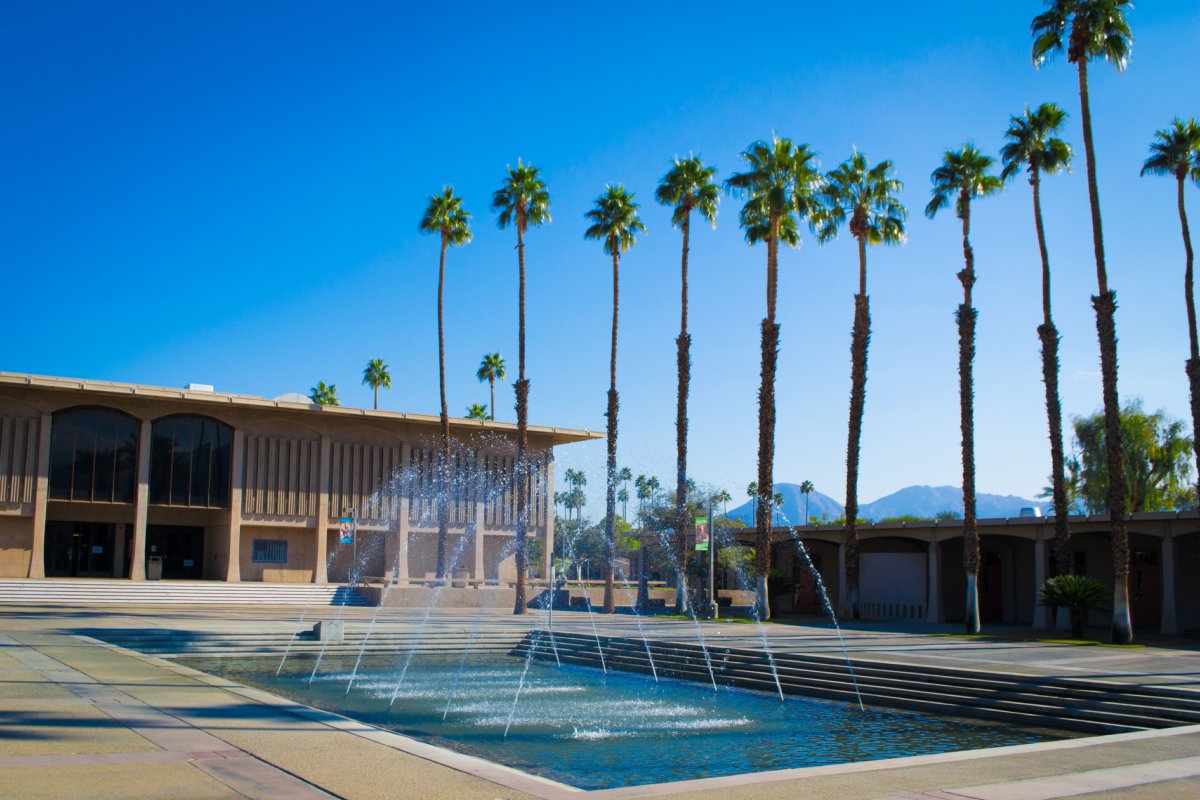
The heavily Hispanic student body (76.1%) reflects the region's demographics, and the 25:1 student-faculty ratio means larger class sizes typical of community colleges. Weekends often empty out as students return to jobs or family obligations. The Roadrunners field 15 varsity sports with 349 total athletes, though athletic scholarships aren't available. Palm Desert's resort atmosphere provides internship opportunities in hospitality and tourism, while the desert setting offers hiking and outdoor recreation. With strong transfer agreements to four-year universities, many students use College of the Desert as an affordable stepping stone, paying just $1,326 in-state tuition before moving on to complete bachelor's degrees.
- Setting
- City-Small
- Calendar System
- Semester
- Study Abroad
- Available
- Founded
- 1958
Campus Safety (2023)
4 total reported incidents. Source: Clery Act / U.S. Department of Education
| Offense | On Campus | Residential | Noncampus | Public Property |
|---|---|---|---|---|
| Aggravated Assault | 1 | 0 | 0 | 1 |
| Fondling | 1 | 0 | 0 | 1 |
Climate & Weather
- January Avg
- 47°–70°F
- July Avg
- 79°–108°F
- Annual Precipitation
- 4.6"
- Annual Snowfall
- 0.0"
Student Demographics
- Men
- 42.9%
- Women
- 57.1%
- White
- 13.9%
- Black
- 2.5%
- Hispanic
- 76.1%
- Asian
- 2.9%
- In-State Students
- 97.8%
- Pell Grant Recipients
- 32.4%
Location
- Address
- Palm Desert, California 92260
After College
Source: College Scorecard / U.S. Department of Education
- Median Earnings (10 years)
- $39,020
- Median Earnings (5 years)
- $42,194
- Mean Earnings (6 years after entry)
- $28,400
- Loan Repayment Rate
- 31.7%
Frequently Asked Questions
What are the admission requirements at College of the Desert?
College of the Desert maintains an open enrollment policy typical of California community colleges, meaning most students can enroll without competitive admission requirements. The school serves 8,900 students primarily from the local Coachella Valley area. As a community college, it focuses on providing accessible higher education opportunities for transfer preparation and career training.
How much does College of the Desert cost after financial aid?
Students at College of the Desert pay an average net price of $11,812 after aid, with in-state tuition starting at just $1,326. About 32% of students receive financial aid, keeping costs manageable for the predominantly local student body. The school serves as an affordable pathway to higher education in the desert region.
What academic programs is College of the Desert known for?
College of the Desert operates with a 25:1 student-faculty ratio and offers strong transfer programs to four-year universities. The school has built a reputation for career training programs that prepare students for the local job market. With 97% of students coming from in-state, it serves as the primary higher education access point for the Coachella Valley.
What are the employment outcomes for College of the Desert graduates?
College of the Desert graduates achieve an 88.9% employment rate, reflecting strong job placement in the region. The median earnings reach $39,020 ten years after enrollment, which is solid for a community college serving a largely Hispanic student population. However, the 29% six-year graduation rate indicates many students transfer or take longer to complete their programs.
Where is College of the Desert's campus located?
College of the Desert sits in Palm Desert, California, serving the desert communities of the Coachella Valley. The campus operates in a small city setting that provides easy access for the 76% Hispanic student population that makes up the majority of enrollment. Founded in 1958, it has become the educational center for this growing desert region.
Does College of the Desert offer athletic scholarships?
College of the Desert provides $0 in athletic scholarships despite fielding 15 varsity sports teams with 349 total athletes competing as the Roadrunners. The school competes as an independent rather than in a formal conference structure. This reflects the community college's focus on academics and transfer preparation over athletic recruitment.