

About Columbus State University
The financial picture makes sense for most Georgia families. In-state students pay an average net price of $11,889 after aid, while graduates earn a median of $44,544 within ten years of graduation. Students typically graduate with $26,000 in debt and monthly loan payments of $276. Nearly 92% of students come from Georgia, keeping costs manageable for families who want quality education close to home.
The student body reflects Georgia's diversity, with 42% white students and 38% Black students creating a genuinely integrated campus. The 73% retention rate shows students generally stick with their choice, though the 42% four-year graduation rate suggests many take longer to finish. Columbus State fields 15 Division II sports teams that compete in the Peach Belt Conference, giving student-athletes solid opportunities without the pressure of major college athletics.
Academics & Faculty
Source: College Scorecard / U.S. Department of Education
- Student-to-Faculty Ratio
- 18:1
- Full-Time Faculty
- 58.7%
- Graduation Rate (4-year)
- 42.6%
- Graduation Rate (6-year)
- 41.7%
- Retention Rate
- 72.7%
- Median Earnings (10 years)
- $44,544
- Carnegie Classification
- Master's University (Large)
Popular Programs by Earnings
| Program | Level | Median Earnings |
|---|---|---|
| Computer and Information Sciences, General. | Master | $95,537 |
| Criminal Justice and Corrections. | Master | $70,009 |
| Educational Administration and Supervision. | Doctoral | $63,005 |
| Business, Management, Marketing, and Related Support Services, Other. | Master | $63,005 |
| Educational Administration and Supervision. | Doctoral | $61,516 |
| Registered Nursing, Nursing Administration, Nursing Research and Clinical Nursing. | Bachelor | $56,169 |
| Computer and Information Sciences, General. | Bachelor | $54,852 |
| Criminal Justice and Corrections. | Certificate | $51,551 |
| Business Administration, Management and Operations. | Master | $51,106 |
| Teacher Education and Professional Development, Specific Subject Areas. | Master | $48,041 |
Campus Life
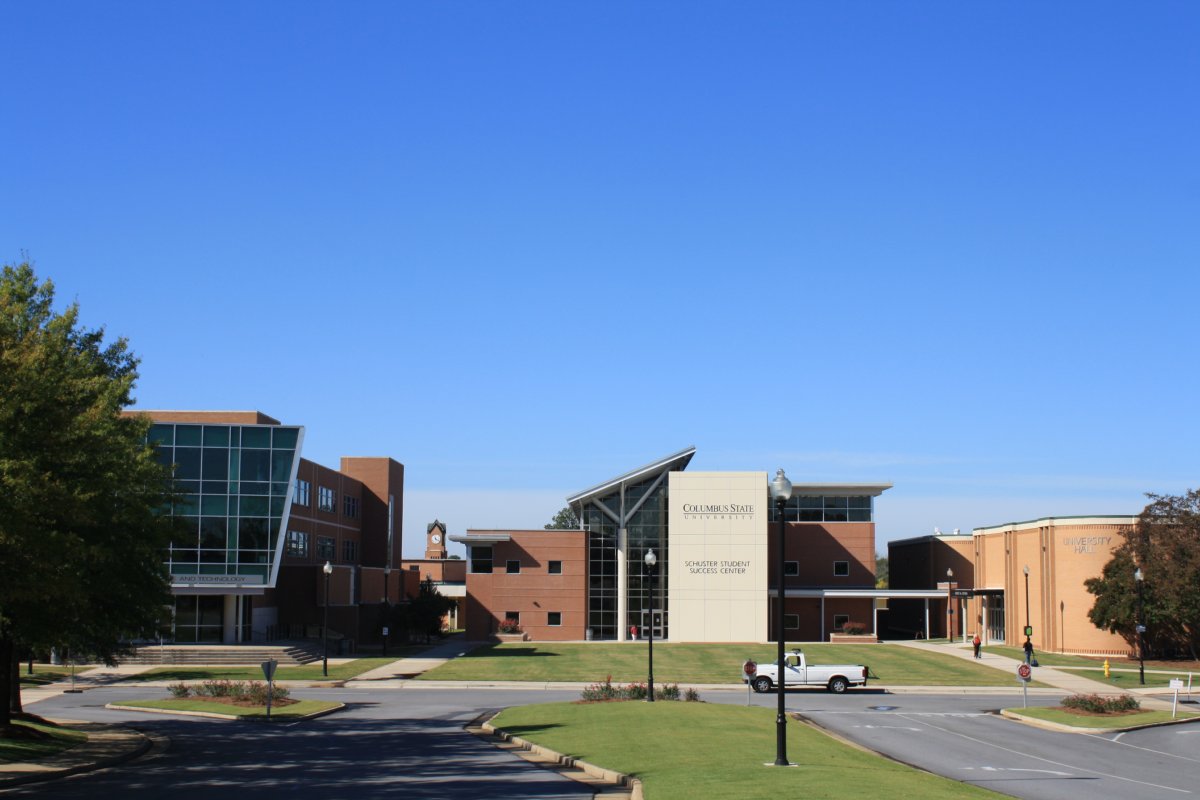
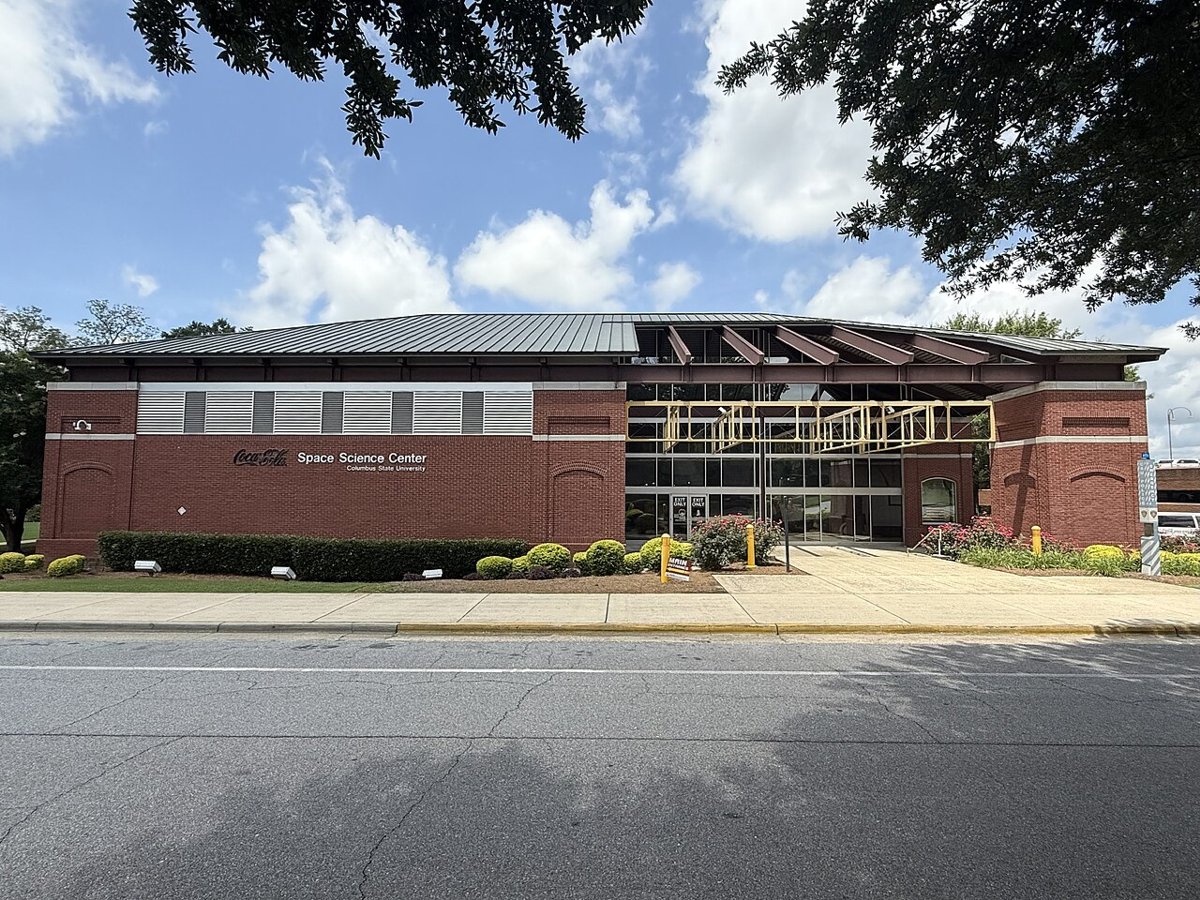
The 132-acre campus blends modern facilities with older buildings near the Chattahoochee River. Students often cross into Alabama for shopping and dining in nearby Phenix City. With 92% of students coming from Georgia, the atmosphere feels decidedly local and tight-knit. The 18:1 student-faculty ratio creates smaller class sizes than you'd find at larger state universities.
Weekend life centers around Division II athletics and the historic downtown Columbus area. The RiverWalk provides outdoor recreation along the river, while the city's arts district offers galleries and live music venues. Many students work part-time jobs since 44% receive Pell Grants and the median debt load reaches $26,000. The commuter culture means campus empties on weekends as students head home or to jobs.
- Setting
- City-Midsize
- Housing Capacity
- 1,392 beds
- Calendar System
- Semester
- Study Abroad
- Available
- Founded
- 1958
Campus Safety (2023)
48 total reported incidents. Source: Clery Act / U.S. Department of Education
| Offense | On Campus | Residential | Noncampus | Public Property |
|---|---|---|---|---|
| Dating Violence | 6 | 6 | 0 | 0 |
| Fondling | 5 | 3 | 0 | 0 |
| Aggravated Assault | 7 | 0 | 0 | 0 |
| Motor Vehicle Theft | 7 | 0 | 0 | 0 |
| Rape | 3 | 3 | 0 | 0 |
| Burglary | 3 | 0 | 0 | 0 |
| Arson | 1 | 1 | 0 | 0 |
| Stalking | 2 | 0 | 0 | 0 |
| Murder | 1 | 0 | 0 | 0 |
Climate & Weather
- January Avg
- 38°–58°F
- July Avg
- 73°–92°F
- Annual Precipitation
- 48.8"
- Annual Snowfall
- 0.5"
Student Demographics
- Men
- 41.7%
- Women
- 58.4%
- White
- 41.3%
- Black
- 38.0%
- Hispanic
- 9.4%
- Asian
- 2.6%
- In-State Students
- 91.8%
- Pell Grant Recipients
- 44.4%
Location
- Address
- Columbus, Georgia 31907-5645

After College
Source: College Scorecard / U.S. Department of Education
- Median Earnings (10 years)
- $44,544
- Median Earnings (5 years)
- $53,931
- Mean Earnings (6 years after entry)
- $31,100
- Loan Repayment Rate
- 37.6%
- Monthly Loan Payment
- $276/mo
- Median Debt at Graduation
- $26,000
Frequently Asked Questions
What is the acceptance rate at Columbus State University?
Columbus State accepts 87.80% of applicants with an average SAT score of 1015. The university maintains an open-access mission, making quality higher education accessible to Georgia residents and working adults seeking career advancement.
How much does Columbus State University cost after financial aid?
Students pay an average net price of $11,889 annually, with in-state tuition at just $5,751. Nearly half of students receive Pell Grants (44.40%), reflecting the university's commitment to serving first-generation and low-income students in the Chattahoochee Valley.
What is the student-faculty ratio at Columbus State University?
Columbus State maintains an 18:1 student-faculty ratio across its programs. The university has built a strong reputation for its nursing, education, and business programs, serving as a key pipeline for healthcare professionals and teachers in west Georgia.
What are the graduation rates at Columbus State University?
The university has a 41.70% six-year graduation rate and 72.73% retention rate. Many students attend part-time while working, as Columbus State has historically served non-traditional students balancing education with career and family responsibilities.
Where do Columbus State University students live on campus?
Campus housing accommodates 1,392 students out of the total 5,537 enrollment. Most students (91.78% are in-state residents) commute from the Columbus metropolitan area, giving the campus a strong connection to the local community.
Does Columbus State University have Division I athletics?
Columbus State competes in NCAA Division II as the Cougars with 15 varsity sports and 298 total athletes. The athletic program awards $1,507,910 in scholarships and competes in the Peach Belt Conference, building school spirit in this mid-sized Georgia city.
Similar Schools

Georgia College & State University
Milledgeville, Georgia

Valdosta State University
Valdosta, Georgia

Augusta University
Augusta, Georgia

Shippensburg University of Pennsylvania
Shippensburg, Pennsylvania

Frostburg State University
Frostburg, Maryland

Bridgewater State University
Bridgewater, Massachusetts