About Community College of Denver
Students pay an average net price of $9,431, making higher education affordable for working families. In-state tuition costs just $4,902 annually. Graduates earn a median of $39,095 ten years after enrollment, while carrying typical debt loads of only $12,495. The monthly loan payment averages $132, making the financial burden manageable for most careers. With 93.6% of graduates finding employment, the college delivers solid returns on investment for students seeking practical skills and career advancement.
Women comprise 63.27% of the student body, reflecting the college's strength in healthcare and social service programs. Hispanic students make up 37.55% of enrollment, demonstrating the institution's role in serving Denver's diverse communities. The 21:1 student-faculty ratio ensures personal attention despite the urban setting. While graduation rates of 15.80% reflect the part-time, working student population typical of community colleges, the high employment rate shows students achieve their career goals.
Academics & Faculty
Source: College Scorecard / U.S. Department of Education
- Student-to-Faculty Ratio
- 21:1
- Full-Time Faculty
- 31.4%
- Graduation Rate (4-year)
- 16.8%
- Graduation Rate (6-year)
- 15.8%
- Median Earnings (10 years)
- $39,095
Popular Programs by Earnings
| Program | Level | Median Earnings |
|---|---|---|
| Dental Support Services and Allied Professions. | Associate | $65,320 |
| Allied Health Diagnostic, Intervention, and Treatment Professions. | Associate | $44,021 |
| Allied Health Diagnostic, Intervention, and Treatment Professions. | Certificate | $36,848 |
| Veterinary/Animal Health Technologies/Technicians. | Associate | $28,816 |
| Practical Nursing, Vocational Nursing and Nursing Assistants. | Certificate | $27,488 |
| Liberal Arts and Sciences, General Studies and Humanities. | Associate | $26,850 |
| Teacher Education and Professional Development, Specific Levels and Methods. | Certificate | $24,035 |
Campus Life
With 98.70% of students coming from in-state, most commute from across the Denver metro area rather than living on campus. The 21:1 student-faculty ratio means larger classes typical of community colleges, but the urban setting offers endless weekend options. Students often work part-time jobs downtown or explore Denver's food scene, breweries, and outdoor recreation just minutes from campus. The CityHawks compete in athletics, though many students are focused on workforce training programs or transferring to four-year universities. The semester system keeps pace steady, while the city's job market helps explain the strong 93.6% employment rate after graduation.
- Setting
- City-Large
- Calendar System
- Semester
Campus Safety (2023)
104 total reported incidents. Source: Clery Act / U.S. Department of Education
| Offense | On Campus | Residential | Noncampus | Public Property |
|---|---|---|---|---|
| Motor Vehicle Theft | 30 | 0 | 0 | 3 |
| Stalking | 13 | 0 | 0 | 0 |
| Arson | 2 | 0 | 0 | 10 |
| Burglary | 11 | 0 | 0 | 0 |
| Dating Violence | 8 | 0 | 0 | 1 |
| Domestic Violence | 6 | 0 | 0 | 2 |
| Aggravated Assault | 5 | 0 | 0 | 1 |
| Rape | 6 | 0 | 0 | 0 |
| Fondling | 3 | 0 | 0 | 0 |
| Robbery | 2 | 0 | 0 | 1 |
Climate & Weather
- January Avg
- 21°–48°F
- July Avg
- 61°–91°F
- Annual Precipitation
- 15.9"
- Annual Snowfall
- 40.7"
Student Demographics
- Men
- 36.7%
- Women
- 63.3%
- White
- 34.7%
- Black
- 12.0%
- Hispanic
- 37.6%
- Asian
- 5.8%
- In-State Students
- 98.7%
- Pell Grant Recipients
- 31.0%
Location
- Address
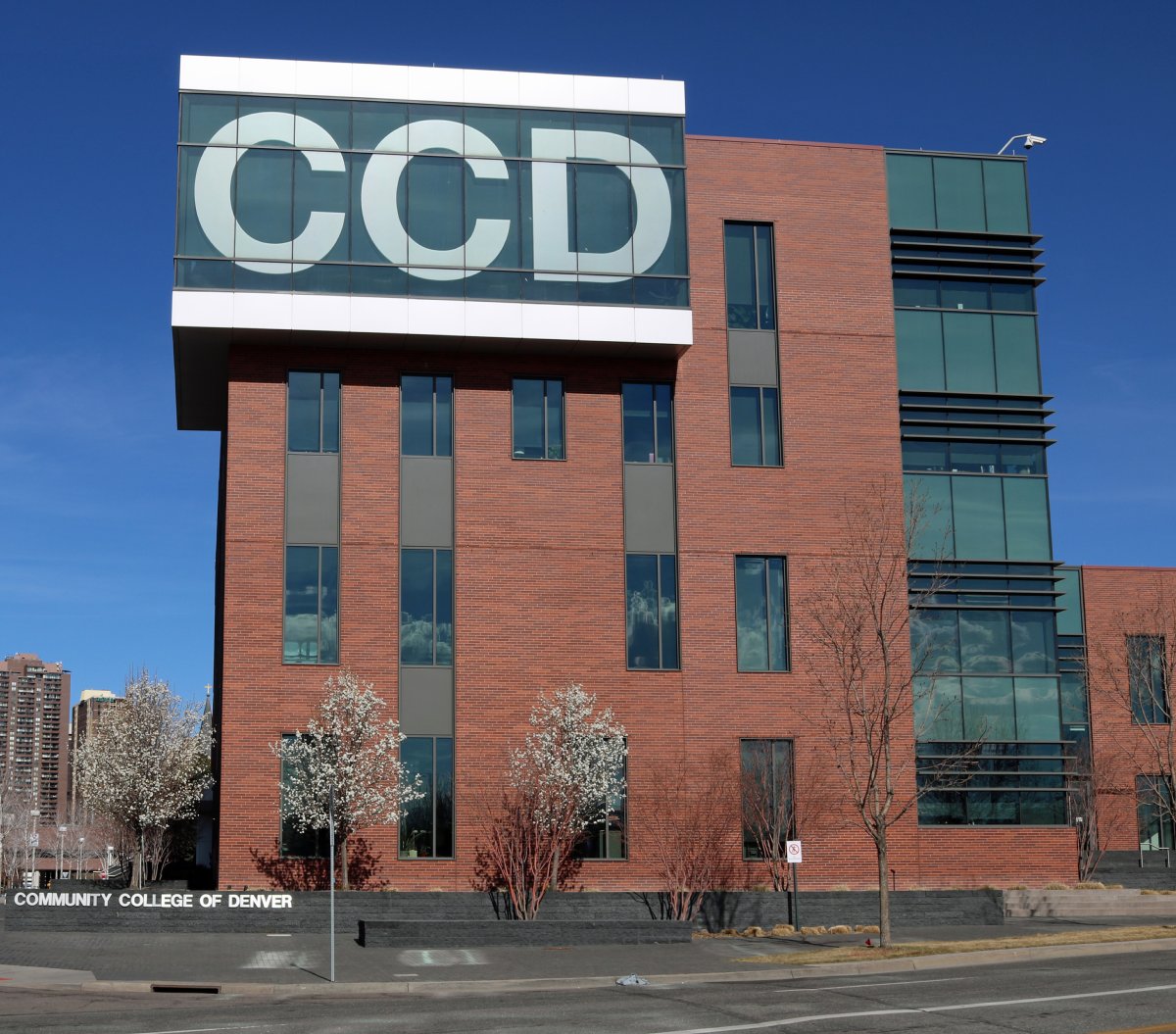
- Denver, Colorado 80204-2026
After College
Source: College Scorecard / U.S. Department of Education
- Median Earnings (10 years)
- $39,095
- Median Earnings (5 years)
- $47,106
- Mean Earnings (6 years after entry)
- $30,100
- Loan Repayment Rate
- 26.3%
- Monthly Loan Payment
- $132/mo
- Median Debt at Graduation
- $12,495
Frequently Asked Questions
What is the acceptance rate at Community College of Denver?
Community College of Denver has an open enrollment policy typical of community colleges, meaning they accept all students who meet basic requirements. The college serves as Denver's primary community college with 5,156 students enrolled. Nearly 99% of students are Colorado residents, reflecting its mission to serve the local community.
How much does Community College of Denver cost after financial aid?
Students pay an average net price of $9,431 after financial aid at Community College of Denver. In-state tuition runs $4,902 while out-of-state students pay $17,136. About 31% of students receive Pell Grants, and graduates typically leave with a median debt of just $12,495.
What are the academics like at Community College of Denver?
The student-faculty ratio is 21:1 at Community College of Denver, providing reasonable access to instructors. The college focuses heavily on workforce training programs and creating transfer pathways to four-year universities. Students can choose from semester-based programs designed to either prepare them for immediate employment or continuation of their education.
What are the graduation and employment outcomes at Community College of Denver?
Community College of Denver has a 16% four-year graduation rate and 16% six-year graduation rate, which reflects the nature of community college students who often attend part-time or take breaks. However, graduates achieve a strong 94% employment rate and earn a median salary of $39,095 ten years after enrollment. The college effectively prepares students for Denver's job market through its workforce training focus.
Where is Community College of Denver located and what is campus life like?
Community College of Denver operates in Colorado's largest city, serving a diverse student body that is 38% Hispanic, 35% White, and 12% Black. With 63% female enrollment, the college reflects the demographics of students seeking accessible higher education. The CityHawks compete in athletics while maintaining the college's urban, commuter-focused environment.
Does Community College of Denver offer good financial support for low-income students?
Students from families earning under $30,000 pay a net price of just $7,881 at Community College of Denver. Only 17% of students take federal loans, and those who do have manageable monthly payments of $132. The college's affordable structure makes it particularly accessible to working-class Denver residents seeking career advancement or university transfer preparation.