About Concord University
Students pay an average net price of $9,983 after financial aid, making this one of West Virginia's more affordable options. Nearly 47% receive Pell Grants, reflecting the school's commitment to first-generation college students. Graduates earn a median of $42,703 ten years after graduation with typical debt loads of $18,900. The monthly loan payment averages $200, manageable given the employment rate of 94.5%. For families earning under $30,000, the net price drops to just $8,292.
The Mountain Lions compete in NCAA Division II with 464 student-athletes across 12 sports. Athletic scholarships total nearly $2 million annually. However, the 49% retention rate suggests many students struggle to stay enrolled. The 15:1 student-faculty ratio provides personal attention, but only 42% graduate within six years. Students considering Concord should be prepared for a close-knit environment that requires self-motivation to succeed.
Academics & Faculty
Source: College Scorecard / U.S. Department of Education
- Student-to-Faculty Ratio
- 15:1
- Full-Time Faculty
- 80.9%
- Graduation Rate (4-year)
- 41.2%
- Graduation Rate (6-year)
- 42.3%
- Retention Rate
- 49.0%
- Median Earnings (10 years)
- $42,703
- Carnegie Classification
- Master's University (Medium)
Popular Programs by Earnings
| Program | Level | Median Earnings |
|---|---|---|
| Education, General. | Master | $41,286 |
| Social Work. | Master | $40,827 |
| Public Health. | Master | $36,848 |
| Teacher Education and Professional Development, Specific Levels and Methods. | Bachelor | $33,883 |
| Design and Applied Arts. | Bachelor | $27,397 |
| Business Administration, Management and Operations. | Bachelor | $27,222 |
| Specialized Sales, Merchandising and Marketing Operations. | Bachelor | $27,126 |
| Liberal Arts and Sciences, General Studies and Humanities. | Bachelor | $25,856 |
| Psychology, General. | Bachelor | $25,194 |
| History. | Bachelor | $24,615 |
Campus Life
Weekends revolve around Mountain Lions athletics, with 464 student-athletes competing across 12 NCAA Division II sports in the Mountain East Conference. The campus becomes a gathering spot for games, especially during basketball and football seasons. Students often head to nearby Bluestone Lake for outdoor activities or make the drive to Beckley for shopping and dining options. With 58.9% of students being women and 79.63% from West Virginia, the social scene feels familial rather than competitive. Greek life isn't dominant here, so students build friendships through residence halls, academic programs, and campus organizations.
- Setting
- Rural-Fringe
- Housing Capacity
- 1,012 beds
- Calendar System
- Semester
- Founded
- 1872
Campus Safety (2023)
No reported Clery Act crimes in 2023.
Climate & Weather
- January Avg
- 20°–40°F
- July Avg
- 58°–80°F
- Annual Precipitation
- 38.0"
- Annual Snowfall
- -1,526.5"
Student Demographics
- Men
- 41.1%
- Women
- 58.9%
- White
- 80.1%
- Black
- 8.0%
- Hispanic
- 0.7%
- Asian
- 0.7%
- In-State Students
- 79.6%
- Pell Grant Recipients
- 46.8%
Location
- Address
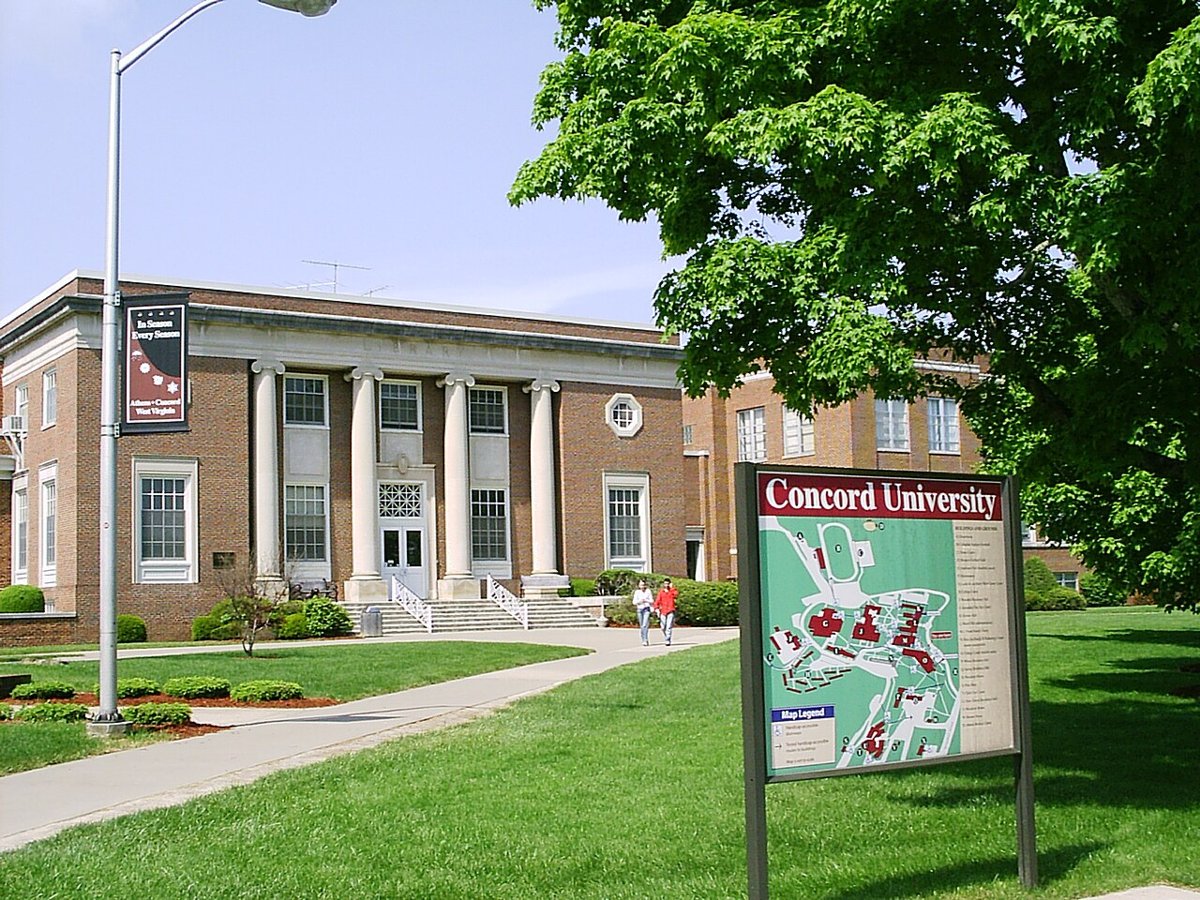
- Athens, West Virginia 24712
After College
Source: College Scorecard / U.S. Department of Education
- Median Earnings (10 years)
- $42,703
- Median Earnings (5 years)
- $45,066
- Mean Earnings (6 years after entry)
- $28,900
- Loan Repayment Rate
- 47.9%
- Monthly Loan Payment
- $200/mo
- Median Debt at Graduation
- $18,900
Frequently Asked Questions
What is the acceptance rate at Concord University?
Concord University accepts 91.39% of applicants, making it highly accessible to most students. The average SAT score is 1013, reflecting the school's commitment to serving a broad range of academic backgrounds in rural West Virginia.
How much does Concord University cost after financial aid?
The average net price at Concord University is $9,983, making it quite affordable for a four-year degree. Nearly 47% of students receive Pell Grants, and the median debt upon graduation is a manageable $18,900.
What is the student-faculty ratio at Concord University?
Concord University maintains a 15:1 student-faculty ratio with just 1,394 total students. This small size allows for personalized attention in the school's well-regarded education and business programs.
What are the graduation rates at Concord University?
Concord University has a 42.30% six-year graduation rate and graduates earn a median salary of $42,703 ten years after graduation. The 94.5% employment rate shows strong job placement despite the modest graduation numbers.
Where is Concord University located and what is campus life like?
Concord University sits in Athens, West Virginia, in a rural-fringe setting that houses 1,012 students on campus. The Mountain Lions compete in NCAA Division II with 464 total athletes across 12 varsity sports, creating a tight-knit athletic community.
Does Concord University have strong retention rates?
Concord University has a 49.04% retention rate, meaning about half of first-year students return for their sophomore year. This relatively low retention reflects the challenges many rural public universities face in keeping students engaged through graduation.