
About Cornell University
Students from families earning under $30,000 pay just $4,079 annually after aid, while those from wealthier families face the full $66,014 sticker price. Cornell graduates earn a median of $104,043 ten years out, making the typical debt load of $14,000 manageable with monthly payments of $148. The 95% graduation rate suggests most students successfully navigate the academic rigor to reach these strong earning outcomes.
Cornell's Big Red compete in 31 Division I sports as part of the Ivy League, giving 1,127 student-athletes a chance to balance top academics with competition. The 9:1 student-faculty ratio ensures personal attention despite the university's research intensity. Nearly 98% of students return after freshman year, indicating that those who can handle Cornell's demands typically stay and thrive.
Academics & Faculty
Source: College Scorecard / U.S. Department of Education
- Student-to-Faculty Ratio
- 9:1
- Full-Time Faculty
- 92.3%
- Graduation Rate (4-year)
- 95.2%
- Graduation Rate (6-year)
- 95.1%
- Retention Rate
- 97.8%
- Median Earnings (10 years)
- $104,043
- Carnegie Classification
- Doctoral University (R1)
Popular Programs by Earnings
| Program | Level | Median Earnings |
|---|---|---|
| Law. | Doctoral | $172,867 |
| Business Administration, Management and Operations. | Master | $145,332 |
| Computer Science. | Master | $127,397 |
| Computer Science. | Bachelor | $122,485 |
| Allied Health Diagnostic, Intervention, and Treatment Professions. | Master | $111,926 |
| Operations Research. | Master | $109,763 |
| Real Estate. | Master | $108,649 |
| Human Resources Management and Services. | Master | $101,072 |
| Aerospace, Aeronautical and Astronautical Engineering. | Master | $99,517 |
| Electrical, Electronics and Communications Engineering. | Master | $97,071 |
Campus Life
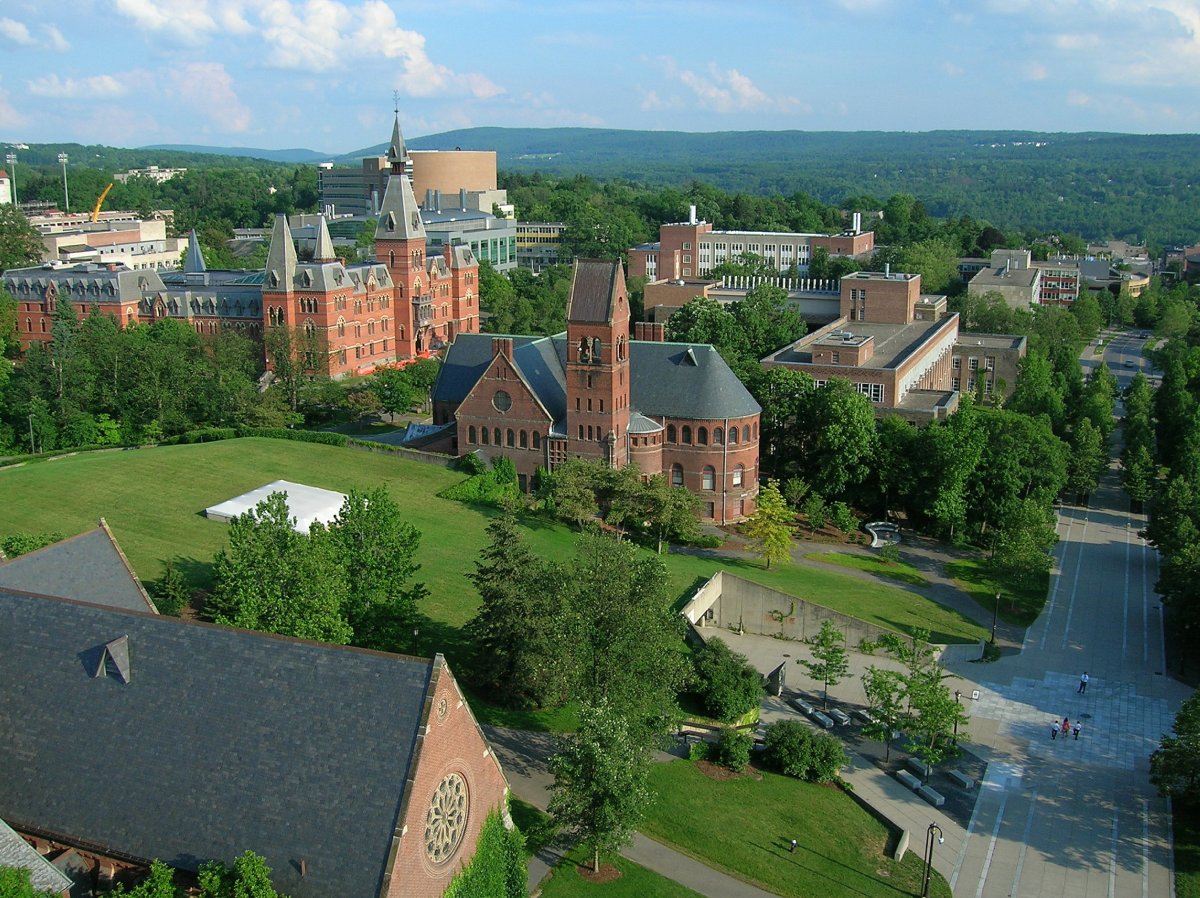
The 9:1 student-faculty ratio means smaller classes despite being a major research university. Students often gather at Collegetown's cafes and bars just off campus. Cornell's gorges and waterfalls create stunning scenery, though they also contribute to the campus's reputation for academic intensity. The university's seven undergraduate colleges create distinct communities within the larger institution. Weekend activities range from hiking the gorge trails to attending Big Red hockey games. The semester system allows for winter break escape from Ithaca's harsh climate. With 31 varsity sports and over 1,000 student organizations, there's competition for everything from club spots to research positions.
- Setting
- City-Small
- Housing Capacity
- 8,747 beds
- Calendar System
- Semester
- Study Abroad
- Available
- Founded
- 1865
Campus Safety (2023)
298 total reported incidents. Source: Clery Act / U.S. Department of Education
| Offense | On Campus | Residential | Noncampus | Public Property |
|---|---|---|---|---|
| Dating Violence | 35 | 35 | 3 | 1 |
| Stalking | 41 | 20 | 3 | 0 |
| Rape | 28 | 25 | 0 | 0 |
| Arson | 16 | 14 | 0 | 0 |
| Fondling | 22 | 6 | 1 | 0 |
| Burglary | 16 | 8 | 0 | 0 |
| Domestic Violence | 8 | 8 | 2 | 0 |
| Aggravated Assault | 2 | 0 | 1 | 0 |
| Motor Vehicle Theft | 1 | 0 | 1 | 1 |
Climate & Weather
- January Avg
- 15°–31°F
- July Avg
- 57°–79°F
- Annual Precipitation
- 37.3"
- Annual Snowfall
- 64.4"
Student Demographics
- Men
- 45.5%
- Women
- 54.5%
- White
- 31.4%
- Black
- 7.5%
- Hispanic
- 14.6%
- Asian
- 25.1%
- In-State Students
- 34.4%
- Pell Grant Recipients
- 18.2%
Location
- Address
- Ithaca, New York 14853
After College
Source: College Scorecard / U.S. Department of Education
- Median Earnings (10 years)
- $104,043
- Median Earnings (5 years)
- $104,057
- Mean Earnings (6 years after entry)
- $76,300
- Loan Repayment Rate
- 87.5%
- Monthly Loan Payment
- $148/mo
- Median Debt at Graduation
- $14,000
Frequently Asked Questions
What is the acceptance rate at Cornell University?
Cornell accepts just 7.47% of applicants, making it one of the most selective universities in the country. Admitted students typically score between 1470-1570 on the SAT with an average of 1520.
How much does Cornell University cost after financial aid?
Cornell costs $85,922 for total attendance, but the average net price drops to $32,337 after aid. Students from families earning under $30,000 pay only $4,079 on average, while those from higher-income families pay more.
What is Cornell University known for academically?
Cornell operates multiple specialized colleges including agriculture, engineering, and veterinary medicine within one university. The 9:1 student-faculty ratio ensures close academic attention across these diverse programs.
What are the career outcomes for Cornell University graduates?
Cornell graduates earn a median salary of $104,043 ten years after graduation with a strong 93.3% employment rate. The university maintains an impressive 95.1% six-year graduation rate, reflecting its academic rigor and student success.
Where is Cornell University located and what is campus life like?
Cornell sits in Ithaca, New York, a small college city that centers around the university. With 8,747 students living on campus out of 15,935 total enrollment, the residential experience is central to student life.
Does Cornell University compete in Division I athletics?
Cornell fields 31 varsity sports teams competing in the Ivy League conference as the Big Red. With 1,127 total athletes, sports play a significant role on campus despite the league's no athletic scholarship policy.
Similar Schools

Columbia University in the City of New York
New York, New York

Northwestern University
Evanston, Illinois

Northeastern University
Boston, Massachusetts
University of Pennsylvania
Philadelphia, Pennsylvania

University of Southern California
Los Angeles, California

University of Notre Dame
Notre Dame, Indiana