
About Franklin University
Students pay an average net price of $22,605 after financial aid, with tuition set at $9,577 regardless of residency status. Graduates earn a median of $51,892 ten years after starting, while typical debt loads reach $20,836 with monthly payments around $221. The employment rate hits 94.5%, showing strong job market outcomes. However, only 33% of students receive federal aid, suggesting many are working professionals who don't qualify for need-based assistance.
The academic environment centers on practical skills rather than traditional college experiences. Student-faculty ratios of 16:1 provide reasonable access to instructors. The 30% six-year graduation rate reflects the challenges facing adult learners who often balance work and family responsibilities. Most students come from Ohio, with 91% residing in-state, creating a locally-focused community of career-minded learners.
Academics & Faculty
Source: College Scorecard / U.S. Department of Education
- Student-to-Faculty Ratio
- 16:1
- Full-Time Faculty
- 6.3%
- Graduation Rate (4-year)
- 37.4%
- Graduation Rate (6-year)
- 30.3%
- Retention Rate
- 47.4%
- Median Earnings (10 years)
- $51,892
- Carnegie Classification
- Master's University (Large)
Popular Programs by Earnings
| Program | Level | Median Earnings |
|---|---|---|
| Computer Science. | Master | $71,351 |
| Homeland Security, Law Enforcement, Firefighting and Related Protective Services, Other. | Bachelor | $71,015 |
| Business Administration, Management and Operations. | Master | $61,580 |
| Computer Science. | Bachelor | $61,516 |
| Health and Medical Administrative Services. | Master | $59,124 |
| Economics. | Bachelor | $58,673 |
| Accounting and Related Services. | Master | $58,402 |
| Computer and Information Sciences, General. | Bachelor | $54,664 |
| Curriculum and Instruction. | Master | $53,984 |
| Marketing. | Master | $53,358 |
Campus Life
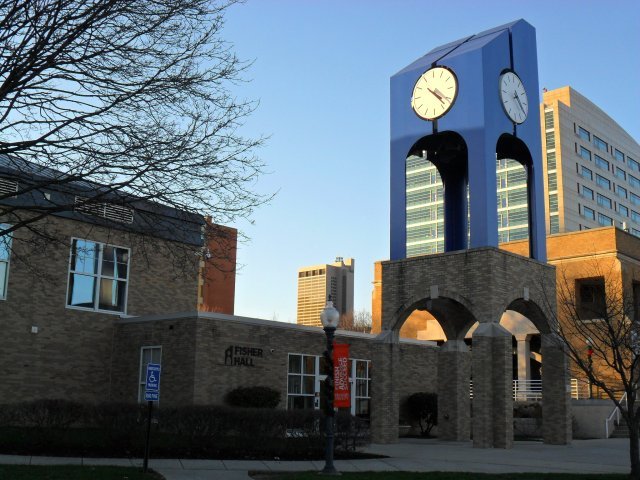
Campus life centers around practicality rather than traditional college activities. With 90.7% of students from Ohio, many commute from across the Columbus metro area. The downtown location means students grab coffee between classes at nearby cafes or study in the university's modern facilities. Winter temperatures regularly drop below freezing, so a heavy coat is essential from December through February.
The school caters to busy schedules with flexible class times and online options. Students often form study groups in the evenings and connect through professional networking events. Weekend activities typically revolve around completing coursework or attending career-development workshops rather than traditional campus social events. The university's proximity to state government and Fortune 500 companies creates internship opportunities within walking distance.
- Setting
- City-Large
- Calendar System
- Trimester
- Study Abroad
- Available
- Founded
- 1902
Campus Safety (2023)
1 total reported incident. Source: Clery Act / U.S. Department of Education
| Offense | On Campus | Residential | Noncampus | Public Property |
|---|---|---|---|---|
| Motor Vehicle Theft | 0 | 0 | 0 | 1 |
Climate & Weather
- January Avg
- 20°–36°F
- July Avg
- 64°–85°F
- Annual Precipitation
- 44.7"
- Annual Snowfall
- 28.2"
Student Demographics
- Men
- 40.1%
- Women
- 59.9%
- White
- 55.4%
- Black
- 18.8%
- Hispanic
- 7.9%
- Asian
- 2.5%
- In-State Students
- 90.7%
- Pell Grant Recipients
- 33.4%
Location
- Address
- Columbus, Ohio 43215-5399
After College
Source: College Scorecard / U.S. Department of Education
- Median Earnings (10 years)
- $51,892
- Median Earnings (5 years)
- $63,041
- Mean Earnings (6 years after entry)
- $42,600
- Loan Repayment Rate
- 40.0%
- Monthly Loan Payment
- $221/mo
- Median Debt at Graduation
- $20,836
Frequently Asked Questions
What is the acceptance rate at Franklin University?
Franklin University maintains an open admission policy for most programs, reflecting its mission to serve working adults and non-traditional students. The school enrolls 5,111 students with a 47% retention rate, indicating that while entry is accessible, academic persistence requires commitment.
How much does Franklin University cost after financial aid?
Students pay an average net price of $22,605 annually, with the same $9,577 tuition rate for both in-state and out-of-state students. Only 33% of students receive financial aid, and graduates typically carry $20,836 in debt with monthly loan payments of $221.
What is the student-faculty ratio at Franklin University?
Franklin University maintains a 16:1 student-faculty ratio across its career-focused programs. The school operates on a trimester calendar system, allowing working professionals to complete degrees faster through accelerated scheduling designed for adult learners.
What are the graduation rates at Franklin University?
Franklin University has a 30% six-year graduation rate and 37% four-year graduation rate, reflecting the challenges many working adult students face balancing education with career responsibilities. Despite lower completion rates, 94.5% of graduates find employment, and median earnings reach $51,892 within 10 years.
Where is Franklin University located and what is campus life like?
Franklin University sits in Columbus, Ohio, serving primarily local students with 91% coming from in-state. The urban campus caters to a diverse student body that is 60% women and includes significant representation from Black students at 19% and Hispanic students at 8%.
Does Franklin University specialize in programs for working adults?
Franklin University has built its reputation since 1902 around serving adult learners and working professionals with flexible scheduling options. The school's trimester system and career-focused curriculum help explain why graduates earn a solid $54,244 median salary just one year after graduation.