About Monroe College
Students pay an average net price of $10,376 after financial aid, making Monroe one of the more affordable private options in New York City. Graduates earn a median of $41,236 ten years after starting college, though they typically carry $18,818 in debt with monthly payments around $200. The college's 91% employment rate shows strong job placement, but the relatively low loan repayment rate of 31% suggests some graduates struggle financially after leaving.
Monroe fields 15 varsity sports teams in NAIA competition with 519 total athletes. The student body is predominantly Black (42%) and Hispanic (39%), reflecting the diverse Bronx community. About 58% of students receive Pell Grants, indicating the college serves many first-generation and lower-income families seeking career advancement through practical education.
Academics & Faculty
Source: College Scorecard / U.S. Department of Education
- Student-to-Faculty Ratio
- 18:1
- Full-Time Faculty
- 36.6%
- Graduation Rate (4-year)
- 56.9%
- Graduation Rate (6-year)
- 57.5%
- Retention Rate
- 70.1%
- Median Earnings (10 years)
- $41,236
- Carnegie Classification
- Master's University (Large)
Popular Programs by Earnings
| Program | Level | Median Earnings |
|---|---|---|
| Criminal Justice and Corrections. | Master | $52,941 |
| Business Administration, Management and Operations. | Master | $52,357 |
| Accounting and Related Services. | Bachelor | $37,291 |
| Business Administration, Management and Operations. | Bachelor | $37,208 |
| Computer and Information Sciences, General. | Bachelor | $34,908 |
| Public Health. | Bachelor | $34,388 |
| Hospitality Administration/Management. | Associate | $33,993 |
| Hospitality Administration/Management. | Bachelor | $33,352 |
| Criminal Justice and Corrections. | Bachelor | $31,423 |
| Teacher Education and Professional Development, Specific Levels and Methods. | Bachelor | $31,314 |
Campus Life
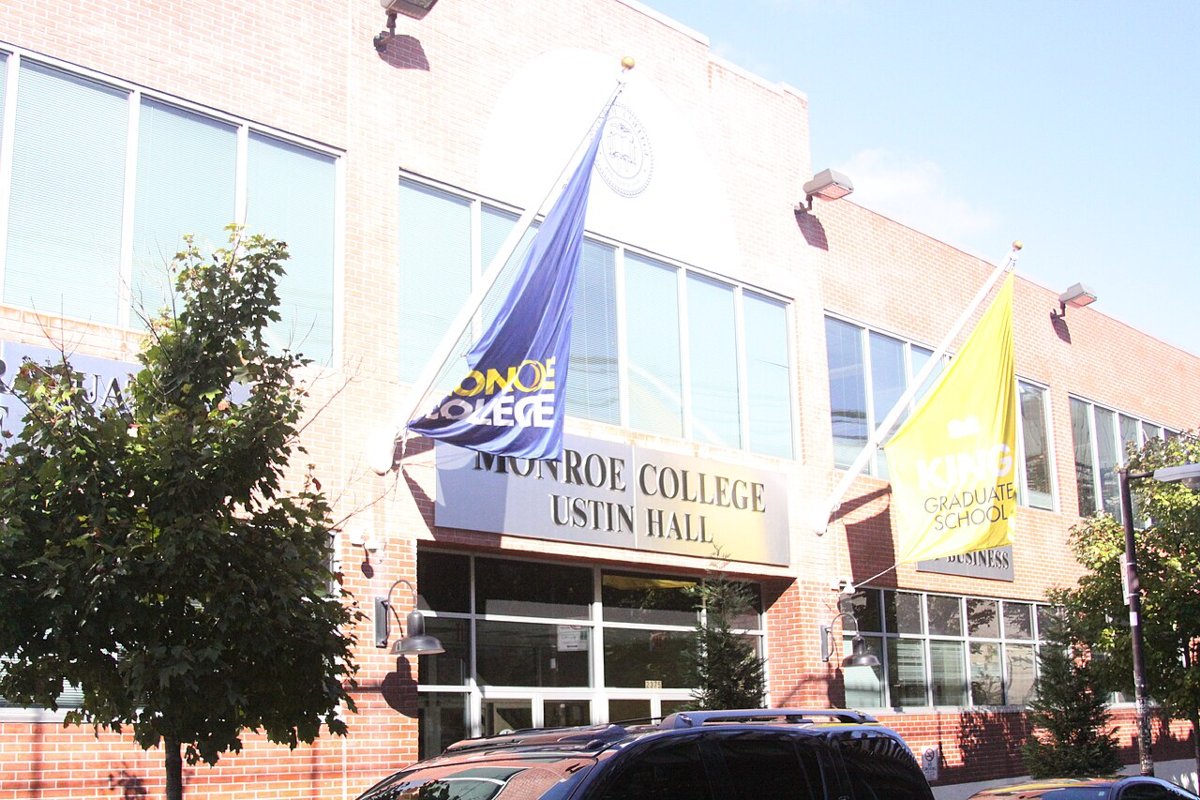
With 67% of students being women and strong representation from Black and Hispanic communities, the campus reflects the diversity of its surrounding neighborhoods. The 519 student-athletes competing in 15 NAIA sports create visible school spirit, especially during basketball season. Most students balance classes with part-time jobs, preparing for the 90.6% employment rate that graduates achieve. Weekends often involve exploring the city rather than traditional campus activities, since many students live off-campus with family. The semester calendar keeps pace quick, matching the career-focused atmosphere where students prioritize practical skills over typical college traditions.
- Setting
- City-Large
- Housing Capacity
- 900 beds
- Calendar System
- Semester
- Study Abroad
- Available
Campus Safety (2023)
2 total reported incidents. Source: Clery Act / U.S. Department of Education
| Offense | On Campus | Residential | Noncampus | Public Property |
|---|---|---|---|---|
| Dating Violence | 1 | 1 | 0 | 0 |
Climate & Weather
- January Avg
- 27°–39°F
- July Avg
- 70°–86°F
- Annual Precipitation
- 49.9"
- Annual Snowfall
- 29.8"
Student Demographics
- Men
- 32.6%
- Women
- 67.4%
- White
- 2.6%
- Black
- 42.1%
- Hispanic
- 39.2%
- Asian
- 1.7%
- In-State Students
- 84.8%
- Pell Grant Recipients
- 57.7%
Location
- Address
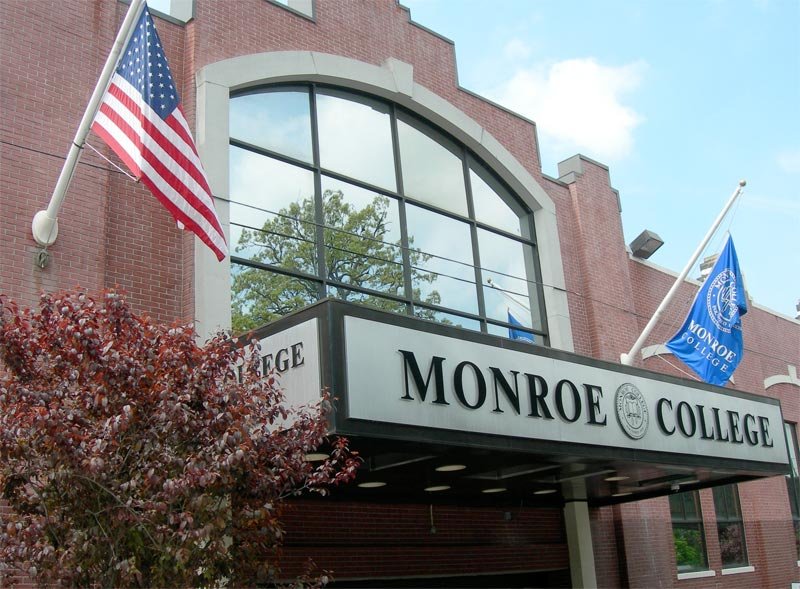
- Bronx, New York 10468
After College
Source: College Scorecard / U.S. Department of Education
- Median Earnings (10 years)
- $41,236
- Median Earnings (5 years)
- $46,160
- Mean Earnings (6 years after entry)
- $29,100
- Loan Repayment Rate
- 31.5%
- Monthly Loan Payment
- $200/mo
- Median Debt at Graduation
- $18,818
Frequently Asked Questions
What is the acceptance rate at Monroe College?
Monroe College accepts 59.84% of applicants, making it moderately selective for a career-focused institution. The college prioritizes students who demonstrate commitment to practical, job-oriented education in business, hospitality, and health sciences.
How much does Monroe College cost after financial aid?
Students pay an average net price of $10,376 after financial aid, lower than the $17,922 sticker price. About 57.66% of students receive Pell Grants, reflecting the college's mission to serve working-class families in the Bronx.
What is the student-faculty ratio at Monroe College?
Monroe College maintains an 18:1 student-faculty ratio, allowing for hands-on instruction in career-focused programs. The college emphasizes practical skills training in business, hospitality management, and health sciences rather than traditional liberal arts education.
What are the job prospects for Monroe College graduates?
Graduates earn a median salary of $41,236 ten years after enrollment, with a strong 90.6% employment rate. The college's career-focused approach and industry partnerships help students transition directly into the workforce, particularly in New York's business and hospitality sectors.
Where do Monroe College students live?
The college houses 900 students on campus with room and board costing $11,500 annually. Most of the 5,670 students commute from the surrounding Bronx community, with 84.78% coming from within New York State.
Does Monroe College offer athletic scholarships?
Monroe College awards $3,265,435 in athletic scholarships across 15 NAIA sports programs with 519 total athletes. The college competes at the NAIA level, providing opportunities for student-athletes while maintaining focus on career preparation and job placement.