About New Saint Andrews College
The financial picture here is unusual. Tuition runs $15,700 regardless of residency status, but the college reports zero students receiving federal financial aid or Pell Grants. Only 20% of students receive institutional grants averaging $3,947. No students take out federal loans, suggesting families either pay out of pocket or use alternative financing. This cash-heavy model keeps debt low but limits access for students from lower-income backgrounds.
The student body skews 55% female and draws primarily from out-of-state, with only 30% of students from Idaho. The 15:1 student-faculty ratio enables close mentoring relationships. About 76% of students graduate within four years, though the overall six-year rate drops to 70%. The 88% retention rate suggests most students who enroll find the classical Christian approach fits their expectations.
Academics & Faculty
Source: College Scorecard / U.S. Department of Education
- Student-to-Faculty Ratio
- 15:1
- Full-Time Faculty
- 89.3%
- Graduation Rate (4-year)
- 76.1%
- Graduation Rate (6-year)
- 69.7%
- Retention Rate
- 87.7%
- Carnegie Classification
- Liberal Arts College
Campus Life
Most students commute or live in nearby rentals since the college doesn't operate traditional dormitories. The 15:1 student-faculty ratio means professors know your name and academic progress personally. Weekend activities center around the tight-knit Reformed Christian community, with students gathering for study groups, church events, and outdoor activities in the nearby Palouse hills. The classical curriculum emphasizes great books discussions and Latin study. With an 88% retention rate, most students who start here stay through graduation. The academic calendar follows a traditional semester system, allowing time for internships and study abroad programs between terms.
- Setting
- Town-Distant
- Calendar System
- Semester
- Founded
- 1994
Climate & Weather
- January Avg
- 25°–37°F
- July Avg
- 48°–83°F
- Annual Precipitation
- 27.1"
- Annual Snowfall
- 49.2"
Student Demographics
- Men
- 44.7%
- Women
- 55.3%
- White
- 74.4%
- Black
- 0.4%
- Hispanic
- 5.1%
- Asian
- 1.1%
- In-State Students
- 30.0%
- Pell Grant Recipients
- 0.0%
Location
- Address
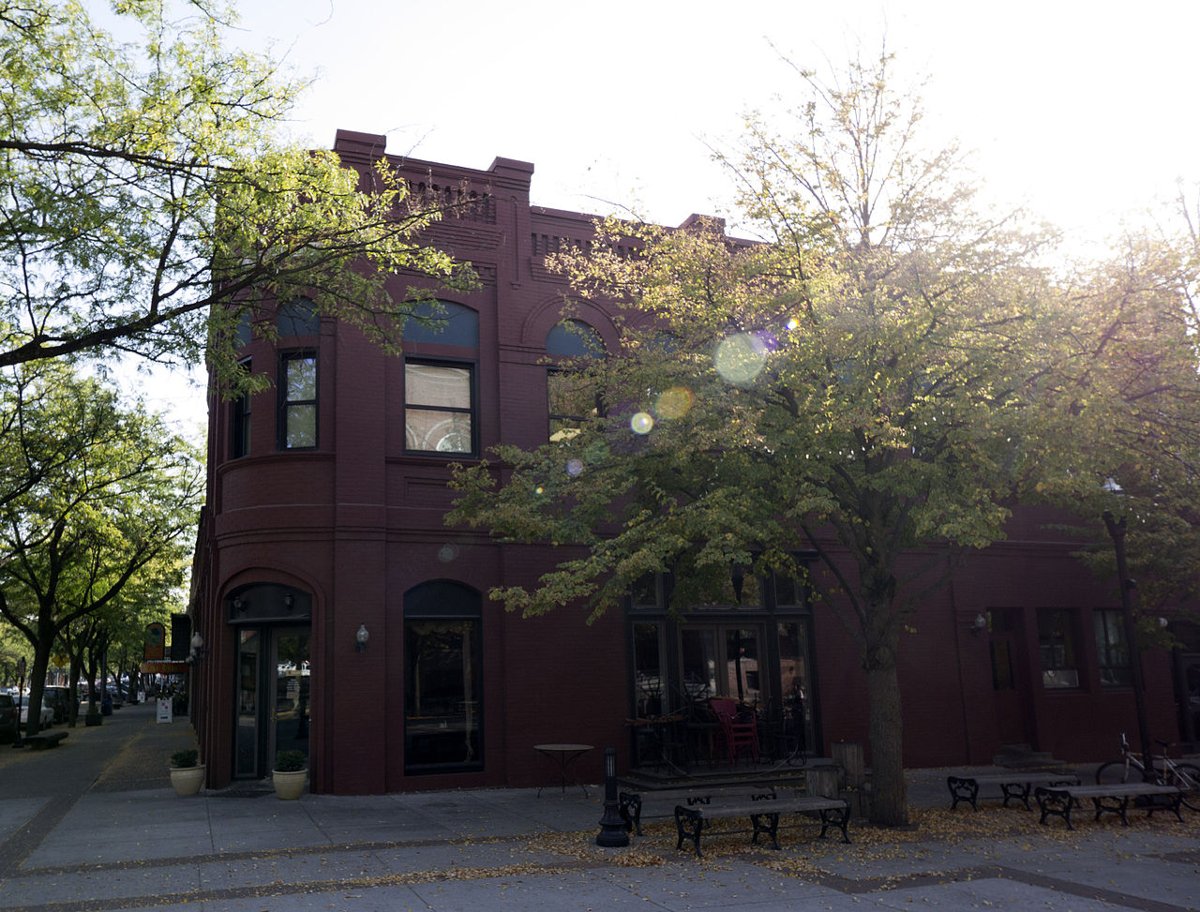
- Moscow, Idaho 83843-1525
After College
Source: College Scorecard / U.S. Department of Education
Frequently Asked Questions
What is the acceptance rate at New Saint Andrews College?
New Saint Andrews College accepts 82.96% of applicants. The school draws students who share its commitment to classical Christian education and Reformed theology. With an average SAT of 1230, admitted students typically demonstrate solid academic preparation.
How much does New Saint Andrews College cost after financial aid?
Tuition costs $15,700 for all students regardless of residency. Only 19.78% of students receive institutional grants averaging $3,947. The college reports zero federal financial aid recipients, reflecting its philosophy of education financing.
What is the student-faculty ratio at New Saint Andrews College?
The student-faculty ratio stands at 15:1 among the 273 enrolled students. This small scale allows for intensive classical education rooted in the trivium of grammar, logic, and rhetoric. The college emphasizes close mentoring relationships between faculty and students.
Does New Saint Andrews College have good graduation rates?
The four-year graduation rate reaches 76.06%, while the six-year rate is 69.70%. Students commit to a rigorous classical curriculum that emphasizes Latin, logic, and literature. The 87.67% retention rate suggests most students adapt well to the demanding academic environment.
Where is New Saint Andrews College located?
The college sits in Moscow, Idaho, a town-distant setting that houses 273 students. Only 30% come from Idaho, drawing the rest from across the nation. The campus serves as a tight-knit community centered on Reformed Christian principles.
Is New Saint Andrews College diverse in its student body?
The student body is 74.36% white with women comprising 55.31% of enrollment. The college was founded in 1994 as an alternative to mainstream higher education. Its focus on Western civilization and classical texts attracts students seeking education grounded in traditional Christian worldview.