

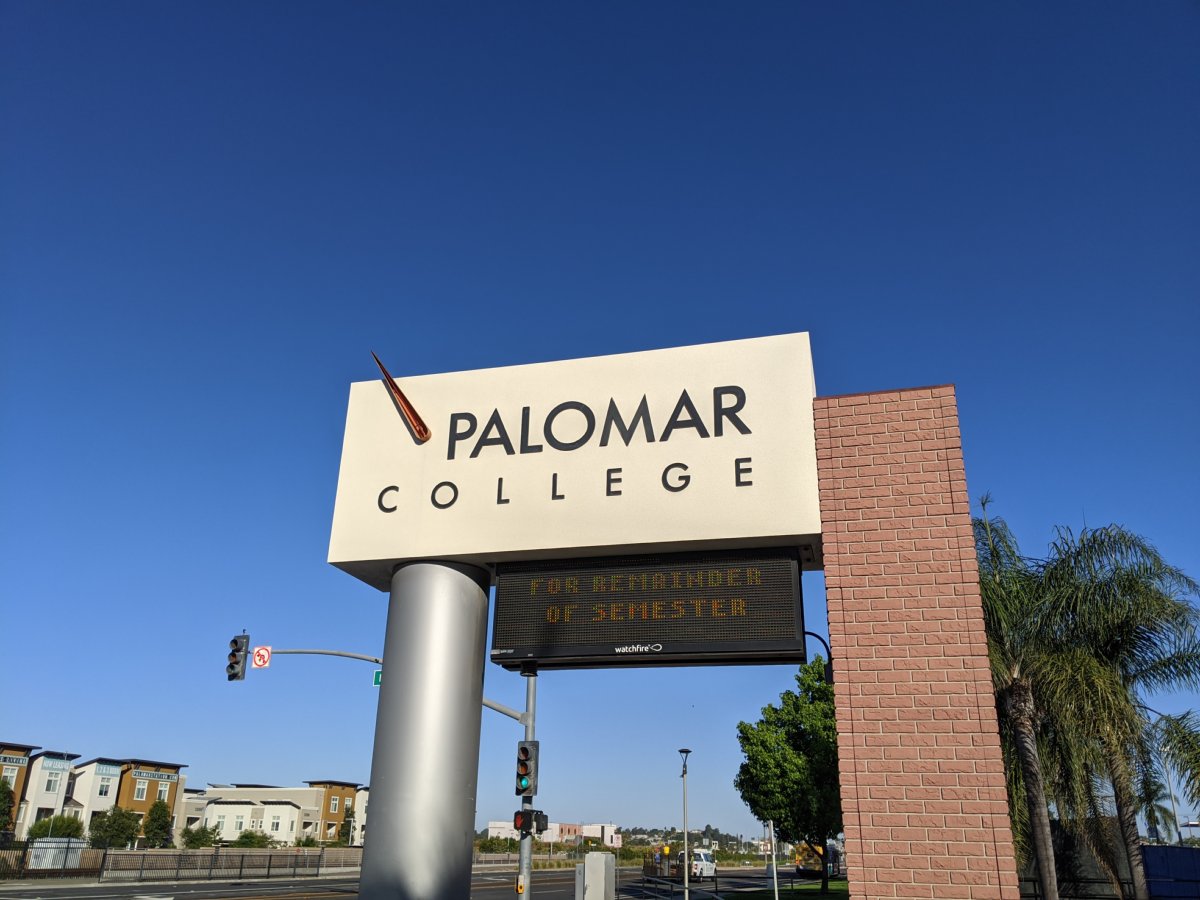
About Palomar College
The financial picture looks favorable for most students. In-state tuition costs just $1,354, and the average net price after aid drops to $5,247. Low-income families pay even less, with those earning under $30,000 facing a net price of only $4,065. Graduates earn a median of $42,300 ten years after starting, making the investment worthwhile. Only 0.65% of students take federal loans, reflecting the school's affordability.
The student body reflects San Diego County's diversity, with Hispanic students comprising 48.51% of enrollment and white students 33.64%. Men slightly outnumber women at 55.93% to 44.07%. Nearly all students come from California, with 94.09% classified as in-state residents. The 24:1 student-faculty ratio means larger class sizes than four-year institutions.
Academics & Faculty
Source: College Scorecard / U.S. Department of Education
- Student-to-Faculty Ratio
- 24:1
- Full-Time Faculty
- 33.8%
- Graduation Rate (6-year)
- 33.8%
- Median Earnings (10 years)
- $42,300
Popular Programs by Earnings
| Program | Level | Median Earnings |
|---|---|---|
| Electrical and Power Transmission Installers. | Certificate | $84,691 |
| Registered Nursing, Nursing Administration, Nursing Research and Clinical Nursing. | Associate | $69,338 |
| Liberal Arts and Sciences, General Studies and Humanities. | Associate | $52,107 |
| Social Sciences, General. | Associate | $24,035 |
Campus Life
With 16,167 students and no on-campus housing, Palomar operates as a true commuter college where students scatter after classes to jobs, internships, or transfer preparation. The diverse student population is 48.51% Hispanic and 33.64% white, reflecting North County's demographics. Many students work part-time while taking classes, contributing to the 24:1 student-faculty ratio that requires self-motivation. Weekend social life happens off-campus at nearby beaches, downtown San Diego, or local venues in the growing San Marcos area. The 382 athletes across 17 varsity sports provide some campus energy, though most students focus on academics and transfer goals rather than traditional college social experiences.
- Setting
- Suburb-Large
- Calendar System
- Semester
- Study Abroad
- Available
- Founded
- 1946
Campus Safety (2023)
11 total reported incidents. Source: Clery Act / U.S. Department of Education
| Offense | On Campus | Residential | Noncampus | Public Property |
|---|---|---|---|---|
| Burglary | 4 | 0 | 1 | 0 |
| Stalking | 5 | 0 | 0 | 0 |
| Domestic Violence | 1 | 0 | 0 | 0 |
Climate & Weather
- January Avg
- 47°–65°F
- July Avg
- 64°–74°F
- Annual Precipitation
- 11.4"
- Annual Snowfall
- 0.0"
Student Demographics
- Men
- 55.9%
- Women
- 44.1%
- White
- 33.6%
- Black
- 3.1%
- Hispanic
- 48.5%
- Asian
- 6.0%
- In-State Students
- 94.1%
- Pell Grant Recipients
- 17.2%
Location
- Address
- San Marcos, California 92069-1487
After College
Source: College Scorecard / U.S. Department of Education
- Median Earnings (10 years)
- $42,300
- Median Earnings (5 years)
- $48,173
- Mean Earnings (6 years after entry)
- $27,400
- Loan Repayment Rate
- 34.4%
Frequently Asked Questions
What are the admission requirements at Palomar College?
Palomar College maintains an open admission policy typical of California community colleges, welcoming students regardless of their high school GPA or test scores. The college serves 16,167 students and draws 94% of its student body from California residents. This accessibility makes it a popular starting point for students seeking affordable higher education or career training.
How much does Palomar College cost after financial aid?
Students pay an average net price of $5,247 annually, with costs varying by family income. Low-income students with families earning under $30,000 pay just $4,065 after aid, while those from higher-income families earning over $110,000 pay $11,879. Only 17% of students receive financial aid, reflecting the college's already low base tuition of $1,354 for California residents.
What is the student-faculty ratio at Palomar College?
Classes average 24 students per instructor, which is typical for community colleges but larger than most four-year institutions. The college operates on a semester calendar system and offers comprehensive programs designed for both transfer students and those seeking immediate workforce entry. Faculty focus heavily on practical skills and preparing students for California State University transfers.
What are the graduation and career outcomes for Palomar College students?
About 34% of students complete their programs within six years, which aligns with national community college averages. Graduates earn a median salary of $42,300 ten years after enrollment, reflecting the college's strong emphasis on career-oriented programs. The college's location in San Marcos provides access to both San Diego's job market and emerging North County industries.
Where is Palomar College located and what is campus life like?
The campus sits in San Marcos, a large suburban community in North County San Diego known for its family-friendly atmosphere. With 382 student athletes competing in 17 varsity sports as the Comets, the college maintains an active athletic program despite offering no athletic scholarships. The student body is 49% Hispanic and 56% male, reflecting the diverse demographics of North County San Diego.
Does Palomar College offer strong transfer programs?
Founded in 1946, Palomar College has built a reputation as one of California's top transfer institutions, particularly for students heading to UC San Diego, Cal State San Marcos, and other UC and CSU campuses. The college's location provides unique opportunities for internships and research partnerships with nearby Palomar Observatory and biotechnology companies. Many students choose Palomar specifically to complete general education requirements before transferring to four-year universities.
Similar Schools
Mt San Jacinto Community College District
San Jacinto, California

Sacramento City College
Sacramento, California

San Joaquin Delta College
Stockton, California
San Bernardino Valley College
San Bernardino, California
Sierra College
Rocklin, California
City College of San Francisco
San Francisco, California