About Rogue Community College
Students pay an average net price of $8,493 after financial aid. In-state tuition runs $5,184, while out-of-state students pay $6,192. Graduates earn a median of $36,845 ten years after starting college. Those who borrow take on $17,042 in debt, with monthly payments around $181. The employment rate hits 92.4%, showing strong job market connections. Only 43% of students receive financial aid, suggesting many can afford college without borrowing heavily.
The graduation rate of 12.3% reflects the community college reality where many students transfer or leave for jobs before completing degrees. Just 49 total athletes compete across three varsity sports as the Ospreys. Nearly all students come from Oregon, with 96% in-state enrollment creating a local community atmosphere.
Academics & Faculty
Source: College Scorecard / U.S. Department of Education
- Student-to-Faculty Ratio
- 18:1
- Full-Time Faculty
- 19.6%
- Graduation Rate (6-year)
- 12.3%
- Median Earnings (10 years)
- $36,845
Popular Programs by Earnings
| Program | Level | Median Earnings |
|---|---|---|
| Registered Nursing, Nursing Administration, Nursing Research and Clinical Nursing. | Associate | $75,623 |
| Vehicle Maintenance and Repair Technologies. | Associate | $36,131 |
| Dental Support Services and Allied Professions. | Certificate | $32,711 |
| Allied Health and Medical Assisting Services. | Certificate | $31,670 |
| Electrical Engineering Technologies/Technicians. | Associate | $28,236 |
| Liberal Arts and Sciences, General Studies and Humanities. | Associate | $24,035 |
| Human Development, Family Studies, and Related Services. | Associate | $16,663 |
Campus Life
The 18:1 student-faculty ratio means smaller classes where professors know your name. Women make up 58.09% of the student body, creating a slight gender imbalance. The Ospreys field just 3 varsity sports with 49 total athletes, so school spirit centers more on academics than athletics. Weekends often involve outdoor activities in the nearby Siskiyou and Cascade mountains. Students frequently work part-time jobs while attending classes, reflected in the 92.4% employment rate. The quarter system keeps the pace moving quickly. Many students transfer to four-year universities after completing their associate degrees, while others enter the workforce with career-focused training.
- Setting
- Suburb-Small
- Calendar System
- Quarter
- Founded
- 1970
Campus Safety (2023)
3 total reported incidents. Source: Clery Act / U.S. Department of Education
| Offense | On Campus | Residential | Noncampus | Public Property |
|---|---|---|---|---|
| Motor Vehicle Theft | 0 | 0 | 0 | 2 |
| Aggravated Assault | 0 | 0 | 0 | 1 |
Climate & Weather
- January Avg
- 35°–46°F
- July Avg
- 55°–88°F
- Annual Precipitation
- 56.7"
- Annual Snowfall
- -2,332.0"
Student Demographics
- Men
- 41.9%
- Women
- 58.1%
- White
- 63.7%
- Black
- 1.2%
- Hispanic
- 24.4%
- Asian
- 1.5%
- In-State Students
- 96.1%
- Pell Grant Recipients
- 43.2%
Location
- Address
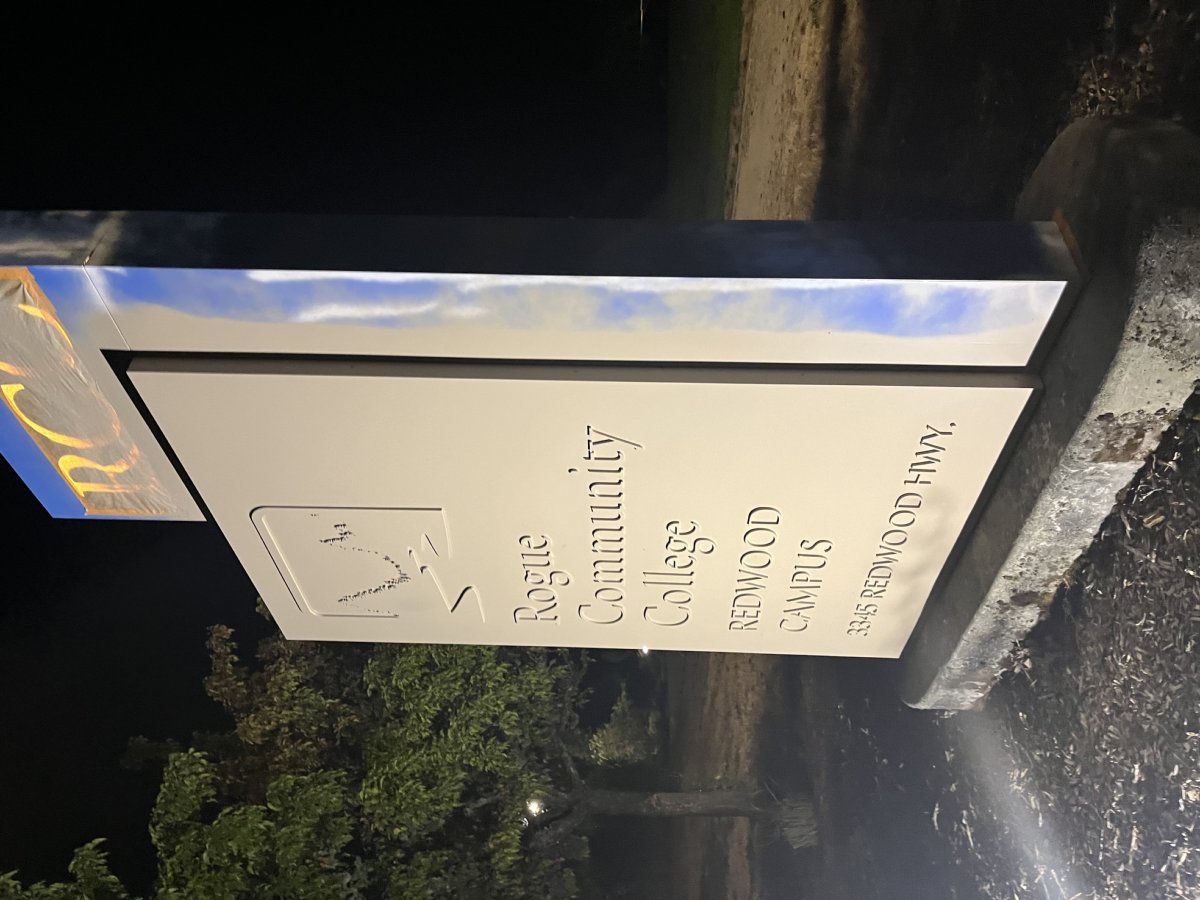
- Grants Pass, Oregon 97527-9291
After College
Source: College Scorecard / U.S. Department of Education
- Median Earnings (10 years)
- $36,845
- Median Earnings (5 years)
- $42,912
- Mean Earnings (6 years after entry)
- $26,500
- Loan Repayment Rate
- 28.3%
- Monthly Loan Payment
- $181/mo
- Median Debt at Graduation
- $17,042
Frequently Asked Questions
What are the admission requirements at Rogue Community College?
Rogue Community College maintains an open enrollment policy typical of Oregon community colleges, welcoming students regardless of academic background. The college serves 3,395 students with 96.10% coming from in-state, making it a local educational center for the Grants Pass region.
How much does Rogue Community College cost after financial aid?
Students pay an average net price of $8,493 annually at Rogue Community College. With 43.21% of students receiving Pell Grants and in-state tuition at $5,184, the college remains affordable for working-class families in southern Oregon.
What is the student-faculty ratio at Rogue Community College?
The student-faculty ratio stands at 18:1, allowing for reasonable class sizes in this quarter-system institution. Founded in 1970, the college has built a reputation for hands-on career training and transfer preparation in the rural Rogue Valley.
What are the job prospects after graduating from Rogue Community College?
Graduates achieve a 92.4% employment rate, though median earnings after 10 years reach $36,845. The college focuses on practical skills training that connects students to local industries, though the 12.30% six-year graduation rate reflects the challenges many community college students face.
Where is Rogue Community College located and what is campus life like?
The college sits in Grants Pass, a small suburban community in southern Oregon known for outdoor recreation. With 58.09% women and a student body that is 63.71% white and 24.36% Hispanic, the campus reflects the demographics of rural Oregon.
Does Rogue Community College offer athletic programs?
The Ospreys compete in just 3 varsity sports with only 49 total athletes participating. The college awards $120,780 in athletic scholarships, focusing resources on a small but dedicated group of student-athletes while prioritizing academic and vocational programs.