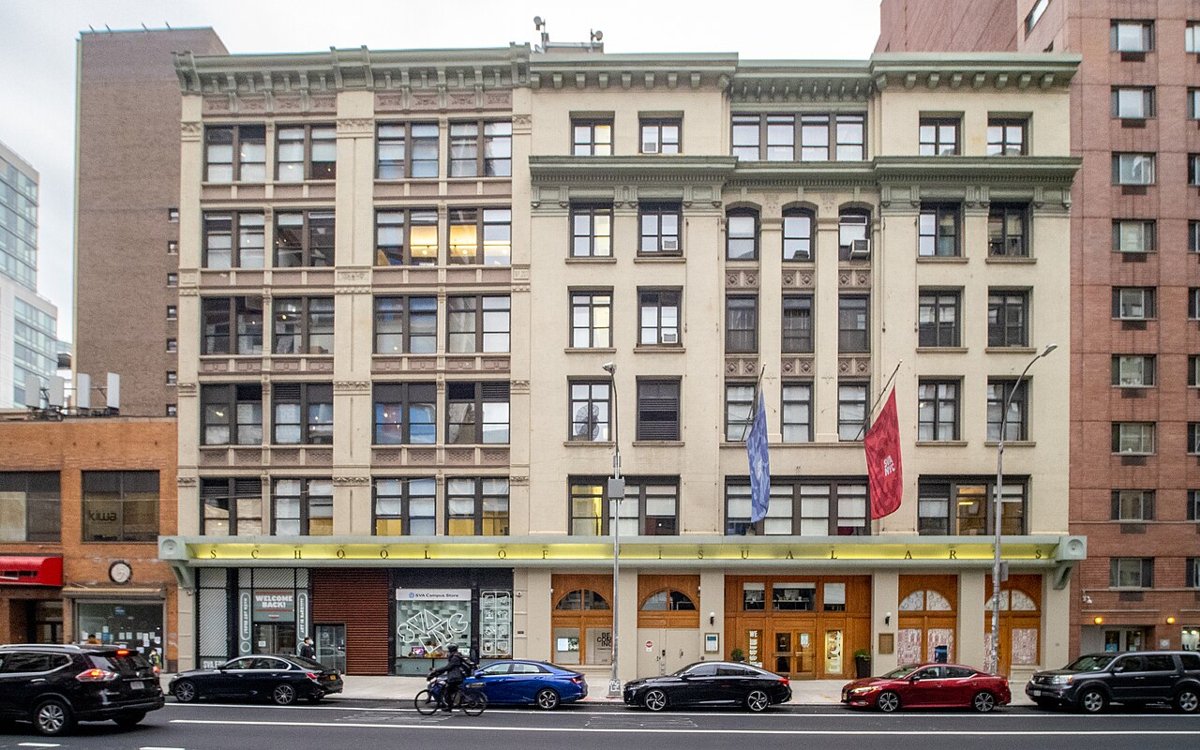
About School of Visual Arts
The financial picture requires careful consideration. Students pay an average net price of $58,628 annually, with total costs reaching $75,208 including room and board. Graduates earn a median of $46,459 ten years after graduation, while carrying typical debt loads of $27,000. The monthly loan payment averages $286, which represents a significant portion of early-career earnings in creative fields. Only 15% of students receive financial aid, making SVA primarily accessible to families who can afford substantial tuition costs.
The student body skews heavily female at 74%, reflecting broader trends in art education. Nearly 80% of students come from out of state, creating a diverse creative community drawn to New York's art scene. The 75% graduation rate demonstrates that most students complete their programs despite the demanding creative curriculum.
Academics & Faculty
Source: College Scorecard / U.S. Department of Education
- Student-to-Faculty Ratio
- 8:1
- Full-Time Faculty
- 15.8%
- Graduation Rate (4-year)
- 74.4%
- Graduation Rate (6-year)
- 74.9%
- Retention Rate
- 88.1%
- Median Earnings (10 years)
- $46,459
- Carnegie Classification
- Master's University (Large)
Popular Programs by Earnings
| Program | Level | Median Earnings |
|---|---|---|
| Design and Applied Arts. | Master | $68,499 |
| Public Relations, Advertising, and Applied Communication. | Bachelor | $48,823 |
| Fine and Studio Arts. | Master | $37,856 |
| Computer Software and Media Applications. | Bachelor | $37,568 |
| Design and Applied Arts. | Bachelor | $31,567 |
| Film/Video and Photographic Arts. | Bachelor | $24,863 |
| Fine and Studio Arts. | Bachelor | $17,489 |
| Graphic Communications. | Bachelor | $13,132 |
Campus Life
The 8:1 student-faculty ratio means you'll work closely with practicing artists and industry professionals in converted warehouse studios and high-tech labs. With 74% of students being women, the atmosphere skews collaborative rather than competitive. Weekends often blur into weekdays as students frequent gallery openings in Chelsea, sketch in Central Park, or work late in the studios that stay open 24/7. The school's location puts you minutes from major museums, advertising agencies, and design firms where many students intern. Street art and experimental installations pop up regularly around campus buildings, reflecting SVA's reputation for pushing creative boundaries since 1947.
- Setting
- City-Large
- Housing Capacity
- 1,128 beds
- Calendar System
- Semester
- Study Abroad
- Available
- Founded
- 1947
Campus Safety (2023)
6 total reported incidents. Source: Clery Act / U.S. Department of Education
| Offense | On Campus | Residential | Noncampus | Public Property |
|---|---|---|---|---|
| Stalking | 2 | 1 | 0 | 0 |
| Aggravated Assault | 1 | 0 | 0 | 1 |
| Fondling | 1 | 0 | 0 | 0 |
Climate & Weather
- January Avg
- 27°–39°F
- July Avg
- 70°–84°F
- Annual Precipitation
- 49.5"
- Annual Snowfall
- 29.8"
Student Demographics
- Men
- 26.2%
- Women
- 73.8%
- White
- 13.7%
- Black
- 2.9%
- Hispanic
- 9.4%
- Asian
- 14.9%
- In-State Students
- 20.6%
- Pell Grant Recipients
- 14.7%
Location
- Address
- New York, New York 10010
After College
Source: College Scorecard / U.S. Department of Education
- Median Earnings (10 years)
- $46,459
- Median Earnings (5 years)
- $41,574
- Mean Earnings (6 years after entry)
- $34,800
- Loan Repayment Rate
- 67.0%
- Monthly Loan Payment
- $286/mo
- Median Debt at Graduation
- $27,000
Frequently Asked Questions
What is the acceptance rate at School of Visual Arts?
School of Visual Arts accepts 87% of applicants, making it accessible for most students who meet basic requirements. The school attracts serious artists from around the world, with 79% of students coming from out of state to study in Manhattan's creative center.
How much does School of Visual Arts cost after financial aid?
The average net price is $58,628, though only 15% of students receive financial aid. With total costs reaching $75,208 including room and board, SVA is among the most expensive art schools in the country.
What is the student-faculty ratio at School of Visual Arts?
SVA maintains an 8:1 student-faculty ratio, ensuring personalized attention in studio courses. The school's 3,432 students learn from working professionals in fields like illustration, graphic design, and fine arts.
How much do School of Visual Arts graduates earn?
SVA graduates earn a median of $46,459 ten years after graduation. The school has an 85% employment rate, reflecting its strong connections to New York's creative industries and alumni network that includes photographers like David LaChapelle.
Where do students live at School of Visual Arts?
SVA houses 1,128 students in residence halls throughout Manhattan, though most of the 3,432 students live off-campus. The school operates in the heart of New York City, giving students direct access to galleries, studios, and creative agencies.
Is School of Visual Arts known for any particular programs?
SVA built its reputation on illustration and graphic design programs that have produced industry leaders for decades. The school's 74% four-year graduation rate reflects the intensive, portfolio-focused curriculum that prepares students for immediate entry into creative careers.