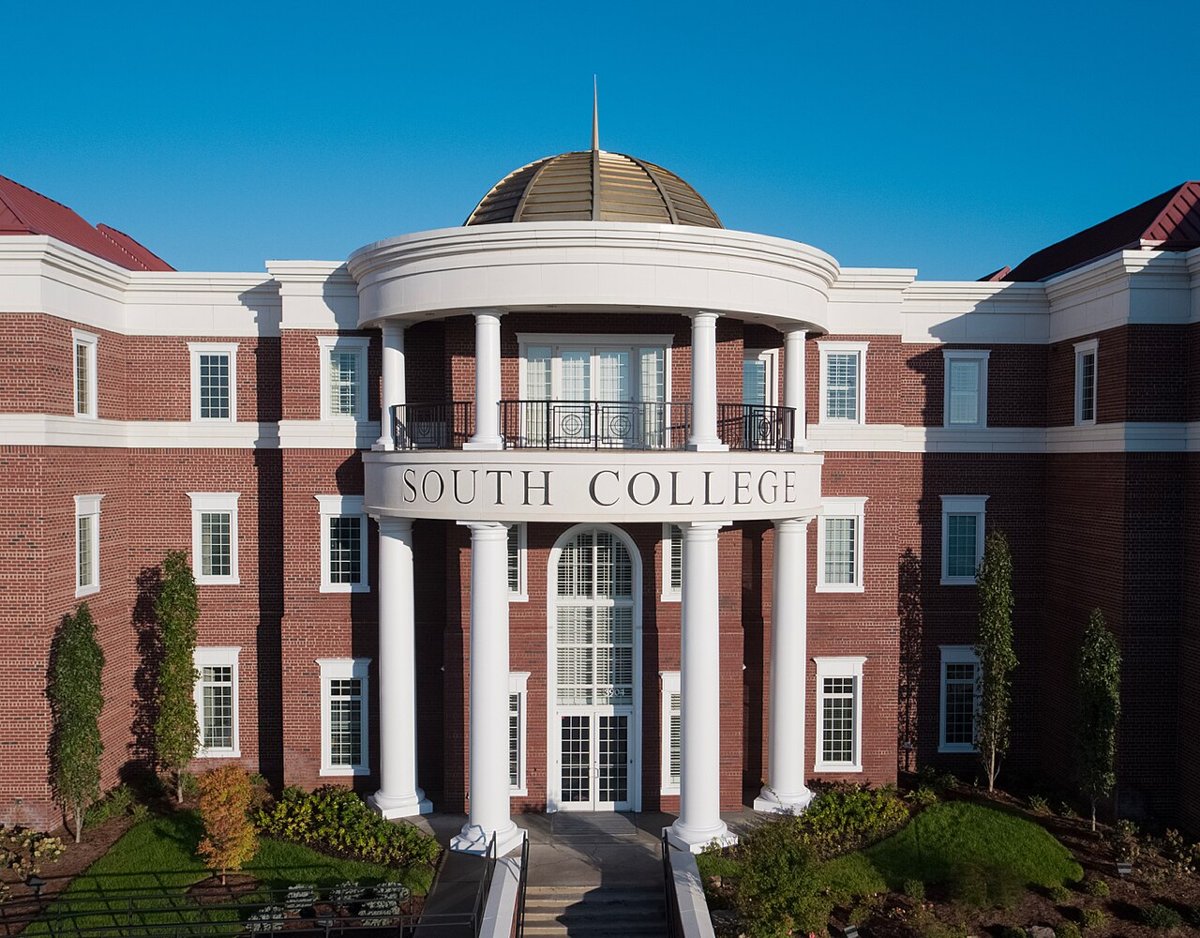
About South College
Students pay an average net price of $17,182 after financial aid, with nearly 50% receiving Pell Grants for low-income families. Graduates earn a median of $36,642 ten years after enrollment, though this varies by program. Students typically graduate with $18,668 in debt and monthly loan payments of $198. The employment rate reaches 96.3%, showing strong job placement despite the relatively modest earnings compared to four-year universities.
The graduation numbers tell a challenging story about student success. Only 37% of students complete their programs within four years, and the retention rate sits at 62%. The loan repayment rate of 33% suggests many graduates struggle to pay back their educational investments, making program choice and career planning especially crucial for prospective students.
Academics & Faculty
Source: College Scorecard / U.S. Department of Education
- Student-to-Faculty Ratio
- 23:1
- Full-Time Faculty
- 34.5%
- Graduation Rate (4-year)
- 37.6%
- Graduation Rate (6-year)
- 36.7%
- Retention Rate
- 61.5%
- Median Earnings (10 years)
- $36,642
- Carnegie Classification
- Doctoral/Professional University
Popular Programs by Earnings
| Program | Level | Median Earnings |
|---|---|---|
| Pharmacy, Pharmaceutical Sciences, and Administration. | Doctoral | $121,650 |
| Allied Health Diagnostic, Intervention, and Treatment Professions. | Master | $104,440 |
| Registered Nursing, Nursing Administration, Nursing Research and Clinical Nursing. | Bachelor | $51,482 |
| Business Administration, Management and Operations. | Bachelor | $38,829 |
| Teacher Education and Professional Development, Specific Levels and Methods. | Master | $38,289 |
| Allied Health Diagnostic, Intervention, and Treatment Professions. | Associate | $38,289 |
| Allied Health Diagnostic, Intervention, and Treatment Professions. | Bachelor | $38,289 |
| Allied Health and Medical Assisting Services. | Associate | $37,568 |
| Accounting and Related Services. | Bachelor | $36,848 |
| Food Science and Technology. | Certificate | $31,133 |
Campus Life
With 88.79% female enrollment, the student body skews heavily toward women pursuing nursing, medical assisting, and other healthcare programs. The 23:1 student-faculty ratio means larger class sizes, but the hands-on nature of many programs creates smaller lab and clinical groups. Most students commute to campus rather than live in dorms, creating a different social active than traditional colleges.
Weekends often involve clinical rotations, internships, or catching up on coursework rather than campus parties. The 61.54% retention rate suggests some students find the intensive, career-focused pace challenging. Knoxville offers outdoor recreation in the nearby Smoky Mountains, plus a growing food scene and live music venues downtown. Students frequently work part-time while studying, preparing for immediate entry into their chosen healthcare or business fields.
- Setting
- City-Midsize
- Calendar System
- Other
Campus Safety (2023)
No reported Clery Act crimes in 2023.
Climate & Weather
- January Avg
- 26°–47°F
- July Avg
- 66°–88°F
- Annual Precipitation
- 55.8"
- Annual Snowfall
- 4.6"
Student Demographics
- Men
- 11.2%
- Women
- 88.8%
- White
- 45.4%
- Black
- 37.8%
- Hispanic
- 2.7%
- Asian
- 1.8%
- In-State Students
- 81.6%
- Pell Grant Recipients
- 49.8%
Location
- Address
- Knoxville, Tennessee 37909-0000
After College
Source: College Scorecard / U.S. Department of Education
- Median Earnings (10 years)
- $36,642
- Median Earnings (5 years)
- $49,367
- Mean Earnings (6 years after entry)
- $28,200
- Loan Repayment Rate
- 33.1%
- Monthly Loan Payment
- $198/mo
- Median Debt at Graduation
- $18,668
Frequently Asked Questions
What is the student body composition at South College?
South College enrolls 6,323 students with an overwhelmingly female population at 88.79%. The school attracts a diverse mix of students with 45.37% White and 37.81% Black enrollment, reflecting its mission to serve working adults seeking career advancement in healthcare and business fields.
How much does South College cost after financial aid?
Students pay an average net price of $17,182 annually, with costs varying by family income from $16,059 for the lowest earners to $26,550 for families making over $110,000. Nearly half of students receive Pell Grants at 49.76%, though only 6.64% receive institutional aid averaging $13,048.
What are the class sizes like at South College?
The student-faculty ratio stands at 23:1, which is higher than typical liberal arts colleges but common for career-focused institutions. South College emphasizes hands-on training in healthcare, business, and technology programs where practical skills development often occurs in lab and clinical settings rather than traditional lecture halls.
What are the graduation rates at South College?
The six-year graduation rate is 36.70% with a four-year rate of 37.55%, reflecting the challenges many working adult students face in completing degrees. The 61.54% retention rate indicates that while many students persist beyond their first year, the demands of balancing work, family, and education impact completion rates.
Where do South College graduates typically find employment?
Graduates achieve a strong 96.3% employment rate, demonstrating the school's effectiveness in career preparation. However, median earnings after 10 years reach $36,642, which reflects the practical, mid-level healthcare and business careers the college prepares students for rather than high-paying professional fields.
Is South College affordable for loan repayment after graduation?
Students graduate with a median debt of $18,668 and monthly loan payments of $198, which is relatively manageable compared to many private colleges. However, the loan repayment rate of only 33.08% suggests that while debt levels are reasonable, some graduates struggle with repayment given their post-graduation earning potential.