About St. John's University-New York
Students pay an average net price of $26,985 after financial aid, well below the sticker price of over $70,000. Graduates earn a median of $69,571 ten years after leaving, making the investment worthwhile for most. The typical debt load of $25,000 translates to monthly payments of $265, manageable given the earning potential.
The student body reflects New York's diversity, with 36% white, 23% Hispanic, 16% Asian, and 15% Black students. An 84% acceptance rate makes St. John's accessible, though the 69% graduation rate suggests students need to stay focused. The 16:1 student-faculty ratio provides reasonable access to professors, while 80% of students come from New York state. Campus housing accommodates 3,191 students, creating a residential community within the urban setting.
Academics & Faculty
Source: College Scorecard / U.S. Department of Education
- Student-to-Faculty Ratio
- 16:1
- Full-Time Faculty
- 45.9%
- Graduation Rate (4-year)
- 68.9%
- Graduation Rate (6-year)
- 68.5%
- Retention Rate
- 79.9%
- Median Earnings (10 years)
- $69,571
- Carnegie Classification
- Doctoral/Professional University
Popular Programs by Earnings
| Program | Level | Median Earnings |
|---|---|---|
| Educational Administration and Supervision. | Doctoral | $151,822 |
| Curriculum and Instruction. | Doctoral | $135,946 |
| Pharmacy, Pharmaceutical Sciences, and Administration. | Doctoral | $118,034 |
| Educational Administration and Supervision. | Certificate | $104,597 |
| Allied Health Diagnostic, Intervention, and Treatment Professions. | Bachelor | $102,306 |
| Teaching English or French as a Second or Foreign Language. | Certificate | $86,424 |
| Management Sciences and Quantitative Methods. | Bachelor | $78,719 |
| Clinical, Counseling and Applied Psychology. | Doctoral | $75,204 |
| Taxation. | Master | $74,953 |
| Educational Administration and Supervision. | Master | $71,015 |
Campus Life
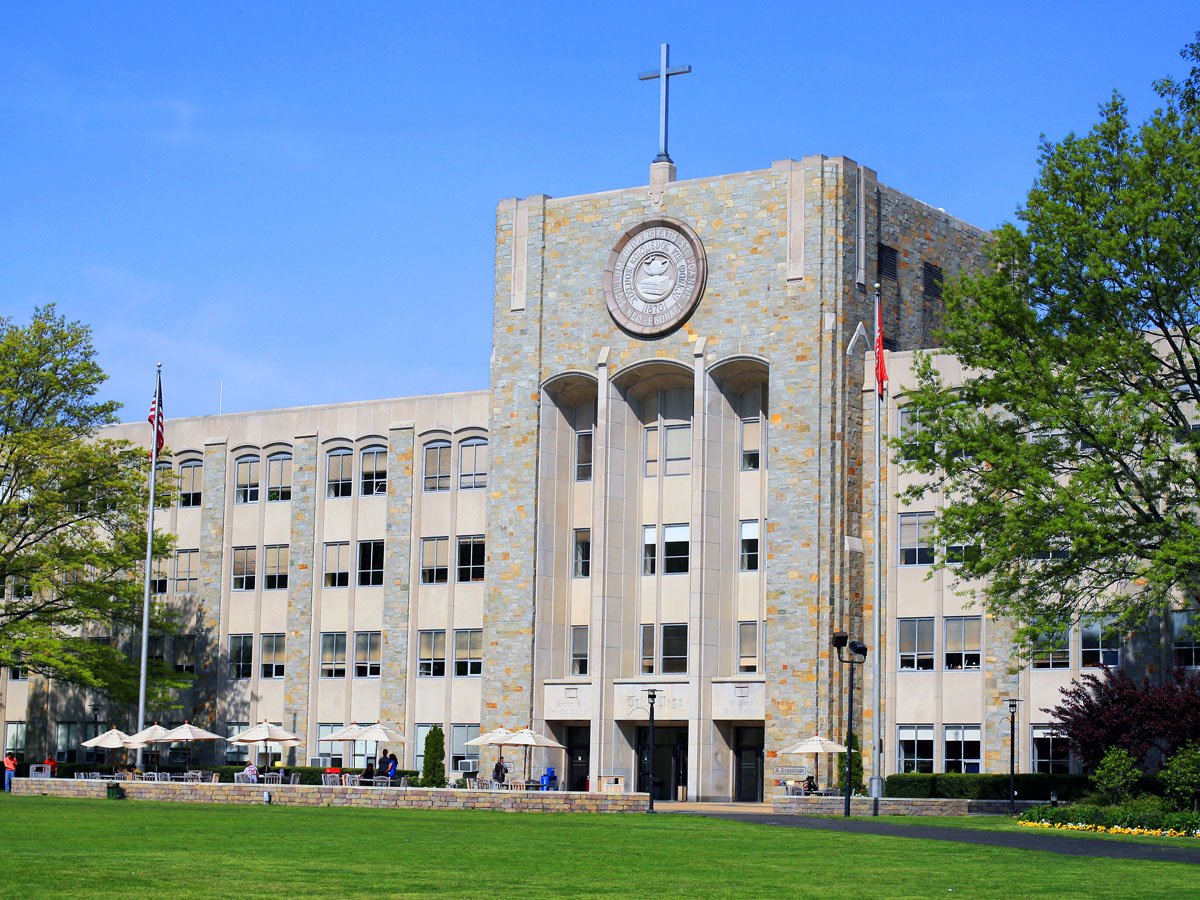
Winter coats are essential from December through March as temperatures regularly drop below freezing. The diverse student body reflects Queens itself, with 36% white, 23% Hispanic, 16% Asian, and 15% Black students creating a multicultural atmosphere. Basketball dominates campus culture during season, with students packing Carnesecca Arena to support the NCAA Division I Red Storm. The 16:1 student-faculty ratio means smaller class discussions are common despite the university's size. Weekends often involve trips to nearby Flushing Meadows Park or Manhattan adventures via the subway. The Catholic identity influences campus programming but doesn't overwhelm daily life. Many students balance part-time jobs with studies, preparing for careers in the business programs that anchor the university's reputation.
- Setting
- City-Large
- Housing Capacity
- 3,191 beds
- Calendar System
- Semester
- Study Abroad
- Available
Campus Safety (2023)
35 total reported incidents. Source: Clery Act / U.S. Department of Education
| Offense | On Campus | Residential | Noncampus | Public Property |
|---|---|---|---|---|
| Motor Vehicle Theft | 13 | 0 | 0 | 0 |
| Rape | 3 | 3 | 0 | 0 |
| Burglary | 2 | 1 | 2 | 0 |
| Fondling | 3 | 2 | 0 | 0 |
| Dating Violence | 1 | 0 | 0 | 1 |
| Robbery | 1 | 0 | 0 | 1 |
| Aggravated Assault | 0 | 0 | 0 | 1 |
| Stalking | 1 | 0 | 0 | 0 |
Climate & Weather
- January Avg
- 28°–40°F
- July Avg
- 71°–86°F
- Annual Precipitation
- 45.3"
- Annual Snowfall
- 29.8"
Student Demographics
- Men
- 45.6%
- Women
- 54.4%
- White
- 36.4%
- Black
- 15.4%
- Hispanic
- 23.1%
- Asian
- 16.1%
- In-State Students
- 80.3%
- Pell Grant Recipients
- 23.7%
Location
- Address
- Queens, New York 11439
After College
Source: College Scorecard / U.S. Department of Education
- Median Earnings (10 years)
- $69,571
- Median Earnings (5 years)
- $71,559
- Mean Earnings (6 years after entry)
- $48,100
- Loan Repayment Rate
- 62.1%
- Monthly Loan Payment
- $265/mo
- Median Debt at Graduation
- $25,000
Frequently Asked Questions
What is the acceptance rate at St. John's University-New York?
St. John's accepts 84.67% of applicants, making it accessible to most students who meet basic requirements. The middle 50% of admitted students score between 1110-1310 on the SAT. This Catholic research university in Queens welcomes students from diverse backgrounds while maintaining academic standards.
How much does St. John's University-New York cost after financial aid?
The average net price is $26,985 after aid, lower than the $70,811 sticker price. Students from families earning under $30,000 pay just $23,468 on average. The university provides substantial institutional grants averaging $32,626 to help make this private education more affordable.
What is St. John's University-New York known for academically?
St. John's has built a strong reputation for its business school programs and maintains a 16:1 student-faculty ratio across 9,742 students. The university combines Catholic educational values with practical career preparation. Its location in Queens provides students access to New York City's extensive internship and job opportunities.
How do St. John's University-New York graduates perform in the job market?
Graduates achieve a 91.4% employment rate and earn a median salary of $69,571 ten years after graduation. The 68.5% six-year graduation rate reflects the challenges many students face balancing work and studies in an expensive city. Monthly loan payments average $265, which is manageable given the strong earnings potential.
Where do students live at St. John's University-New York?
The campus houses 3,191 students in residence halls, though 80.31% of students come from within New York state. Room and board costs $19,926 annually for on-campus living. Many students choose to commute from home given the university's location in Queens and the high cost of New York City housing.
What makes St. John's University-New York's basketball program special?
St. John's competes in NCAA Division I with 339 total athletes across 15 varsity sports and awards $10,100,388 in athletic scholarships. The basketball program has produced NBA legends like Chris Mullin and Ron Artest. The Red Storm's historic rivalries with Georgetown and Villanova continue to energize the campus and alumni community.