
About St Petersburg College
The financial picture tells a compelling story. Students pay an average net price of negative $52, meaning financial aid actually exceeds costs for many. In-state tuition runs just $2,682 annually. Graduates earn a median of $42,557 ten years after starting, while carrying only $16,868 in debt. The monthly loan payment averages $179. This represents strong value for career-focused education.
The student body skews heavily female at 62%, reflecting the college's strength in healthcare and education programs. The Titans compete in six NJCAA sports with 97 total athletes supported by $867,682 in scholarships. With a 37.5% six-year graduation rate and 92.7% employment rate, the school prioritizes getting students into jobs quickly. Classes average 25 students per faculty member, allowing for more personalized attention than typical at large universities.
Academics & Faculty
Source: College Scorecard / U.S. Department of Education
- Student-to-Faculty Ratio
- 25:1
- Full-Time Faculty
- 25.8%
- Graduation Rate (4-year)
- 37.9%
- Graduation Rate (6-year)
- 37.5%
- Median Earnings (10 years)
- $42,557
- Carnegie Classification
- Baccalaureate/Associate College
Popular Programs by Earnings
| Program | Level | Median Earnings |
|---|---|---|
| Registered Nursing, Nursing Administration, Nursing Research and Clinical Nursing. | Bachelor | $65,512 |
| Registered Nursing, Nursing Administration, Nursing Research and Clinical Nursing. | Associate | $57,318 |
| Dental Support Services and Allied Professions. | Bachelor | $55,512 |
| Business Administration, Management and Operations. | Bachelor | $43,696 |
| Computer/Information Technology Administration and Management. | Bachelor | $43,128 |
| Homeland Security, Law Enforcement, Firefighting and Related Protective Services, Other. | Bachelor | $42,682 |
| Public Health. | Bachelor | $42,682 |
| Education, Other. | Certificate | $42,363 |
| Allied Health Diagnostic, Intervention, and Treatment Professions. | Associate | $42,235 |
| Teacher Education and Professional Development, Specific Levels and Methods. | Bachelor | $41,565 |
Campus Life
The 25:1 student-faculty ratio means larger class sizes than at four-year universities. Students often work while attending school, contributing to the practical, career-focused atmosphere. With 98.03% of students from Florida, you'll mostly meet locals who know the area well. Weekends typically involve Tampa Bay beaches, downtown St. Pete's arts district, or jobs since many students balance work and education. The Titans compete in six NJCAA sports with 97 total athletes, though athletics play a smaller role than at traditional four-year colleges. The diverse student population includes 54.50% white, 19.73% Hispanic, and 13.98% Black students, reflecting the region's demographics.
- Setting
- City-Large
- Calendar System
- Semester
- Study Abroad
- Available
Campus Safety (2023)
4 total reported incidents. Source: Clery Act / U.S. Department of Education
| Offense | On Campus | Residential | Noncampus | Public Property |
|---|---|---|---|---|
| Motor Vehicle Theft | 2 | 0 | 0 | 0 |
| Aggravated Assault | 1 | 0 | 0 | 0 |
| Robbery | 1 | 0 | 0 | 0 |
Climate & Weather
- January Avg
- 54°–69°F
- July Avg
- 76°–90°F
- Annual Precipitation
- 52.5"
- Annual Snowfall
- 0.0"
Student Demographics
- Men
- 38.2%
- Women
- 61.8%
- White
- 54.5%
- Black
- 14.0%
- Hispanic
- 19.7%
- Asian
- 4.2%
- In-State Students
- 98.0%
- Pell Grant Recipients
- 33.1%
Location
- Address
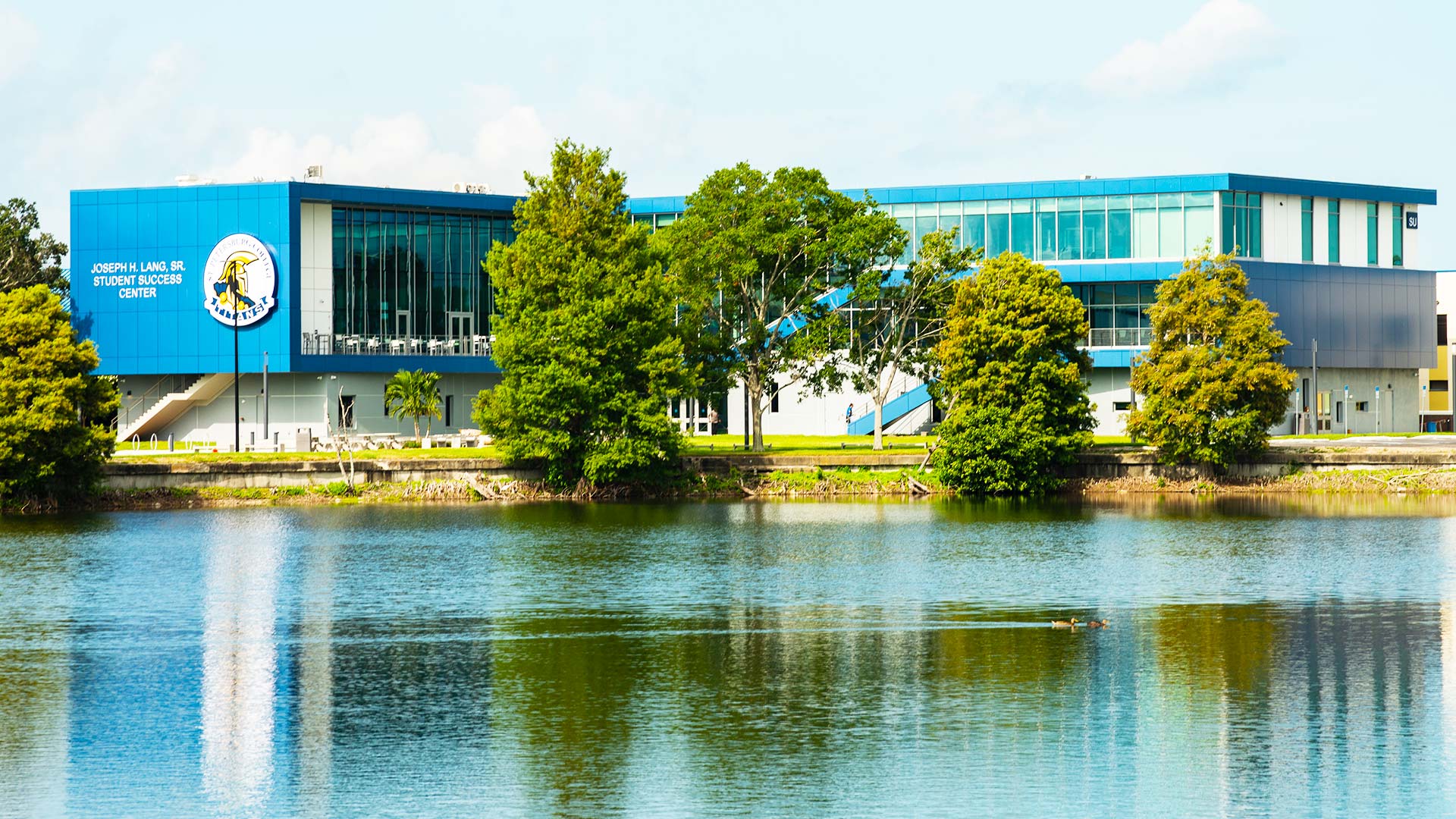
- St. Petersburg, Florida 33701
After College
Source: College Scorecard / U.S. Department of Education
- Median Earnings (10 years)
- $42,557
- Median Earnings (5 years)
- $52,194
- Mean Earnings (6 years after entry)
- $31,700
- Loan Repayment Rate
- 32.0%
- Monthly Loan Payment
- $179/mo
- Median Debt at Graduation
- $16,868
Frequently Asked Questions
What is the admission process like at St Petersburg College?
St Petersburg College operates as an open-access community college, meaning qualified high school graduates or GED holders can enroll without competitive admissions. The college serves 18,759 students and maintains a 98.03% in-state enrollment rate. Most students begin here to save money on their first two years before transferring to four-year universities.
How much does St Petersburg College cost after financial aid?
Students at St Petersburg College pay an average net price of negative $52, meaning financial aid typically covers all costs and provides additional support. In-state tuition runs just $2,682 annually, while 33.09% of students receive Pell Grants. The college is known for being one of the most affordable higher education options in Florida.
What are the academics like at St Petersburg College?
St Petersburg College maintains a 25:1 student-faculty ratio across its programs. The college offers both associate degrees and bachelor's degree completion programs in select fields. It has built a reputation as a strong transfer institution, helping students complete general education requirements affordably before moving to four-year schools.
What career outcomes do St Petersburg College graduates experience?
Graduates earn a median salary of $42,557 ten years after starting college, with a 92.7% employment rate. The college keeps student debt manageable with a median debt load of $16,868 and monthly loan payments of $179. It focuses heavily on workforce development programs that connect directly to Tampa Bay area job markets.
Where is St Petersburg College located and what is campus life like?
The college operates multiple campuses throughout Pinellas County in the Tampa Bay area. With 61.76% women and 38.24% men, the student body reflects the college's strength in health sciences and education programs. The diverse student population includes 54.50% white, 19.73% Hispanic, and 13.98% Black students.
Does St Petersburg College offer athletic programs?
St Petersburg College fields six varsity sports through the NJCAA with 97 total student-athletes competing as the Titans. The college provides $867,682 in athletic scholarships across its programs. Athletics serve as both a recruiting tool and a pathway for students planning to transfer to four-year universities with sports programs.
Similar Schools

Florida State College at Jacksonville
Jacksonville, Florida
Florida SouthWestern State College
Fort Myers, Florida

Seminole State College of Florida
Sanford, Florida

Indian River State College
Fort Pierce, Florida

Eastern Florida State College
Melbourne, Florida

Hillsborough Community College
Tampa, Florida