About Suffolk University
Students pay an average net price of $30,031 after financial aid, less than the sticker price of $45,380. Graduates earn a median of $67,506 ten years after graduation, while carrying typical debt loads of $26,889. The monthly loan payment of $285 represents a manageable portion of most graduates' salaries. With a 94% employment rate, Suffolk delivers solid career outcomes that justify the investment.
The student body skews 63% female and draws 58% of students from Massachusetts. Suffolk's 15 NCAA Division III teams compete as the Rams, though athletics take a backseat to internships and co-ops in downtown Boston. The 76% retention rate reflects students who appreciate the school's no-frills approach to urban education, though the 60% graduation rate suggests the city's distractions challenge some students' focus.
Academics & Faculty
Source: College Scorecard / U.S. Department of Education
- Student-to-Faculty Ratio
- 15:1
- Full-Time Faculty
- 56.7%
- Graduation Rate (4-year)
- 60.1%
- Graduation Rate (6-year)
- 59.8%
- Retention Rate
- 75.5%
- Median Earnings (10 years)
- $67,506
- Carnegie Classification
- Doctoral/Professional University
Popular Programs by Earnings
| Program | Level | Median Earnings |
|---|---|---|
| Business/Managerial Economics. | Master | $97,071 |
| Finance and Financial Management Services. | Master | $87,973 |
| Business Administration, Management and Operations. | Master | $83,388 |
| Marketing. | Master | $76,460 |
| Taxation. | Master | $74,576 |
| Health and Medical Administrative Services. | Master | $69,338 |
| Accounting and Related Services. | Master | $67,273 |
| Public Administration. | Master | $62,260 |
| Law. | Doctoral | $59,253 |
| Finance and Financial Management Services. | Bachelor | $52,941 |
Campus Life
Weekend life centers on exploring Boston rather than campus activities. Students hit Faneuil Hall, catch Red Sox games at nearby Fenway, or take the T to Cambridge and other neighborhoods. The 15 NCAA Division III teams draw modest crowds, but the real action happens in the city's endless internship opportunities. With 325 total athletes among the student body, sports culture stays low-key. The 75.52% retention rate reflects students who either love the urban integration or transfer seeking a more traditional college experience. Suffolk works best for students who want city life over campus quads and see Boston as their real classroom.
- Setting
- City-Large
- Housing Capacity
- 1,440 beds
- Calendar System
- Semester
- Study Abroad
- Available
- Founded
- 1906
Campus Safety (2023)
17 total reported incidents. Source: Clery Act / U.S. Department of Education
| Offense | On Campus | Residential | Noncampus | Public Property |
|---|---|---|---|---|
| Fondling | 2 | 2 | 0 | 1 |
| Stalking | 3 | 1 | 0 | 0 |
| Aggravated Assault | 0 | 0 | 0 | 2 |
| Burglary | 1 | 1 | 0 | 0 |
| Dating Violence | 1 | 1 | 0 | 0 |
| Rape | 1 | 1 | 0 | 0 |
Climate & Weather
- January Avg
- 23°–36°F
- July Avg
- 66°–82°F
- Annual Precipitation
- 43.6"
- Annual Snowfall
- 49.2"
Student Demographics
- Men
- 36.9%
- Women
- 63.1%
- White
- 49.7%
- Black
- 7.9%
- Hispanic
- 17.2%
- Asian
- 7.1%
- In-State Students
- 57.6%
- Pell Grant Recipients
- 27.4%
Location
- Address
- Boston, Massachusetts 02108-3901

After College
Source: College Scorecard / U.S. Department of Education
- Median Earnings (10 years)
- $67,506
- Median Earnings (5 years)
- $69,332
- Mean Earnings (6 years after entry)
- $43,700
- Loan Repayment Rate
- 70.0%
- Monthly Loan Payment
- $285/mo
- Median Debt at Graduation
- $26,889
Frequently Asked Questions
What is the acceptance rate at Suffolk University?
Suffolk University accepts 86.79% of applicants, making it accessible to most students who apply. The middle 50% of admitted students score between 1080 and 1300 on the SAT. This relatively high acceptance rate reflects the university's commitment to providing urban education opportunities in downtown Boston.
How much does Suffolk University cost after financial aid?
The average net price at Suffolk University is $30,031 after financial aid, lower than the full tuition of $45,380. About 27.41% of students receive Pell Grants, and graduates typically leave with $26,889 in debt. Students from families earning under $30,000 pay an average net price of just $25,575.
What is Suffolk University known for academically?
Suffolk University is recognized for its strong programs in law, business, and government, taking advantage of its downtown Boston location. The student-faculty ratio is 15:1, providing personalized attention in an urban setting. The university's proximity to state government and financial districts creates excellent internship and networking opportunities.
What are the graduation rates and career outcomes at Suffolk University?
Suffolk University graduates 59.80% of students within six years, with a 93.5% employment rate after graduation. Alumni earn a median salary of $67,506 ten years after graduation. The university's urban location and strong alumni network, including notable figures like David Ortiz and John Kerry, help students launch successful careers.
Where is Suffolk University's campus located?
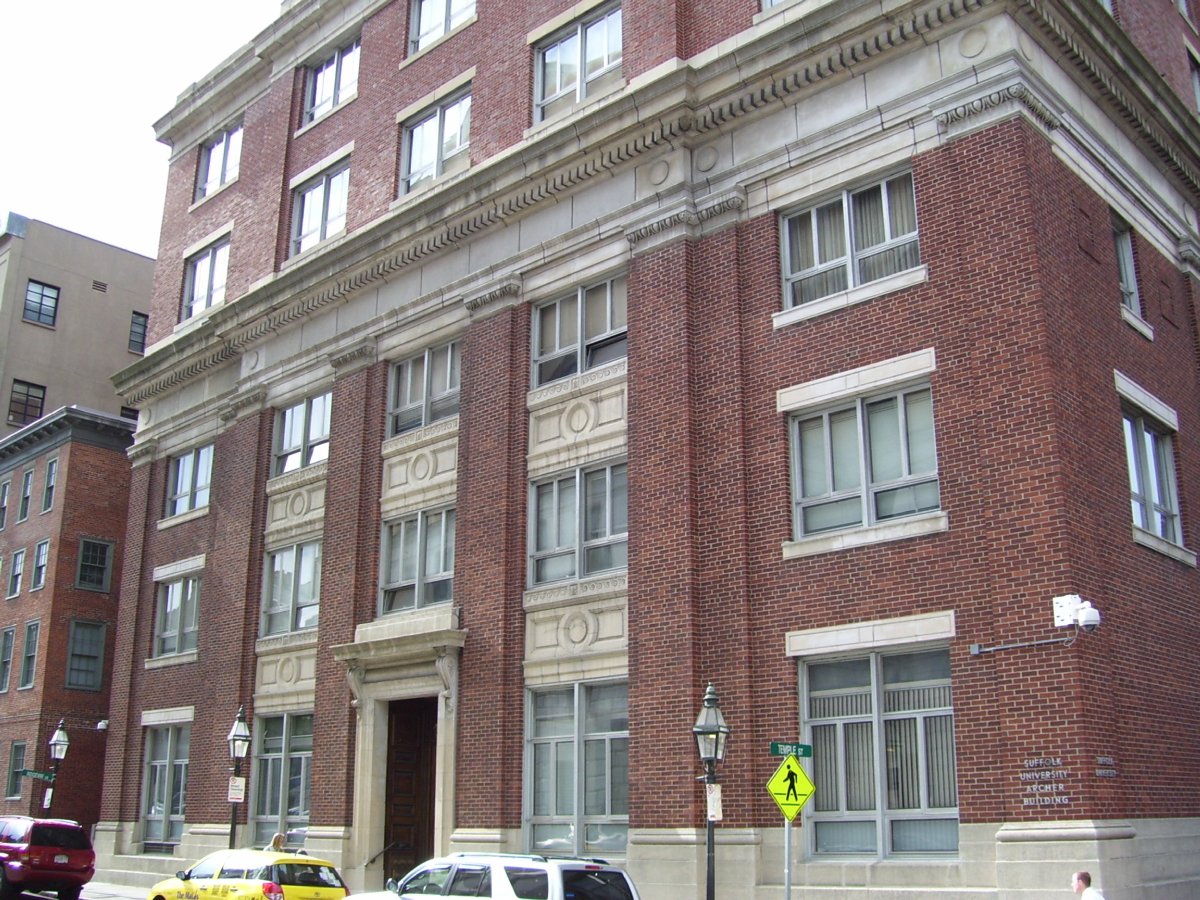
Suffolk University's campus is integrated directly into downtown Boston, providing students with an urban college experience. The university can house 1,440 students on campus, though many students live throughout the city. This downtown location puts students steps away from internships, cultural attractions, and professional opportunities.
How diverse is the student body at Suffolk University?
Suffolk University enrolls 4,434 students, with women comprising 63.10% of the student body. The campus is ethnically diverse, with 49.71% White students, 17.21% Hispanic students, and 7.85% Black students. About 57.63% of students come from Massachusetts, while others travel from across the country to experience Boston's educational opportunities.