About University at Albany
The financial picture looks reasonable for a public university. Students pay an average net price of $18,486 after aid, while graduates earn a median of $67,979 ten years after graduation. That income easily covers the typical monthly loan payment of $207. With 42% of students receiving Pell Grants, Albany serves a significant population of first-generation and lower-income students who see solid returns on their investment.
Albany's student body reflects New York's diversity, with 23% Black students and 19% Hispanic students. The Great Danes compete in Division I athletics across 18 sports, though the university focuses more on academics than athletic prestige. With 93% of students coming from in-state, campus culture stays deeply connected to New York politics and career opportunities in the capital region.
Academics & Faculty
Source: College Scorecard / U.S. Department of Education
- Student-to-Faculty Ratio
- 17:1
- Full-Time Faculty
- 58.7%
- Graduation Rate (4-year)
- 64.7%
- Graduation Rate (6-year)
- 63.9%
- Retention Rate
- 83.3%
- Median Earnings (10 years)
- $67,979
- Carnegie Classification
- Doctoral University (R1)
Popular Programs by Earnings
| Program | Level | Median Earnings |
|---|---|---|
| Business Administration, Management and Operations. | Master | $74,576 |
| Taxation. | Master | $74,307 |
| Computer/Information Technology Administration and Management. | Certificate | $68,219 |
| Clinical, Counseling and Applied Psychology. | Doctoral | $61,516 |
| Accounting and Related Services. | Master | $60,256 |
| Public Administration. | Master | $55,964 |
| Curriculum and Instruction. | Master | $52,733 |
| Accounting and Related Services. | Bachelor | $49,962 |
| Public Health. | Master | $49,270 |
| Criminology. | Master | $46,673 |
Campus Life
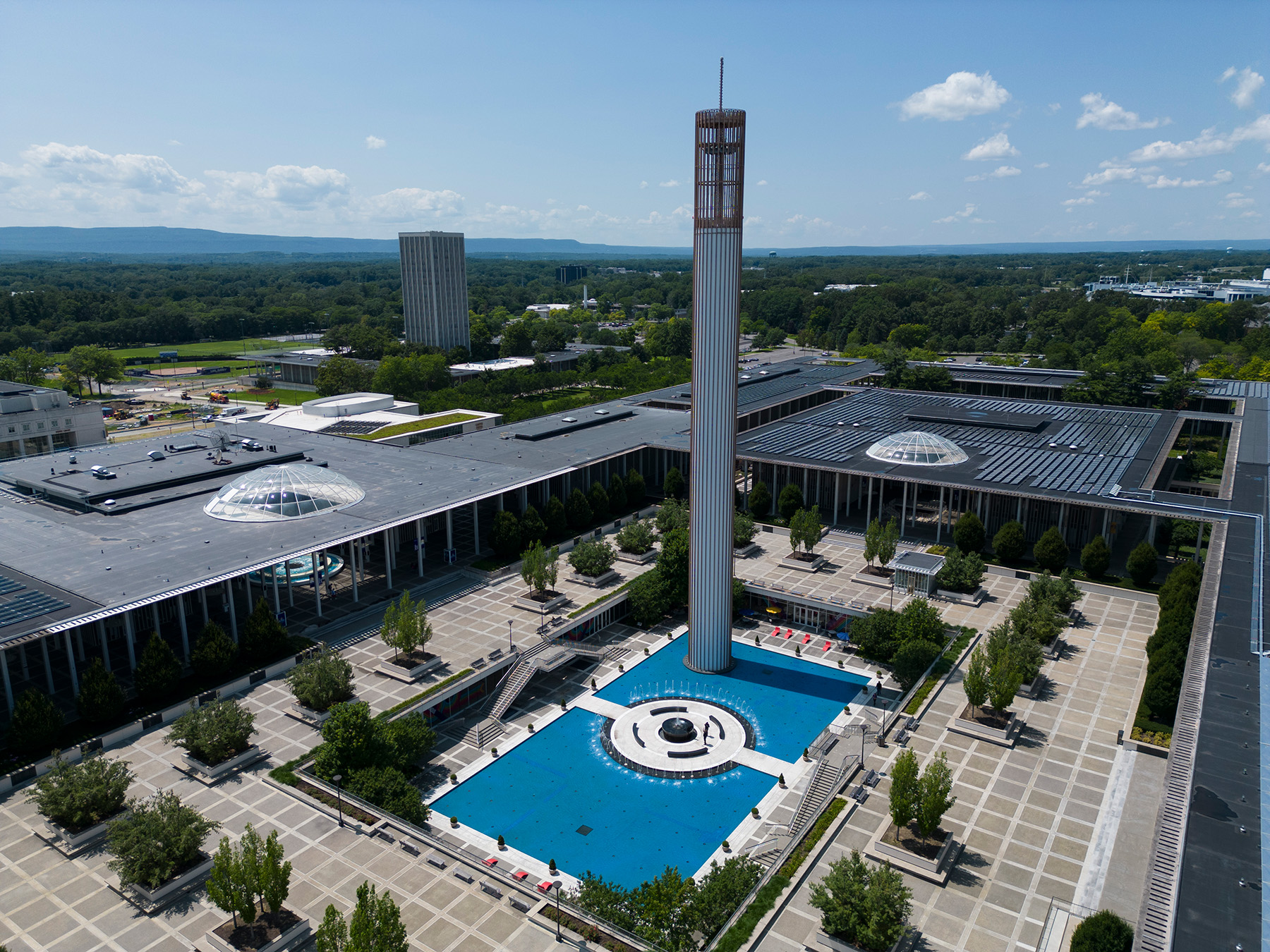
The Great Danes compete in 18 Division I sports, with 478 student-athletes representing just 4% of the student body. Most students gravitate toward the strong criminal justice and public affairs programs, taking advantage of internships in state government offices downtown. With 93% of students coming from New York State, weekends often see campus empty as students head home. Those who stay find Albany's downtown revitalization offers new restaurants and entertainment venues. The Uptown Campus features modern residence halls and academic buildings, while the surrounding Pine Hills neighborhood provides off-campus housing and local hangouts. Students frequently volunteer for political campaigns and advocacy groups, reflecting the school's public policy focus.
- Setting
- City-Midsize
- Housing Capacity
- 6,890 beds
- Calendar System
- Semester
- Study Abroad
- Available
Campus Safety (2023)
113 total reported incidents. Source: Clery Act / U.S. Department of Education
| Offense | On Campus | Residential | Noncampus | Public Property |
|---|---|---|---|---|
| Dating Violence | 25 | 21 | 0 | 0 |
| Stalking | 13 | 6 | 0 | 0 |
| Rape | 8 | 7 | 0 | 0 |
| Fondling | 8 | 6 | 0 | 0 |
| Burglary | 7 | 6 | 0 | 0 |
| Motor Vehicle Theft | 4 | 0 | 0 | 0 |
| Robbery | 1 | 1 | 0 | 0 |
Climate & Weather
- January Avg
- 15°–32°F
- July Avg
- 62°–83°F
- Annual Precipitation
- 40.7"
- Annual Snowfall
- 59.2"
Student Demographics
- Men
- 46.2%
- Women
- 53.8%
- White
- 38.7%
- Black
- 23.4%
- Hispanic
- 19.1%
- Asian
- 9.7%
- In-State Students
- 93.3%
- Pell Grant Recipients
- 42.1%
Location
- Address
- Albany, New York 12222

After College
Source: College Scorecard / U.S. Department of Education
- Median Earnings (10 years)
- $67,979
- Median Earnings (5 years)
- $64,597
- Mean Earnings (6 years after entry)
- $41,000
- Loan Repayment Rate
- 67.2%
- Monthly Loan Payment
- $207/mo
- Median Debt at Graduation
- $19,500
Frequently Asked Questions
What is the acceptance rate at University at Albany?
University at Albany accepts 67.90% of applicants with an average SAT score of 1220. The middle 50% of admitted students score between 1120 and 1320 on the SAT. This SUNY school draws heavily from New York state, with 93.32% of students coming from in-state.
How much does University at Albany cost after financial aid?
Students pay an average net price of $18,486 annually at University at Albany. In-state tuition runs $10,408 while out-of-state students pay $28,998. About 42.12% of students receive Pell Grants, and graduates typically leave with $19,500 in debt.
What are the strongest academic programs at University at Albany?
University at Albany is known for its criminal justice and public policy programs within the SUNY system. The student-faculty ratio is 17:1 across all programs. The university operates on a semester calendar and serves 12,100 students as a public research institution.
What do University at Albany graduates earn after college?
University at Albany graduates earn a median salary of $67,979 ten years after graduation. The employment rate reaches 93.9% for recent graduates. However, only 63.90% of students graduate within six years, though 83.33% return for their sophomore year.
Where is University at Albany located and what is campus life like?
University at Albany sits in the mid-sized city of Albany, New York's capital. The campus houses 6,890 students in residence halls with room and board costing $16,182. The Great Danes compete in NCAA Division I athletics with 18 varsity sports and 478 total athletes.
Is University at Albany diverse in its student population?
University at Albany enrolls a diverse student body with 38.70% white students, 23.42% Black students, and 19.12% Hispanic students. Women make up 53.83% of the enrollment of 12,100 students. The university has produced notable alumni including Pulitzer Prize-winning novelist William Kennedy and Wicked author Gregory Maguire.