
About University at Buffalo
Students pay an average net price of $20,470 after aid, while graduates earn a median of $70,814 ten years out. That return on investment looks solid, especially considering the typical graduate leaves with just $19,000 in debt and monthly loan payments of $201. The 94% employment rate shows employers value UB degrees, making the financial math work for most families.
With 87% of students coming from New York, this feels like a true state university where in-state students find their people. The 11:1 student-faculty ratio means you can actually get to know professors despite the large enrollment. The Bulls compete in Division I athletics across 12 sports, though academics clearly take center stage. The 73% graduation rate reflects the school's serious academic environment where students come to work toward career-focused degrees.
Academics & Faculty
Source: College Scorecard / U.S. Department of Education
- Student-to-Faculty Ratio
- 11:1
- Full-Time Faculty
- 68.8%
- Graduation Rate (4-year)
- 73.5%
- Graduation Rate (6-year)
- 73.4%
- Retention Rate
- 84.5%
- Median Earnings (10 years)
- $70,814
- Carnegie Classification
- Doctoral University (R1)
Popular Programs by Earnings
| Program | Level | Median Earnings |
|---|---|---|
| Registered Nursing, Nursing Administration, Nursing Research and Clinical Nursing. | Doctoral | $159,761 |
| Pharmacy, Pharmaceutical Sciences, and Administration. | Doctoral | $104,510 |
| Electrical, Electronics and Communications Engineering. | Master | $74,576 |
| Educational Administration and Supervision. | Certificate | $73,215 |
| Mechanical Engineering. | Master | $72,482 |
| Chemistry. | Doctoral | $71,957 |
| Computer and Information Sciences, General. | Master | $71,575 |
| Clinical/Medical Laboratory Science/Research and Allied Professions. | Bachelor | $70,456 |
| Business Administration, Management and Operations. | Master | $68,499 |
| Dentistry. | Doctoral | $67,772 |
Campus Life
UB operates as a major research university where undergraduates work alongside graduate students and faculty on modern projects. The student body reflects New York's diversity, with 45% White, 18% Asian, 9% Black, and 9% Hispanic students creating a multicultural environment. Weekend activities center around Division I athletics, with Bulls football and basketball drawing crowds to campus. The 11:1 student-faculty ratio means smaller class sizes despite the large enrollment. Students bundle up for outdoor activities like sledding and ice skating during Buffalo's long winters, while spring brings outdoor concerts and festivals to the quad.
- Setting
- Suburb-Large
- Housing Capacity
- 7,725 beds
- Calendar System
- Semester
- Study Abroad
- Available
- Founded
- 1846
Campus Safety (2023)
111 total reported incidents. Source: Clery Act / U.S. Department of Education
| Offense | On Campus | Residential | Noncampus | Public Property |
|---|---|---|---|---|
| Dating Violence | 11 | 11 | 2 | 1 |
| Domestic Violence | 11 | 11 | 2 | 1 |
| Motor Vehicle Theft | 25 | 0 | 0 | 0 |
| Burglary | 9 | 5 | 0 | 0 |
| Fondling | 5 | 2 | 0 | 0 |
| Rape | 4 | 3 | 0 | 0 |
| Arson | 2 | 2 | 0 | 0 |
| Stalking | 2 | 1 | 0 | 1 |
Climate & Weather
- January Avg
- 19°–32°F
- July Avg
- 63°–80°F
- Annual Precipitation
- 40.7"
- Annual Snowfall
- 95.4"
Student Demographics
- Men
- 53.8%
- Women
- 46.2%
- White
- 45.0%
- Black
- 9.0%
- Hispanic
- 8.8%
- Asian
- 17.8%
- In-State Students
- 87.3%
- Pell Grant Recipients
- 32.3%
Location
- Address
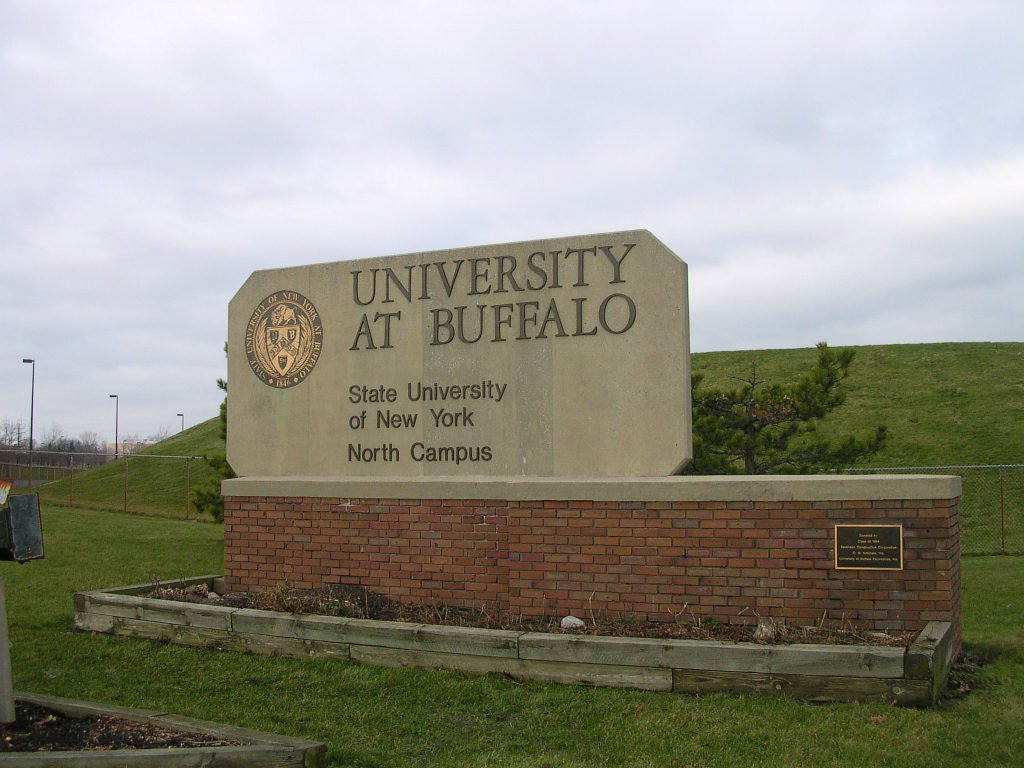
- Buffalo, New York 14260-1660
After College
Source: College Scorecard / U.S. Department of Education
- Median Earnings (10 years)
- $70,814
- Median Earnings (5 years)
- $68,437
- Mean Earnings (6 years after entry)
- $46,100
- Loan Repayment Rate
- 68.4%
- Monthly Loan Payment
- $201/mo
- Median Debt at Graduation
- $19,000
Frequently Asked Questions
What is the acceptance rate at University at Buffalo?
University at Buffalo accepts 67.71% of applicants, making it moderately selective among SUNY schools. The middle 50% of admitted students score between 1190-1380 on the SAT, reflecting the university's role as a major research institution within the State University of New York system.
How much does University at Buffalo cost after financial aid?
Students pay an average net price of $20,470 annually at University at Buffalo. In-state students benefit from SUNY's affordable tuition structure at $10,782, while the university keeps median student debt relatively low at $19,000 upon graduation.
What is University at Buffalo known for academically?
University at Buffalo operates as a major research university with particularly strong programs in engineering, medicine, and business. The 11:1 student-faculty ratio allows for solid academic support despite the large enrollment of 20,284 students across all programs.
What are the career outcomes for University at Buffalo graduates?
University at Buffalo graduates earn a median salary of $70,814 ten years after graduation, with a strong 94% employment rate. The university's connection to Buffalo's growing tech and healthcare sectors, plus its research focus, helps students transition successfully into their careers.
Where is University at Buffalo located and what is campus life like?
University at Buffalo sits in suburban Buffalo with housing for 7,725 students on campus. The Bulls compete in NCAA Division I athletics across 12 varsity sports, and the large student body of over 20,000 creates an active campus environment typical of major state universities.
How diverse is the student body at University at Buffalo?
University at Buffalo enrolls a diverse student population with 45% White, 18% Asian, 9% Black, and 9% Hispanic students. The university draws heavily from New York state with 87% in-state students, reflecting its role as a flagship SUNY campus serving the region's diverse communities.