

About University of Alaska Fairbanks
Students pay an average net price of $9,634 after financial aid, making this one of the more affordable research universities in the country. Graduates earn a median of $48,866 ten years after graduation while carrying typical debt of $20,291. The monthly loan payment averages $215, which represents a reasonable burden given the earning potential. Only 22.37% of students receive Pell Grants, suggesting many families can handle the costs without significant federal aid.
The student body skews heavily Alaskan, with 87% coming from in-state. Women outnumber men 61% to 39%. The 36.7% six-year graduation rate reflects the unique challenges of studying in such a remote location. The Nanooks compete in 11 NCAA Division II sports, though with only 114 total athletes, this clearly isn't a sports-focused campus.
Academics & Faculty
Source: College Scorecard / U.S. Department of Education
- Student-to-Faculty Ratio
- 12:1
- Full-Time Faculty
- 62.2%
- Graduation Rate (4-year)
- 35.3%
- Graduation Rate (6-year)
- 36.7%
- Retention Rate
- 72.1%
- Median Earnings (10 years)
- $48,866
- Carnegie Classification
- Doctoral University (R2)
Popular Programs by Earnings
| Program | Level | Median Earnings |
|---|---|---|
| Petroleum Engineering. | Bachelor | $75,889 |
| Mechanical Engineering. | Bachelor | $68,219 |
| Civil Engineering. | Bachelor | $63,997 |
| Industrial Production Technologies/Technicians. | Associate | $63,997 |
| Business Administration, Management and Operations. | Master | $58,221 |
| Teacher Education and Professional Development, Specific Levels and Methods. | Certificate | $51,607 |
| Student Counseling and Personnel Services. | Master | $50,439 |
| Vehicle Maintenance and Repair Technologies. | Certificate | $44,942 |
| Accounting and Related Services. | Bachelor | $43,798 |
| Teacher Education and Professional Development, Specific Levels and Methods. | Bachelor | $42,682 |
Campus Life
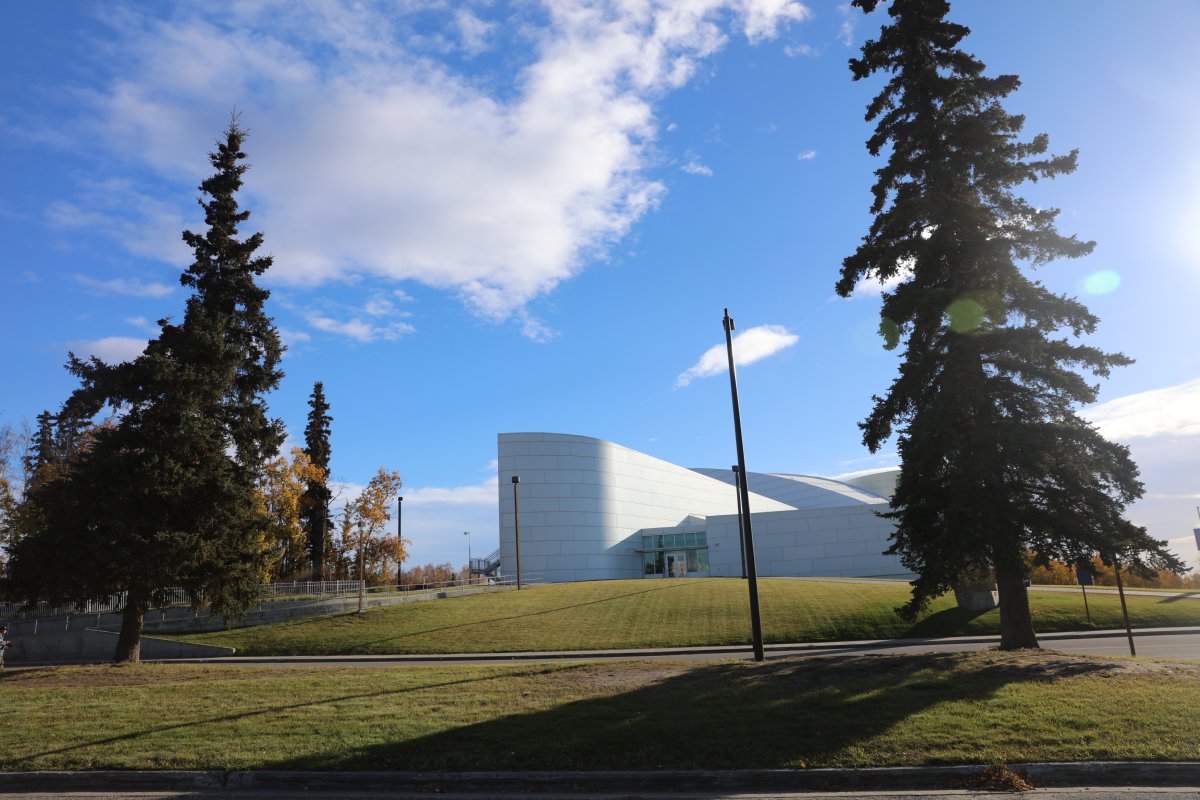
Students embrace the extreme environment through outdoor activities like cross-country skiing, ice hockey, and aurora viewing parties when the Northern Lights appear overhead. The Wood Center serves as the social center during harsh weather, while the Student Recreation Center offers indoor climbing walls and fitness facilities. Weekend activities shift dramatically with the seasons - fall brings hiking and fishing, while winter means dog sledding and ice sculpture contests. The 12:1 student-faculty ratio creates close mentorship opportunities, especially important given the university's reputation for Arctic research and engineering programs. With 87% of students from Alaska, there's a strong sense of local pride and frontier independence that defines campus culture.
- Setting
- City-Small
- Housing Capacity
- 1,746 beds
- Calendar System
- Semester
- Study Abroad
- Available
- Founded
- 1917
Campus Safety (2023)
148 total reported incidents. Source: Clery Act / U.S. Department of Education
| Offense | On Campus | Residential | Noncampus | Public Property |
|---|---|---|---|---|
| Statutory Rape | 21 | 21 | 0 | 0 |
| Rape | 13 | 13 | 1 | 0 |
| Stalking | 15 | 6 | 0 | 0 |
| Domestic Violence | 11 | 6 | 2 | 1 |
| Aggravated Assault | 13 | 3 | 0 | 0 |
| Fondling | 9 | 3 | 0 | 0 |
| Burglary | 3 | 1 | 1 | 0 |
| Motor Vehicle Theft | 5 | 0 | 0 | 0 |
Climate & Weather
- January Avg
- -11°–2°F
- July Avg
- 51°–71°F
- Annual Precipitation
- 13.3"
- Annual Snowfall
- 64.3"
Student Demographics
- Men
- 39.2%
- Women
- 60.8%
- White
- 53.1%
- Black
- 3.4%
- Hispanic
- 9.8%
- Asian
- 3.1%
- In-State Students
- 87.0%
- Pell Grant Recipients
- 22.4%
Location
- Address
- Fairbanks, Alaska 99775
After College
Source: College Scorecard / U.S. Department of Education
- Median Earnings (10 years)
- $48,866
- Median Earnings (5 years)
- $58,051
- Mean Earnings (6 years after entry)
- $36,500
- Loan Repayment Rate
- 54.7%
- Monthly Loan Payment
- $215/mo
- Median Debt at Graduation
- $20,291
Frequently Asked Questions
What is the retention rate at University of Alaska Fairbanks?
University of Alaska Fairbanks has a 72.10% retention rate, meaning about three-quarters of first-year students return for their sophomore year. The university serves as Alaska's flagship research institution, focusing heavily on Arctic and northern studies that attract students interested in unique geographical research opportunities.
How much does University of Alaska Fairbanks cost after financial aid?
Students at University of Alaska Fairbanks pay an average net price of $9,634 annually. The university offers particularly good value for low-income families, with students from families earning under $30,000 paying just $7,494 after aid.
What is the student-faculty ratio at University of Alaska Fairbanks?
University of Alaska Fairbanks maintains a 12:1 student-faculty ratio with 4,027 total students enrolled. The university is well-known for its Arctic research programs and engineering degrees, taking advantage of its unique location as the northernmost university in the United States.
What do graduates from University of Alaska Fairbanks typically earn?
University of Alaska Fairbanks graduates earn a median salary of $48,866 ten years after graduation. The university has a 91.2% employment rate, reflecting strong job placement in Alaska's resource-based economy and research sectors.
Where is University of Alaska Fairbanks located and what is campus life like?
University of Alaska Fairbanks sits in Fairbanks, Alaska, with on-campus housing for 1,746 students at $10,450 annually. The campus serves a predominantly in-state student body at 86.98%, creating a tight-knit community centered around Alaska's unique geography and culture.
Does University of Alaska Fairbanks have a strong graduation rate?
University of Alaska Fairbanks has a 36.70% six-year graduation rate, which reflects the challenges many students face in Alaska's remote setting. Despite this, the university excels in specialized fields like Arctic engineering and northern research, where hands-on experience often extends traditional timelines.
Similar Schools

Southern University and A & M College
Baton Rouge, Louisiana

Michigan Technological University
Houghton, Michigan
University of Maryland Eastern Shore
Princess Anne, Maryland

University of New Orleans
New Orleans, Louisiana

University of Massachusetts-Dartmouth
North Dartmouth, Massachusetts

University of Arkansas at Little Rock
Little Rock, Arkansas