
About University of Minnesota-Twin Cities
The financial picture looks manageable for most families. Students pay an average net price of $17,139 after aid, with low-income families paying just $7,262. Graduates earn a median of $69,020 ten years out with typical debt of $19,500. Monthly loan payments average $207, making this education affordable given the earning potential. The 85% graduation rate suggests most students finish what they start.
Campus life centers around Division I athletics with 19 varsity sports and Big Ten Conference rivalries against Wisconsin and Iowa. The student body splits 54% women to 46% men, with 70% coming from Minnesota. The 91% retention rate indicates students stick around after freshman year. With 615 student athletes and over $17 million in athletic scholarships, sports culture runs deep at this research university.
Academics & Faculty
Source: College Scorecard / U.S. Department of Education
- Student-to-Faculty Ratio
- 16:1
- Full-Time Faculty
- 82.2%
- Graduation Rate (4-year)
- 84.6%
- Graduation Rate (6-year)
- 84.8%
- Retention Rate
- 90.9%
- Median Earnings (10 years)
- $69,020
- Carnegie Classification
- Doctoral University (R1)
Popular Programs by Earnings
| Program | Level | Median Earnings |
|---|---|---|
| Dentistry. | Doctoral | $140,032 |
| Pharmacy, Pharmaceutical Sciences, and Administration. | Doctoral | $121,673 |
| Business Administration, Management and Operations. | Master | $112,319 |
| Public Health. | Master | $76,460 |
| Construction Management. | Bachelor | $75,204 |
| Veterinary Medicine. | Doctoral | $74,477 |
| Computer Systems Analysis. | Bachelor | $73,446 |
| Computer Science. | Bachelor | $72,286 |
| Computer Engineering. | Bachelor | $72,022 |
| Chemical Engineering. | Bachelor | $70,176 |
Campus Life
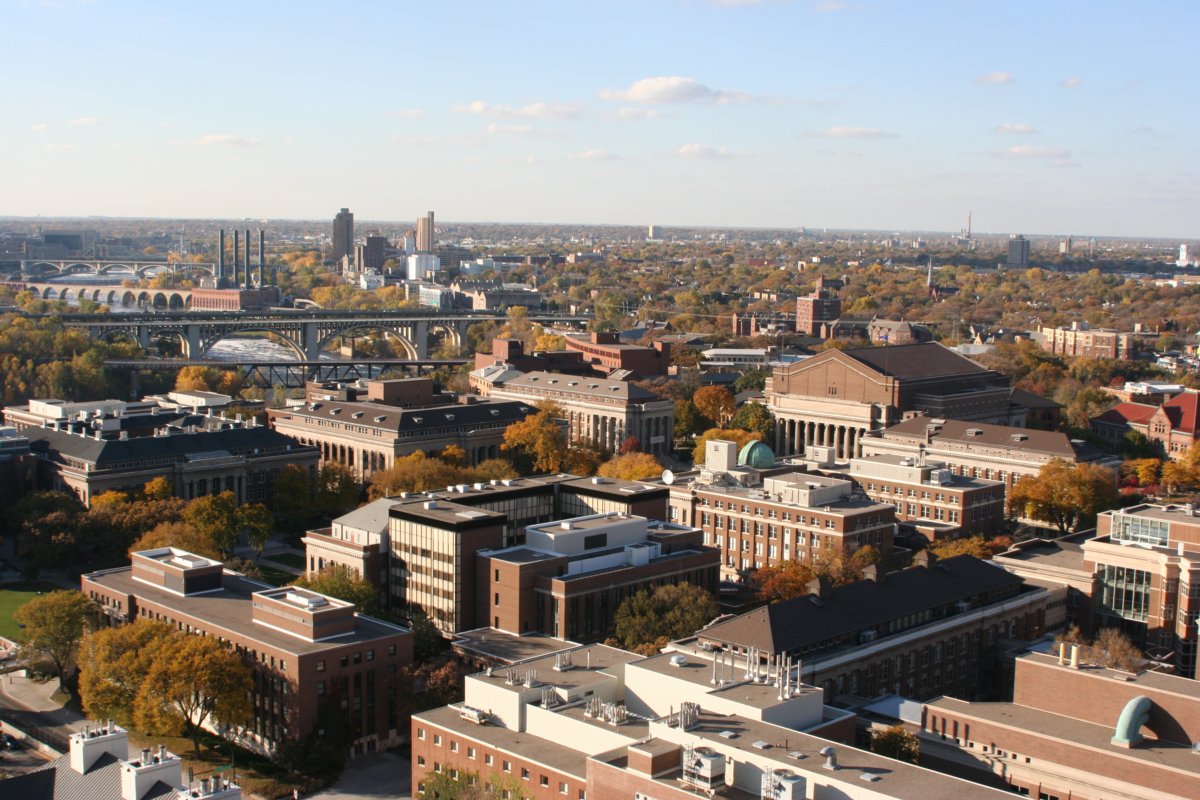
The Golden Gophers draw massive crowds to Big Ten football games at Huntington Bank Stadium. Students embrace the cold with winter traditions like broomball on frozen ponds and ice skating between classes. The campus buzzes with research activity year-round, from the medical school labs to the agricultural research facilities that helped feed the world. Weekend options range from exploring the Walker Art Center downtown to hitting the extensive trail system along the river. With 70% of students from Minnesota, the culture stays rooted in Midwest friendliness and outdoor recreation, even when the thermometer hits negative double digits.
- Setting
- City-Large
- Housing Capacity
- 7,558 beds
- Calendar System
- Semester
- Study Abroad
- Available
Campus Safety (2023)
374 total reported incidents. Source: Clery Act / U.S. Department of Education
| Offense | On Campus | Residential | Noncampus | Public Property |
|---|---|---|---|---|
| Motor Vehicle Theft | 67 | 1 | 19 | 26 |
| Stalking | 52 | 10 | 2 | 0 |
| Rape | 26 | 19 | 2 | 0 |
| Burglary | 34 | 8 | 2 | 0 |
| Fondling | 25 | 13 | 5 | 0 |
| Domestic Violence | 10 | 1 | 7 | 1 |
| Aggravated Assault | 12 | 1 | 1 | 4 |
| Dating Violence | 11 | 5 | 0 | 0 |
| Robbery | 4 | 0 | 1 | 4 |
| Arson | 1 | 0 | 0 | 0 |
Climate & Weather
- January Avg
- 8°–21°F
- July Avg
- 64°–83°F
- Annual Precipitation
- 34.4"
- Annual Snowfall
- 40.4"
Student Demographics
- Men
- 46.0%
- Women
- 54.0%
- White
- 59.2%
- Black
- 8.9%
- Hispanic
- 6.0%
- Asian
- 13.1%
- In-State Students
- 70.1%
- Pell Grant Recipients
- 16.9%
Location
- Address
- Minneapolis, Minnesota 55455-0213
After College
Source: College Scorecard / U.S. Department of Education
- Median Earnings (10 years)
- $69,020
- Median Earnings (5 years)
- $68,455
- Mean Earnings (6 years after entry)
- $46,000
- Loan Repayment Rate
- 74.7%
- Monthly Loan Payment
- $207/mo
- Median Debt at Graduation
- $19,500
Frequently Asked Questions
What is the acceptance rate at University of Minnesota-Twin Cities?
The University of Minnesota-Twin Cities accepts 74.91% of applicants, making it moderately selective for a major research university. Students typically need SAT scores around 1395 or ACT scores around 30 to be competitive. This Big Ten powerhouse balances accessibility with academic rigor across its comprehensive program offerings.
How much does University of Minnesota-Twin Cities cost after financial aid?
Students pay an average net price of $17,139 after aid, with costs varying by family income. Low-income families earning under $30,000 pay just $7,262 on average, while those earning over $110,000 pay $26,623. The university keeps costs manageable for a major research institution, especially for Minnesota residents who pay $16,488 in tuition.
What academic programs is University of Minnesota-Twin Cities known for?
The university excels as a major research institution with particularly strong programs in engineering, medicine, and agriculture. With 30,469 students and a 16:1 student-faculty ratio, it offers the resources of a large university while maintaining quality instruction. The school has produced notable graduates including Nobel Prize winner Norman Borlaug and journalist Thomas Friedman.
What do graduates of University of Minnesota-Twin Cities earn after college?
Alumni earn a median salary of $69,020 ten years after graduation, reflecting strong career outcomes from this research university. The employment rate reaches 96.0%, demonstrating the value of a Golden Gophers degree in the job market. Graduates typically carry $19,500 in debt with monthly loan payments of $207, reasonable for the earning potential.
Where do students live at University of Minnesota-Twin Cities?
The campus houses 7,558 students in residence halls, serving about 25% of the total enrollment of 30,469. Most students are Minnesota residents, making up 70.05% of the student body, while the rest come from across the country and internationally. The large city setting of Minneapolis provides countless off-campus housing and internship opportunities.
Is University of Minnesota-Twin Cities competitive in athletics?
The Golden Gophers compete in NCAA Division I as members of the strong Big Ten Conference with 19 varsity sports. The athletic program supports 615 student-athletes with $17,703,130 in athletic scholarships distributed annually. The university maintains traditional rivalries with University of Wisconsin-Madison and University of Iowa, adding excitement to the collegiate sports experience.
Similar Schools
Mississippi State University
Mississippi State, Mississippi

Wayne State University
Detroit, Michigan

Louisiana State University and Agricultural & Mechanical College
Baton Rouge, Louisiana

University of Delaware
Newark, Delaware
University of Oklahoma-Norman Campus
Norman, Oklahoma

University of Nebraska-Lincoln
Lincoln, Nebraska