
About University of New Haven
Students pay an average net price of $34,089 after financial aid, which represents significant savings from the $66,924 sticker price. Graduates earn a median of $60,126 ten years after graduation, making the typical debt load of $27,000 manageable with monthly payments around $286. The numbers suggest a reasonable return on investment, especially for students entering the university's signature programs. About 81% of students take federal loans to finance their education.
The student body leans female at 58% and draws heavily from out-of-state, with only 40% coming from Connecticut. With 96.5% of graduates finding employment and strong athletic programs fielding 16 varsity sports, the university offers both career preparation and campus engagement opportunities.
Academics & Faculty
Source: College Scorecard / U.S. Department of Education
- Student-to-Faculty Ratio
- 18:1
- Full-Time Faculty
- 35.6%
- Graduation Rate (4-year)
- 60.5%
- Graduation Rate (6-year)
- 59.2%
- Retention Rate
- 77.2%
- Median Earnings (10 years)
- $60,126
- Carnegie Classification
- Master's University (Large)
Popular Programs by Earnings
| Program | Level | Median Earnings |
|---|---|---|
| Electrical, Electronics and Communications Engineering. | Bachelor | $67,995 |
| Civil Engineering. | Bachelor | $65,486 |
| Mechanical Engineering. | Bachelor | $63,997 |
| Health and Medical Administrative Services. | Master | $62,012 |
| Dental Support Services and Allied Professions. | Bachelor | $58,673 |
| Business, Management, Marketing, and Related Support Services, Other. | Master | $57,318 |
| Fire Protection. | Bachelor | $48,682 |
| Clinical, Counseling and Applied Psychology. | Master | $47,930 |
| Educational Administration and Supervision. | Master | $45,584 |
| Security Science and Technology. | Master | $45,584 |
Campus Life
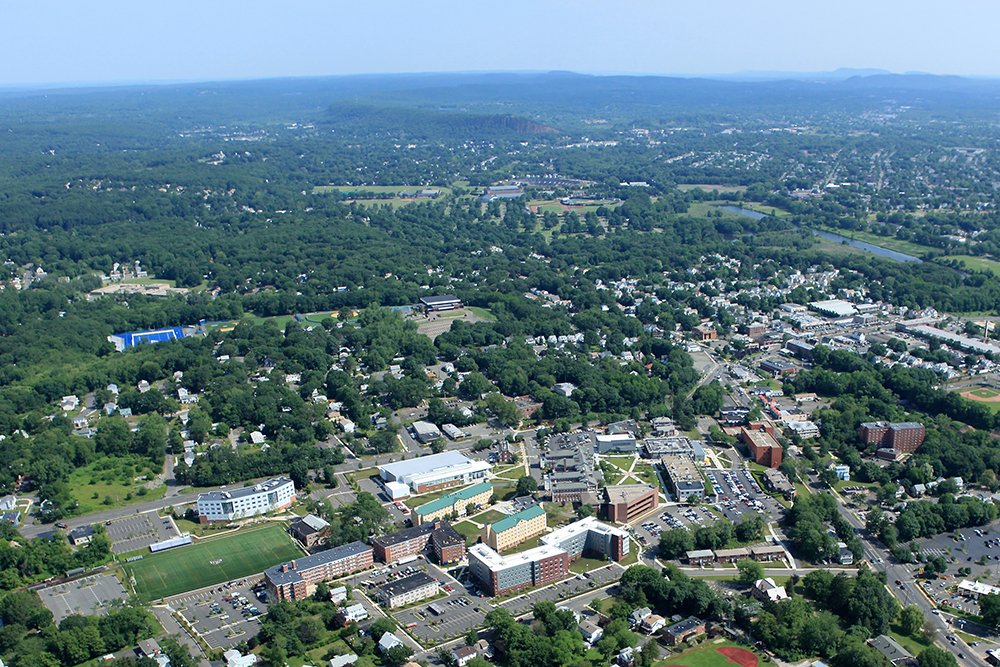
The campus buzzes with forensic science and criminal justice majors who dominate the academic culture. Students often gather around the Henry C. Lee Institute of Forensic Science, which draws visiting law enforcement professionals. With 504 student-athletes competing across 16 varsity sports as Division II Chargers, games create weekend social centers. The 18:1 student-faculty ratio means smaller classes where professors know your name. Many students intern at nearby corporations or law enforcement agencies, taking advantage of the school's strong industry connections. Weekend activities center on campus events, trips to New Haven's restaurants and Yale University area, or quick trains to New York City for bigger adventures.
- Setting
- Suburb-Large
- Housing Capacity
- 2,800 beds
- Calendar System
- Semester
- Study Abroad
- Available
- Founded
- 1920
Campus Safety (2023)
27 total reported incidents. Source: Clery Act / U.S. Department of Education
| Offense | On Campus | Residential | Noncampus | Public Property |
|---|---|---|---|---|
| Dating Violence | 3 | 3 | 0 | 0 |
| Motor Vehicle Theft | 3 | 0 | 0 | 2 |
| Robbery | 1 | 0 | 0 | 4 |
| Burglary | 2 | 2 | 0 | 0 |
| Fondling | 2 | 2 | 0 | 0 |
| Rape | 1 | 1 | 0 | 0 |
| Aggravated Assault | 1 | 0 | 0 | 0 |
Climate & Weather
- January Avg
- 23°–38°F
- July Avg
- 65°–82°F
- Annual Precipitation
- 41.8"
- Annual Snowfall
- 33.6"
Student Demographics
- Men
- 42.3%
- Women
- 57.7%
- White
- 53.7%
- Black
- 10.8%
- Hispanic
- 20.7%
- Asian
- 3.1%
- In-State Students
- 39.8%
- Pell Grant Recipients
- 27.4%
Location
- Address
- West Haven, Connecticut 06516-1916
After College
Source: College Scorecard / U.S. Department of Education
- Median Earnings (10 years)
- $60,126
- Median Earnings (5 years)
- $62,942
- Mean Earnings (6 years after entry)
- $40,500
- Loan Repayment Rate
- 69.7%
- Monthly Loan Payment
- $286/mo
- Median Debt at Graduation
- $27,000
Frequently Asked Questions
What is the acceptance rate at University of New Haven?
University of New Haven accepts 91.24% of applicants with an average SAT score of 1180. The school is known for its accessible admissions process while maintaining strong programs in criminal justice and forensic science.
How much does University of New Haven cost after financial aid?
Students pay an average net price of $34,089 after aid, down from the full tuition of $45,730. About 27.40% of students receive federal Pell Grants, and graduates leave with a median debt of $27,000.
What is University of New Haven known for academically?
The university built its reputation on criminal justice and forensic science programs with strong industry connections. With a student-faculty ratio of 18:1, students get hands-on training in state-of-the-art labs and real-world investigative techniques.
How much do University of New Haven graduates earn?
Graduates earn a median of $60,126 ten years after graduation with a 96.5% employment rate. The school's career-focused programs and industry partnerships help students transition into well-paying jobs in law enforcement, engineering, and business.
Where is University of New Haven located and what is campus life like?
The suburban campus in West Haven, Connecticut houses 2,800 students in residence halls serving 4,799 total students. The Chargers compete in 16 NCAA Division II sports with 504 student-athletes receiving over $5 million in athletic scholarships.
Does University of New Haven have a strong forensic science program?
The university operates one of the nation's top forensic science programs with modern crime labs and simulation facilities. Students work with real evidence and learn from faculty with FBI and law enforcement backgrounds, producing graduates who work for major agencies nationwide.