
About University of Pittsburgh-Pittsburgh Campus
Students pay an average net price of $30,074 after financial aid, though families earning under $30,000 pay just $17,007. Graduates earn a median salary of $66,125 ten years after college with typical debt of $24,250. Monthly loan payments average $257, making this a solid financial investment. The 84% graduation rate reflects strong student support in a challenging academic environment.
Panthers compete in 15 Division I sports with $19 million in athletic scholarships available. The student body tilts 58% female with strong representation from Pennsylvania residents at 59%. A 92% retention rate means most freshmen stick around, helped by a 13:1 student-faculty ratio. The employment rate hits 96%, reflecting Pittsburgh's growing tech and healthcare job market.
Academics & Faculty
Source: College Scorecard / U.S. Department of Education
- Student-to-Faculty Ratio
- 13:1
- Full-Time Faculty
- 78.7%
- Graduation Rate (4-year)
- 84.0%
- Graduation Rate (6-year)
- 84.3%
- Retention Rate
- 92.4%
- Median Earnings (10 years)
- $66,125
- Carnegie Classification
- Doctoral University (R1)
Popular Programs by Earnings
| Program | Level | Median Earnings |
|---|---|---|
| Advanced/Graduate Dentistry and Oral Sciences. | Certificate | $220,906 |
| Medical Clinical Sciences/Graduate Medical Studies. | Master | $172,991 |
| Registered Nursing, Nursing Administration, Nursing Research and Clinical Nursing. | Doctoral | $136,434 |
| Pharmacy, Pharmaceutical Sciences, and Administration. | Doctoral | $108,012 |
| Allied Health Diagnostic, Intervention, and Treatment Professions. | Master | $99,174 |
| Business Administration, Management and Operations. | Doctoral | $90,572 |
| Biomedical/Medical Engineering. | Doctoral | $83,546 |
| Dentistry. | Doctoral | $83,177 |
| Educational Administration and Supervision. | Doctoral | $81,702 |
| Mechanical Engineering. | Master | $81,702 |
Campus Life
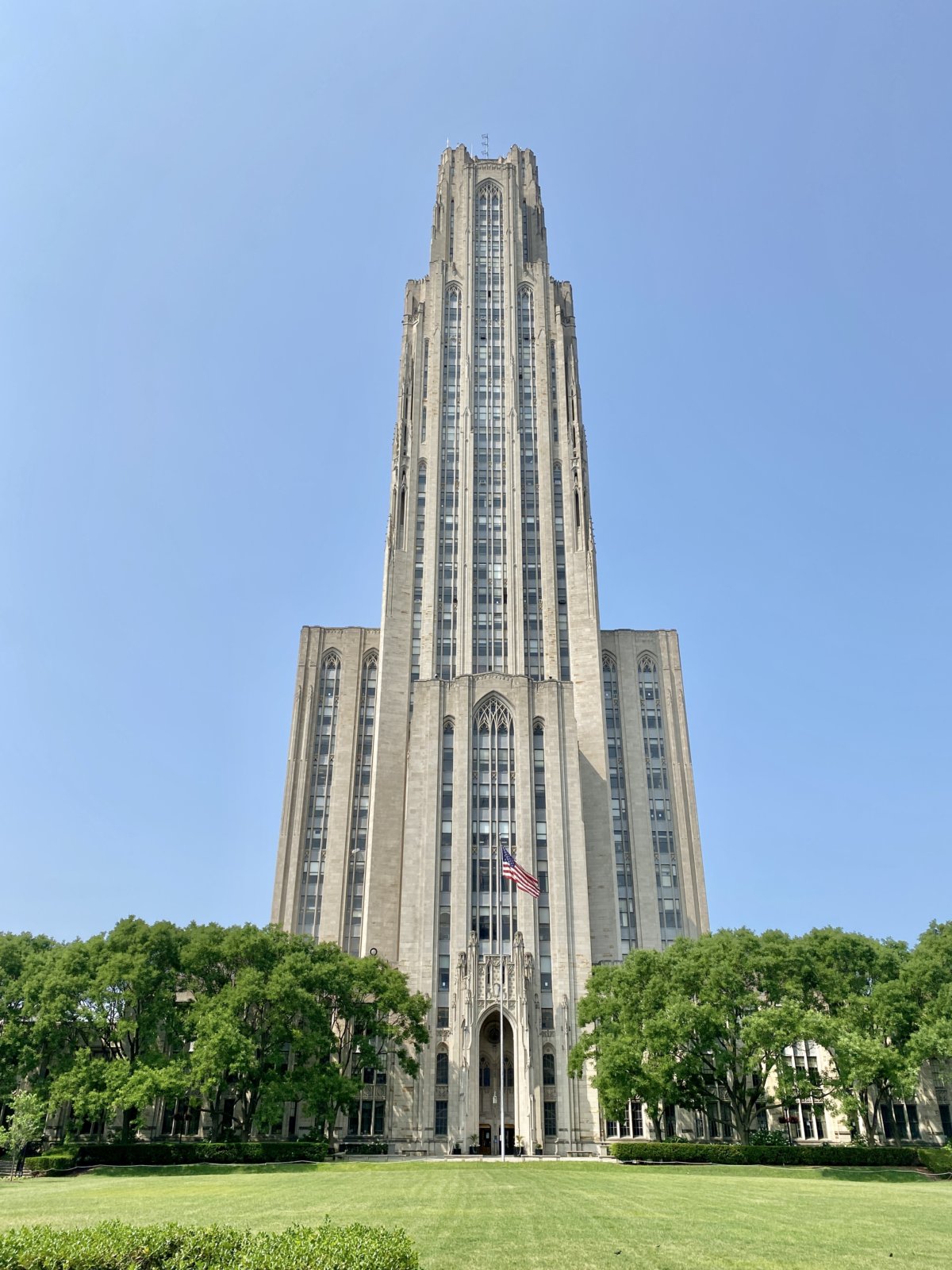
Pittsburgh winters demand heavy coats and boots, with snow lasting from December through March. Students often gather in the Cathedral's nationality rooms or head to nearby South Side for weekend entertainment. The 13:1 student-faculty ratio means smaller class discussions even at this research university of over 20,000 students. Basketball games at the Petersen Events Center draw passionate crowds, especially when facing rival Penn State. Students frequently explore the Strip District's markets or catch Pirates games downtown. The city's bridges and rivers create dramatic views, while the compact campus keeps everything walkable despite the urban setting.
- Setting
- City-Large
- Housing Capacity
- 8,860 beds
- Calendar System
- Semester
- Study Abroad
- Available
Campus Safety (2023)
156 total reported incidents. Source: Clery Act / U.S. Department of Education
| Offense | On Campus | Residential | Noncampus | Public Property |
|---|---|---|---|---|
| Aggravated Assault | 23 | 3 | 0 | 10 |
| Stalking | 22 | 6 | 1 | 0 |
| Rape | 14 | 9 | 0 | 0 |
| Motor Vehicle Theft | 13 | 0 | 0 | 3 |
| Fondling | 10 | 2 | 1 | 2 |
| Burglary | 6 | 6 | 0 | 0 |
| Dating Violence | 4 | 3 | 0 | 1 |
| Robbery | 5 | 0 | 1 | 2 |
| Domestic Violence | 2 | 1 | 1 | 2 |
| Arson | 2 | 1 | 0 | 0 |
Climate & Weather
- January Avg
- 21°–37°F
- July Avg
- 64°–84°F
- Annual Precipitation
- 40.6"
- Annual Snowfall
- 25.0"
Student Demographics
- Men
- 42.1%
- Women
- 57.9%
- White
- 61.0%
- Black
- 5.5%
- Hispanic
- 6.8%
- Asian
- 14.9%
- In-State Students
- 58.8%
- Pell Grant Recipients
- 13.8%
Location
- Address
- Pittsburgh, Pennsylvania 15260
After College
Source: College Scorecard / U.S. Department of Education
- Median Earnings (10 years)
- $66,125
- Median Earnings (5 years)
- $69,754
- Mean Earnings (6 years after entry)
- $44,300
- Loan Repayment Rate
- 75.3%
- Monthly Loan Payment
- $257/mo
- Median Debt at Graduation
- $24,250
Frequently Asked Questions
What is the acceptance rate at University of Pittsburgh-Pittsburgh Campus?
Pitt admits 49.14% of applicants, making it moderately selective among public research universities. The middle 50% of admitted students score between 1280 and 1470 on the SAT, reflecting the academic caliber of students drawn to its well-known medical and engineering programs.
How much does University of Pittsburgh-Pittsburgh Campus cost after financial aid?
The average net price is $30,074, though this varies by family income. Students from families earning under $30,000 pay just $17,007 on average, while those from higher-income families pay closer to the full out-of-state tuition of $39,890.
What academic programs is University of Pittsburgh-Pittsburgh Campus known for?
Pitt excels in medicine, engineering, and public health as a major research university. With a 13:1 student-faculty ratio, students get substantial access to professors conducting groundbreaking research, particularly in health sciences where the university has built its strongest reputation.
What do graduates earn after attending University of Pittsburgh-Pittsburgh Campus?
Ten years after graduation, Pitt alumni earn a median salary of $66,125. The strong employment rate of 95.6% reflects the university's reputation among employers, particularly in healthcare, technology, and engineering fields throughout the Pittsburgh region and beyond.
Where do students live at University of Pittsburgh-Pittsburgh Campus?
The university houses 8,860 students in residence halls throughout Pittsburgh's Oakland neighborhood. Campus sits in the heart of a large city, giving students access to internships, cultural attractions, and the active Steel City atmosphere that defines the Pitt experience.
Does University of Pittsburgh-Pittsburgh Campus have notable alumni?
Pitt has produced remarkable graduates including Jonas Salk, who developed the polio vaccine, and pop artist Andy Warhol. The university's 20,189 students follow in the footsteps of NFL quarterback Dan Marino and Pulitzer Prize-winning author Michael Chabon, reflecting the diverse paths available at this major research institution.
Similar Schools

Stony Brook University
Stony Brook, New York

North Carolina State University at Raleigh
Raleigh, North Carolina
University of California-Santa Cruz
Santa Cruz, California
University of Maryland-College Park
College Park, Maryland
University of Connecticut
Storrs, Connecticut
Auburn University
Auburn, Alabama