
About University of South Dakota
The financial picture looks manageable for most families. Students from households earning under $30,000 pay just $13,687 net price after aid, while even high-income families pay only $21,432. Graduates earn a median of $51,926 ten years after graduation, making the typical debt load of $23,592 reasonable. Monthly loan payments average $250, which most graduates can handle given the strong 98.5% employment rate.
Women outnumber men on campus, making up 65.17% of students. The Coyotes compete in NCAA Division I athletics with 14 varsity sports and $5 million in athletic scholarships. About 80% of students are white, with 63.33% coming from in-state. The 79.98% retention rate suggests most students find what they're looking for in this prairie university town.
Academics & Faculty
Source: College Scorecard / U.S. Department of Education
- Student-to-Faculty Ratio
- 14:1
- Full-Time Faculty
- 67.7%
- Graduation Rate (4-year)
- 59.4%
- Graduation Rate (6-year)
- 61.4%
- Retention Rate
- 80.0%
- Median Earnings (10 years)
- $51,926
- Carnegie Classification
- Doctoral University (R2)
Popular Programs by Earnings
| Program | Level | Median Earnings |
|---|---|---|
| Allied Health Diagnostic, Intervention, and Treatment Professions. | Master | $100,951 |
| Educational Administration and Supervision. | Doctoral | $97,071 |
| Public Administration. | Master | $70,456 |
| Business Administration, Management and Operations. | Master | $68,778 |
| Rehabilitation and Therapeutic Professions. | Doctoral | $65,170 |
| Rehabilitation and Therapeutic Professions. | Master | $62,632 |
| Educational Administration and Supervision. | Master | $62,260 |
| Computer and Information Sciences, General. | Bachelor | $62,012 |
| Accounting and Related Services. | Master | $62,012 |
| Medicine. | Doctoral | $57,860 |
Campus Life
Women outnumber men 65% to 35%, creating a female-heavy social active. Weekend life revolves around Coyote athletics, especially basketball games that draw passionate crowds despite the school's small size. Students often head to Sioux Falls for bigger entertainment options or outdoor recreation at nearby Lewis and Clark Lake. The town of Vermillion offers classic college bars and pizza joints within walking distance. With 63% of students from South Dakota, campus culture feels tight-knit and Midwestern friendly. Greek life exists but doesn't dominate social scenes like at larger universities.
- Setting
- Town-Distant
- Housing Capacity
- 2,128 beds
- Calendar System
- Semester
- Study Abroad
- Available
- Founded
- 1862
Campus Safety (2023)
43 total reported incidents. Source: Clery Act / U.S. Department of Education
| Offense | On Campus | Residential | Noncampus | Public Property |
|---|---|---|---|---|
| Rape | 11 | 10 | 4 | 0 |
| Stalking | 6 | 2 | 0 | 0 |
| Fondling | 3 | 1 | 0 | 0 |
| Dating Violence | 1 | 1 | 1 | 0 |
| Burglary | 1 | 1 | 0 | 0 |
| Motor Vehicle Theft | 1 | 0 | 0 | 0 |
Climate & Weather
- January Avg
- 10°–31°F
- July Avg
- 64°–86°F
- Annual Precipitation
- 27.6"
- Annual Snowfall
- 32.9"
Student Demographics
- Men
- 34.8%
- Women
- 65.2%
- White
- 79.7%
- Black
- 3.8%
- Hispanic
- 5.7%
- Asian
- 1.3%
- In-State Students
- 63.3%
- Pell Grant Recipients
- 18.0%
Location
- Address
- Vermillion, South Dakota 57069-2390
After College
Source: College Scorecard / U.S. Department of Education
- Median Earnings (10 years)
- $51,926
- Median Earnings (5 years)
- $59,693
- Mean Earnings (6 years after entry)
- $37,100
- Loan Repayment Rate
- 69.5%
- Monthly Loan Payment
- $250/mo
- Median Debt at Graduation
- $23,592
Frequently Asked Questions
What is the acceptance rate at University of South Dakota?
USD accepts 99.46% of applicants, making it one of the most accessible state universities in the region. The middle 50% of admitted students score between 1020-1300 on the SAT with an average of 1160.
How much does University of South Dakota cost after financial aid?
The average net price is $19,155 annually, though costs vary by family income. Students from families earning under $30,000 pay just $13,687 on average, while the sticker price for in-state tuition is only $9,432.
What is the student-faculty ratio at University of South Dakota?
USD maintains a 14:1 student-faculty ratio across its 5,239 enrolled students. The university is particularly well-known for its medical school and serves as South Dakota's flagship public research institution.
What are the graduation rates at University of South Dakota?
About 59% of students graduate within four years, while 61% complete their degree within six years. Graduates earn a median salary of $51,926 ten years after enrollment, with strong employment outcomes in the region.
Where is University of South Dakota located?
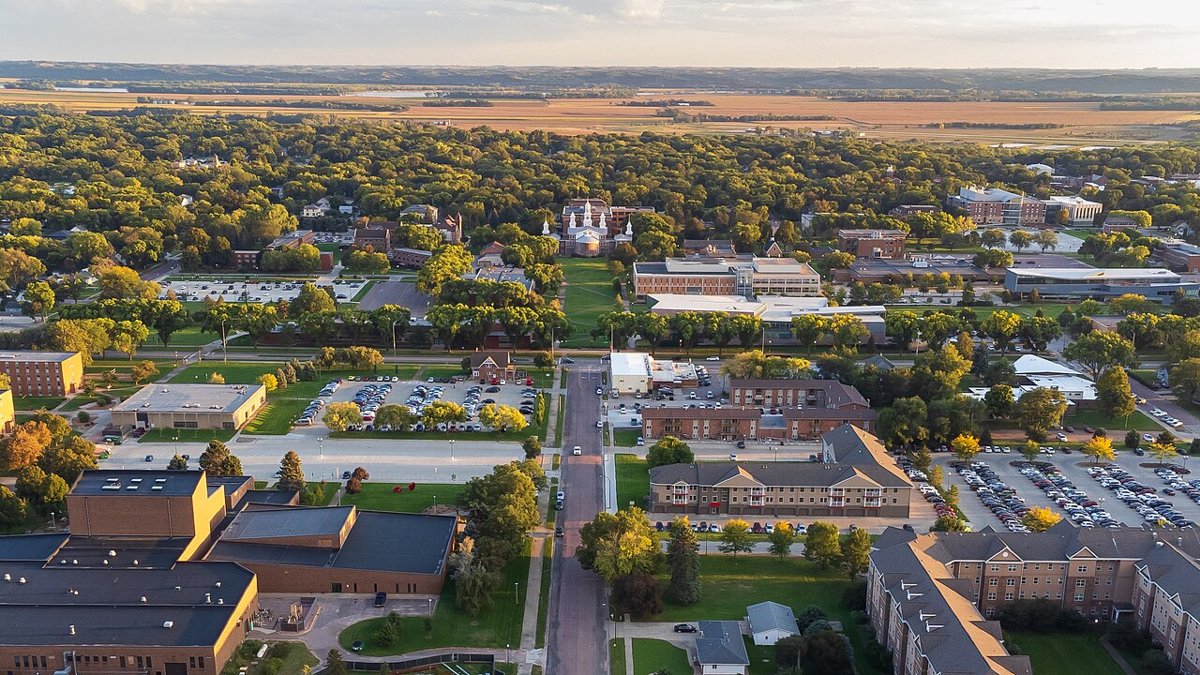
The campus sits in Vermillion, a small college town in southeastern South Dakota near the Nebraska border. With housing for 2,128 students, the university creates a close-knit community atmosphere in this town-distant setting.
Does University of South Dakota compete in Division I athletics?
USD's Coyotes compete in NCAA Division I as members of The Summit League with 14 varsity sports. The athletic program awards over $5 million in scholarships annually to its 446 student-athletes, creating a strong campus sports culture.