About Metropolitan State University
The financial picture tells a practical story. Students pay an average net price of $19,181 annually, with the same tuition rate applying to both in-state and out-of-state students at $9,780. Graduates typically leave with $17,100 in debt and earn a median salary of $64,705 ten years after graduation. Monthly loan payments average just $181, making the debt manageable against solid earning potential. The employment rate hits 95.1%, suggesting strong job market outcomes.
The student body reflects Minnesota's changing demographics. Women make up 58% of enrollment, while the racial composition spans 36% White, 32% Black, 17% Asian, and 8% Hispanic students. Nearly all students (97%) come from Minnesota. The 38% six-year graduation rate reflects the reality of part-time, working students who take longer to complete degrees. The 14:1 student-faculty ratio ensures personal attention despite the urban setting.
Academics & Faculty
Source: College Scorecard / U.S. Department of Education
- Student-to-Faculty Ratio
- 14:1
- Full-Time Faculty
- 32.1%
- Graduation Rate (4-year)
- 35.5%
- Graduation Rate (6-year)
- 38.4%
- Retention Rate
- 73.3%
- Median Earnings (10 years)
- $64,705
- Carnegie Classification
- Master's University (Medium)
Popular Programs by Earnings
| Program | Level | Median Earnings |
|---|---|---|
| Registered Nursing, Nursing Administration, Nursing Research and Clinical Nursing. | Bachelor | $76,998 |
| Computer Science. | Bachelor | $68,821 |
| Business Administration, Management and Operations. | Master | $65,131 |
| Registered Nursing, Nursing Administration, Nursing Research and Clinical Nursing. | Master | $63,005 |
| Management Information Systems and Services. | Bachelor | $62,012 |
| Computer/Information Technology Administration and Management. | Bachelor | $57,318 |
| Criminal Justice and Corrections. | Certificate | $57,318 |
| Liberal Arts and Sciences, General Studies and Humanities. | Bachelor | $54,713 |
| Information Science/Studies. | Bachelor | $53,775 |
| Rhetoric and Composition/Writing Studies. | Master | $52,107 |
Campus Life
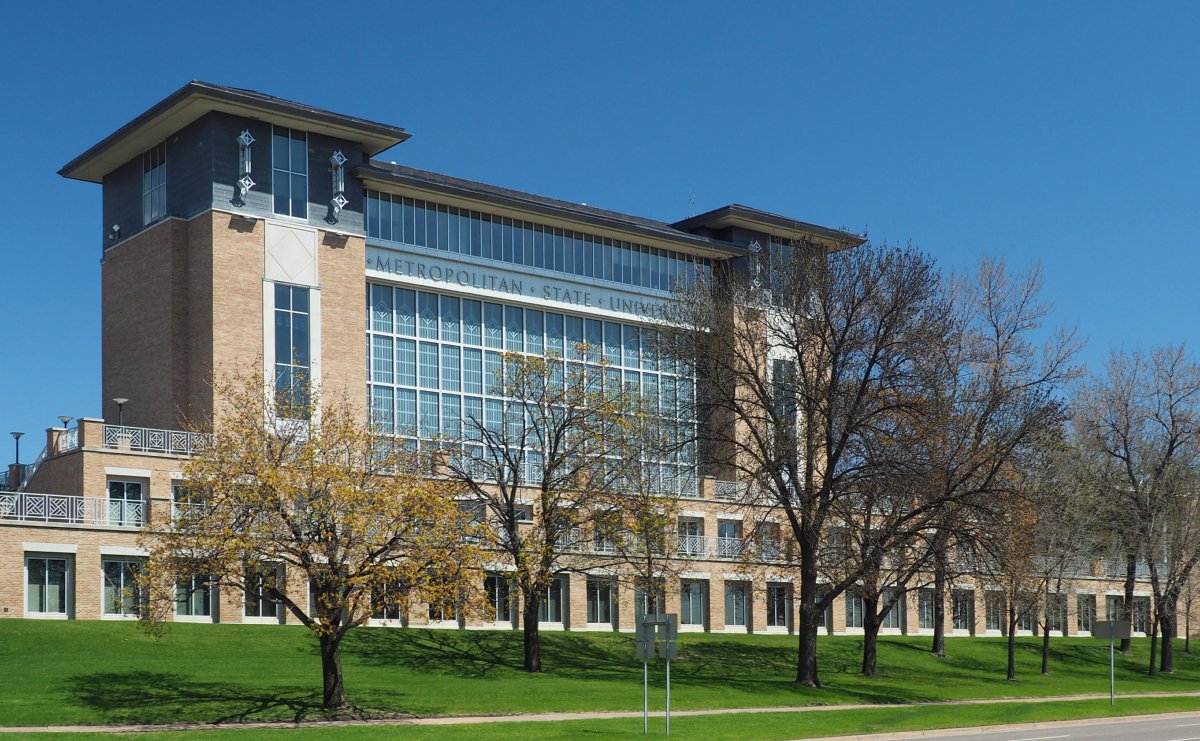
The 14:1 student-faculty ratio creates smaller classrooms despite the urban setting. Students often grab coffee between classes at nearby cafes or study in the library overlooking the Mississippi River. With 57% women and a diverse population including 32% Black students and 17% Asian students, the campus reflects the Twin Cities' demographics. Weekend life revolves around the cities rather than campus traditions. Students might catch a Twins game, explore the Walker Art Center, or hit the hiking trails around the Mississippi. The Roadrunners compete in NAIA athletics, though many students focus more on internships and part-time jobs that downtown Saint Paul readily provides.
- Setting
- City-Large
- Calendar System
- Semester
- Founded
- 1971
Campus Safety (2023)
27 total reported incidents. Source: Clery Act / U.S. Department of Education
| Offense | On Campus | Residential | Noncampus | Public Property |
|---|---|---|---|---|
| Robbery | 0 | 0 | 1 | 9 |
| Stalking | 1 | 0 | 5 | 0 |
| Motor Vehicle Theft | 0 | 0 | 1 | 3 |
| Domestic Violence | 0 | 0 | 1 | 2 |
| Arson | 0 | 0 | 0 | 1 |
| Dating Violence | 1 | 0 | 0 | 0 |
| Fondling | 0 | 0 | 1 | 0 |
| Rape | 0 | 0 | 0 | 1 |
Climate & Weather
- January Avg
- 9°–24°F
- July Avg
- 64°–83°F
- Annual Precipitation
- 62.0"
- Annual Snowfall
- -727.1"
Student Demographics
- Men
- 42.4%
- Women
- 57.6%
- White
- 36.1%
- Black
- 31.6%
- Hispanic
- 7.7%
- Asian
- 16.7%
- In-State Students
- 97.3%
- Pell Grant Recipients
- 44.3%
Location
- Address
- Saint Paul, Minnesota 55106-5000
After College
Source: College Scorecard / U.S. Department of Education
- Median Earnings (10 years)
- $64,705
- Median Earnings (5 years)
- $63,739
- Mean Earnings (6 years after entry)
- $44,600
- Loan Repayment Rate
- 56.8%
- Monthly Loan Payment
- $181/mo
- Median Debt at Graduation
- $17,100
Frequently Asked Questions
What is the acceptance rate at Metropolitan State University?
Metropolitan State University accepts 81.7% of applicants, making it accessible to most students who apply. The university was founded in 1971 specifically to serve working adults and non-traditional students. With an average ACT score of 24, the school maintains reasonable academic standards while keeping doors open for diverse learners.
How much does Metropolitan State University cost after financial aid?
Students pay an average net price of $19,181 annually, with both in-state and out-of-state tuition set at $9,780. The school keeps costs manageable for working adults, with 44.3% of students receiving Pell Grants. Graduates typically leave with $17,100 in median debt and monthly loan payments of $181.
What is the student-faculty ratio at Metropolitan State University?
The university maintains a 14:1 student-faculty ratio with 4,998 total students enrolled. This smaller scale allows for more personalized attention, which fits the school's mission of serving non-traditional students. The flexible scheduling and career-oriented programs attract students who need to balance education with work and family commitments.
What are the graduation rates at Metropolitan State University?
The six-year graduation rate stands at 38.4%, while the four-year rate is 35.5%. These figures reflect the school's focus on working adults who often attend part-time or take breaks in their education. Despite the extended timeline, graduates earn a median of $64,705 ten years after enrollment, with a 95.1% employment rate.
Where is Metropolitan State University located and what is campus life like?
The university sits in Saint Paul, Minnesota, serving a large metropolitan area with urban opportunities. The student body is 57.6% women and remarkably diverse, with 36.1% white, 31.6% Black, 16.7% Asian, and 7.7% Hispanic students. Nearly all students (97.3%) come from Minnesota, and the retention rate of 73.3% shows decent student satisfaction.
What makes Metropolitan State University's athletics unique?
The university's athletic teams go by the unusual nickname "Rodents," setting them apart from typical college mascots. This quirky branding reflects the school's non-traditional approach to higher education. The focus remains on serving working adults rather than traditional college athletics, with flexible programs designed around students' professional and personal obligations.