About Minnesota State University-Mankato
The financial picture looks promising for families. Students typically pay $18,609 after aid, less than the sticker price. Graduates earn a median of $56,922 ten years after leaving school, making the typical debt load of $21,106 manageable with monthly payments around $224. Nearly 99% of graduates find employment, suggesting the investment pays off quickly. Low-income students pay just $11,920 net price, making this an accessible option for first-generation college students.
Campus life centers around Division II athletics, with 570 student-athletes competing across 16 sports in the Northern Sun Conference. The student body draws heavily from Minnesota, with 83% coming from in-state. Housing accommodates 2,889 students, creating a residential campus feel despite the university's size.
Academics & Faculty
Source: College Scorecard / U.S. Department of Education
- Student-to-Faculty Ratio
- 21:1
- Full-Time Faculty
- 68.2%
- Graduation Rate (4-year)
- 53.3%
- Graduation Rate (6-year)
- 54.1%
- Retention Rate
- 79.7%
- Median Earnings (10 years)
- $56,922
- Carnegie Classification
- Master's University (Large)
Popular Programs by Earnings
| Program | Level | Median Earnings |
|---|---|---|
| Registered Nursing, Nursing Administration, Nursing Research and Clinical Nursing. | Master | $104,749 |
| Educational Administration and Supervision. | Doctoral | $78,719 |
| Business Administration, Management and Operations. | Master | $76,460 |
| Computer and Information Sciences, General. | Bachelor | $68,047 |
| Registered Nursing, Nursing Administration, Nursing Research and Clinical Nursing. | Bachelor | $67,079 |
| Mechanical Engineering. | Bachelor | $64,493 |
| Engineering, General. | Bachelor | $63,302 |
| Accounting and Related Services. | Master | $61,303 |
| Clinical, Counseling and Applied Psychology. | Master | $61,064 |
| Civil Engineering. | Bachelor | $60,771 |
Campus Life
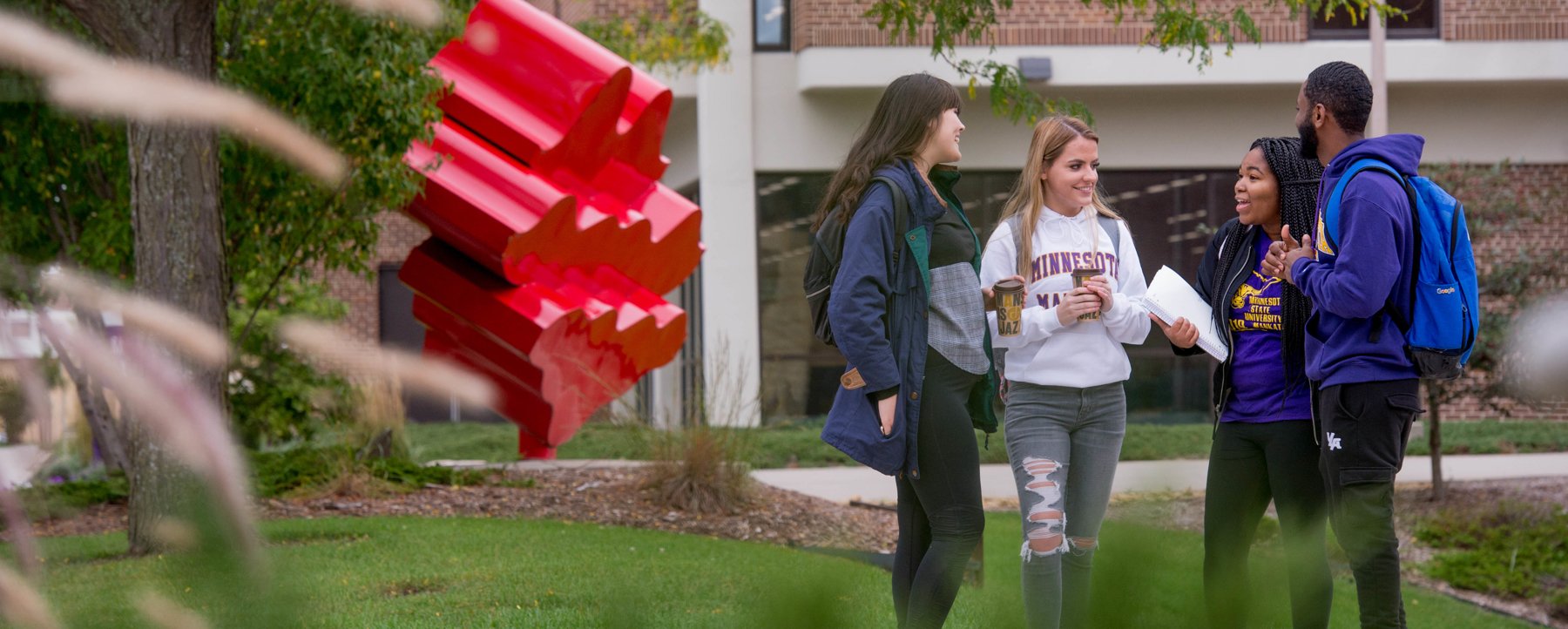
With 83% of students coming from in-state, the Mavericks build strong regional connections. The 570 student-athletes competing in 16 NCAA Division II sports create visible school spirit, especially during hockey and football seasons. Students often gather at the Centennial Student Union or explore downtown Mankato's restaurants and bars on weekends. The 21:1 student-faculty ratio means larger lecture classes are common, but the university's reputation for solid programs in business, education, and engineering keeps the 98.5% employment rate high. Many students work part-time jobs to manage the $18,609 average net price.
- Setting
- City-Small
- Housing Capacity
- 2,889 beds
- Calendar System
- Semester
- Study Abroad
- Available
Campus Safety (2023)
46 total reported incidents. Source: Clery Act / U.S. Department of Education
| Offense | On Campus | Residential | Noncampus | Public Property |
|---|---|---|---|---|
| Rape | 7 | 7 | 0 | 0 |
| Dating Violence | 6 | 3 | 0 | 0 |
| Stalking | 7 | 2 | 0 | 0 |
| Fondling | 4 | 4 | 0 | 0 |
| Aggravated Assault | 2 | 0 | 0 | 0 |
| Motor Vehicle Theft | 2 | 0 | 0 | 0 |
| Arson | 0 | 0 | 0 | 1 |
| Burglary | 1 | 0 | 0 | 0 |
Climate & Weather
- January Avg
- 4°–24°F
- July Avg
- 61°–82°F
- Annual Precipitation
- 32.3"
- Annual Snowfall
- -739.1"
Student Demographics
- Men
- 45.4%
- Women
- 54.6%
- White
- 71.9%
- Black
- 6.0%
- Hispanic
- 5.7%
- Asian
- 3.3%
- In-State Students
- 83.2%
- Pell Grant Recipients
- 20.5%
Location
- Address
- Mankato, Minnesota 56001
After College
Source: College Scorecard / U.S. Department of Education
- Median Earnings (10 years)
- $56,922
- Median Earnings (5 years)
- $60,941
- Mean Earnings (6 years after entry)
- $38,800
- Loan Repayment Rate
- 69.9%
- Monthly Loan Payment
- $224/mo
- Median Debt at Graduation
- $21,106
Frequently Asked Questions
What is the acceptance rate at Minnesota State University-Mankato?
Minnesota State University-Mankato accepts 70.68% of applicants with an average ACT score of 21. The university takes a fairly accessible approach to admissions, welcoming students who show potential for success in their comprehensive programs.
How much does Minnesota State University-Mankato cost after financial aid?
The average net price is $18,609, with costs varying by family income from $11,920 for the lowest earners to $21,860 for families making over $110,000. Students graduate with a median debt of $21,106, which is manageable given the strong return on investment.
What is the student-faculty ratio at Minnesota State University-Mankato?
The student-faculty ratio is 21:1 across the university's 11,325 students. This mid-sized public university balances accessibility with personal attention, though students should expect larger introductory classes typical of comprehensive state schools.
What are the graduation rates at Minnesota State University-Mankato?
The six-year graduation rate is 54.10% with a four-year rate of 53.32%, while 79.66% of students return for their sophomore year. Graduates earn a median of $56,922 ten years after graduation, reflecting the university's focus on career-oriented programs.
Where is Minnesota State University-Mankato located and what is campus life like?
The campus sits in Mankato, a small city in southern Minnesota with housing for 2,889 students out of the total 11,325 enrollment. The university fields 16 varsity sports as the Mavericks in NCAA Division II, creating a strong athletic culture that bonds the predominantly Minnesota student body.
Does Minnesota State University-Mankato have strong job placement for graduates?
The university boasts a 98.5% employment rate for graduates, with recent alumni earning a median of $49,152 in their first year after graduation. This reflects the school's reputation for practical, career-focused education that prepares students for the regional job market.