About Wayne County Community College District
Students pay an average net price of $5,762 after financial aid, making this one of the more affordable options for higher education in Michigan. In-state tuition runs just $3,112 annually. Graduates earn a median of $29,079 ten years after starting, though employment rates reach 86.9%. Students typically graduate with $12,062 in debt and monthly loan payments of $128. The financial picture makes sense for students seeking quick workforce entry or planning to transfer to four-year universities.
The student body is 64.5% women, typical for community colleges nationwide. The 25:1 student-faculty ratio means larger class sizes than at four-year institutions. Only 23.4% of students graduate within six years, but many transfer before completing associate degrees. The Wildcats compete in seven sports with 35 total athletes, providing limited but meaningful athletic opportunities for students.
Academics & Faculty
Source: College Scorecard / U.S. Department of Education
- Student-to-Faculty Ratio
- 25:1
- Full-Time Faculty
- 13.6%
- Graduation Rate (6-year)
- 23.4%
- Median Earnings (10 years)
- $29,079
Popular Programs by Earnings
| Program | Level | Median Earnings |
|---|---|---|
| Registered Nursing, Nursing Administration, Nursing Research and Clinical Nursing. | Associate | $59,350 |
| Criminal Justice and Corrections. | Associate | $32,925 |
| Allied Health Diagnostic, Intervention, and Treatment Professions. | Associate | $32,925 |
| Veterinary/Animal Health Technologies/Technicians. | Associate | $26,739 |
| Liberal Arts and Sciences, General Studies and Humanities. | Associate | $25,396 |
Campus Life
Detroit winters demand heavy coats and snow boots, with temperatures often below freezing from December through February. Most students commute rather than live on campus, since this is primarily a commuter college focused on practical training. The student body is 70% Black and 65% women, many juggling work and family responsibilities alongside classes. With a 25:1 student-faculty ratio, expect larger class sizes typical of community colleges. Students often grab coffee between classes at campus cafeterias or study in library computer labs. Weekends bring quiet campuses as most students return to jobs, families, or transfer preparation at nearby universities like Wayne State.
- Setting
- City-Large
- Calendar System
- Semester
- Study Abroad
- Available
- Founded
- 1967
Campus Safety (2023)
3 total reported incidents. Source: Clery Act / U.S. Department of Education
| Offense | On Campus | Residential | Noncampus | Public Property |
|---|---|---|---|---|
| Burglary | 1 | 0 | 0 | 0 |
| Domestic Violence | 1 | 0 | 0 | 0 |
| Motor Vehicle Theft | 0 | 0 | 0 | 1 |
Climate & Weather
- January Avg
- 19°–32°F
- July Avg
- 64°–83°F
- Annual Precipitation
- 29.9"
- Annual Snowfall
- 30.8"
Student Demographics
- Men
- 35.5%
- Women
- 64.5%
- White
- 17.1%
- Black
- 69.7%
- Hispanic
- 1.7%
- Asian
- 0.5%
- In-State Students
- 96.7%
- Pell Grant Recipients
- 28.5%
Location
- Address
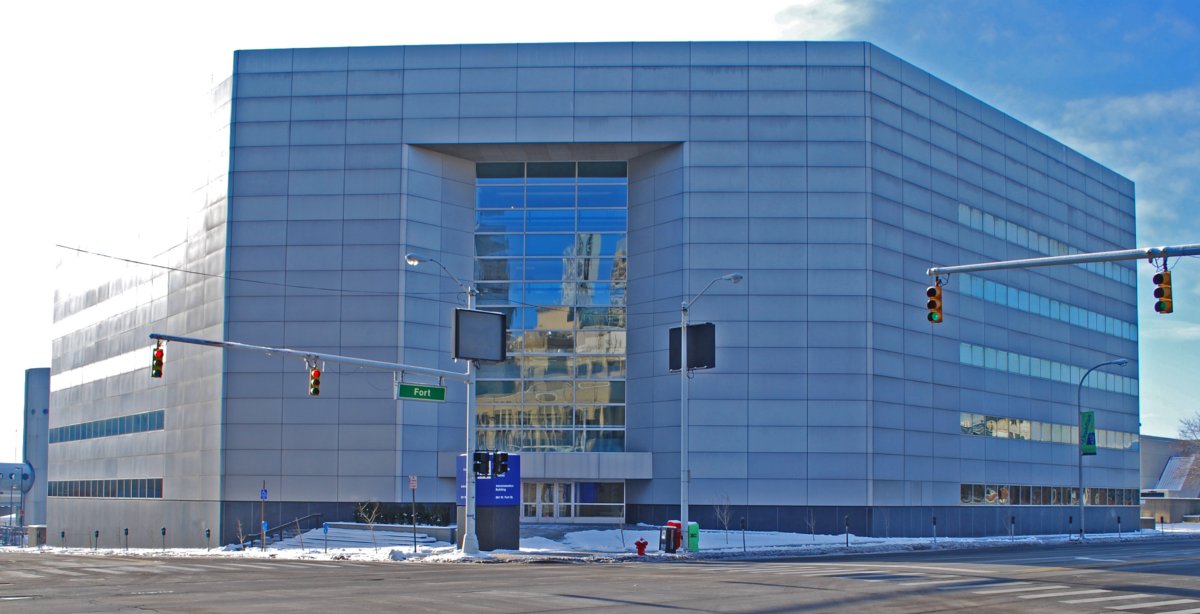
- Detroit, Michigan 48226
After College
Source: College Scorecard / U.S. Department of Education
- Median Earnings (10 years)
- $29,079
- Median Earnings (5 years)
- $41,779
- Mean Earnings (6 years after entry)
- $24,100
- Loan Repayment Rate
- 17.5%
- Monthly Loan Payment
- $128/mo
- Median Debt at Graduation
- $12,062
Frequently Asked Questions
What are the admission requirements at Wayne County Community College District?
Wayne County Community College District maintains an open admission policy as a community college serving Detroit's urban population. The school enrolls 7,848 students across its multiple campuses, with 96.66% coming from Michigan.
How much does Wayne County Community College District cost after financial aid?
Students pay an average net price of $5,762 annually at Wayne County Community College District. In-state tuition runs just $3,112, making it one of Detroit's most affordable higher education options for workforce training and transfer programs.
What is the student-faculty ratio at Wayne County Community College District?
Wayne County Community College District has a 25:1 student-faculty ratio across its multi-campus system. The college focuses heavily on career preparation and workforce development for Detroit's diverse community, with 69.66% of students being Black.
What are employment outcomes like for Wayne County Community College District graduates?
Wayne County Community College District graduates achieve an 86.9% employment rate after completion. However, the median earnings of $29,079 ten years after enrollment reflect the college's role in providing entry-level workforce training rather than high-paying professional programs.
Where are Wayne County Community College District's campuses located?
Wayne County Community College District operates as a multi-campus system throughout Detroit and surrounding areas. The college has served Detroit's urban community since 1967, providing accessible education across multiple locations.
How successful are students at completing programs at Wayne County Community College District?
Wayne County Community College District has a 23.40% six-year graduation rate, which is typical for urban community colleges serving working adults and part-time students. The college's mission centers on workforce development and providing transfer pathways rather than traditional four-year completion metrics.